
Reviewed · EASTER ISLAND TOURS
Easter Island: Private Full Day History Of The Moai
The moai are only half the story. I like that this private seven-hour tour links famous sites with quieter stops such as One Makihi and Ovahe, giving you more than the usual postcard views. I also like the chance to travel with a guide in English, Spanish, or French, though guide quality and pickup communication can vary.
You pay $219 per person, not including park admission or food. That is a serious price, but a private vehicle, hotel pickup, bottled water, and a full circuit of Easter Island can make it worthwhile, especially if your time is short. The main caution is timing: eight stops in one day means a brisk pace, and two brief photo stops have occasionally been skipped.
In This Review
- Key points to know before booking
- Why this full-day Rapa Nui route works
- Starting near Hanga Roa and heading east
- Ahu Ahahanga and moai left where they fell
- One Makihi, a short stop with an unusual form
- Rano Raraku is the day’s main archaeological stop
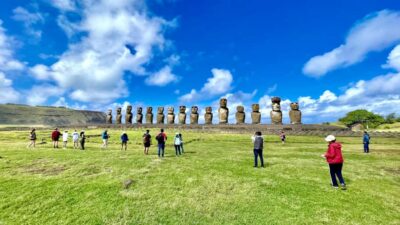
- Ahu Tongariki and its row of 15 moai
- Te Pito Kura and the meaning behind the stone
- Ovahe and the island’s softer side
- Anakena gives you time to slow down
- What $219 buys you
- Guide quality can shape the whole day
- How to prepare for this seven-hour outing
- Who should book this private Moai tour?
- Should you book it?
- FAQ
- How long does the Easter Island Moai tour last?
- Is hotel pickup included?
- Is this a private tour?
- Which languages are available?
- Is food included?
- Is bottled water provided?
- Are park entrance fees included?
- What are the main stops?
- Can I cancel the booking?
Key points to know before booking
- Rano Raraku gets two hours: This is the longest stop and the heart of the moai story, with unfinished statues still resting in the volcanic stone.
- Ahu Tongariki gives you 15 moai at once: The huge ceremonial platform is one of the strongest sights on Rapa Nui.
- The route mixes famous and lesser-seen places: One Makihi, Ovahe, and Ahu Ahahanga add a quieter side of the island.
- Anakena includes the longest beach break: You get sightseeing, free time, shopping, and a chance to relax by the water.
- Private means flexible, not always flawless: A guide waited for one late tender arrival, but other pickups were delayed because of poor communication.
- Park entry and meals cost extra: Bring money for admission and your own food plans, since neither is included.
Why this full-day Rapa Nui route works
Easter Island is compact on a map, but its archaeological sites are spread around the coast and inland volcanic areas. A private tour lets you connect the major moai sites in one day without arranging several separate rides.
I especially like the route’s balance. You see the famous 15 statues at Ahu Tongariki and the unfinished figures at Rano Raraku, then spend time at beaches and smaller ceremonial sites. That gives you a better sense of Rapa Nui as a cultural place, not just an open-air collection of giant stone figures.
The tour is listed at seven hours. The schedule includes roughly 20 minutes at the initial Hanga Roa meeting point, 30 minutes at Ahu Ahahanga, 30 minutes at One Makihi, two hours at Rano Raraku, 80 minutes at Tongariki, 20 minutes at Ovahe, 20 minutes at Te Pito Kura, and about 130 minutes at Anakena split between sightseeing and free time.
That is a lot for one day. You will get broad coverage, but you should not expect long, quiet study at every site. The private format helps because you are not tied to a large group, yet the route still has a fixed amount of driving and walking.
More historic sites:
- Private tour: where the history of the Moai was born
★ 4.7 · 13 reviews - Santiago: Guided Walking Tour of the Historical Old Town
★ 4.8 · 459 reviews - Walking Tour Valparaiso, History & Art – Private Optional
★ 4.5 · 59 reviews
Starting near Hanga Roa and heading east
Pickup is included from your hotel on Easter Island. You are asked to wait in the hotel lobby 10 minutes before the arranged time, a small detail worth taking seriously because pickup communication has not always been smooth.
One guest with a late tender arrival had a particularly good experience: guide Simon waited and still delivered the main route. That is useful if you are arriving by ship, though another pickup was reportedly an hour late and required help from people near the harbor. If you are visiting by tender, confirm the meeting point and timing with the operator before the day begins.
The opening portion near Hanga Roa is short, about 20 minutes. Think of it as the start of the route rather than a major sightseeing stop. The main value comes once you leave town and begin visiting the ahu, the ceremonial platforms connected with the moai.
The tour description also highlights Ahu Vinapu, known for its carefully fitted stone wall and its visual similarity to Inca masonry. The timed itinerary does not give Vinapu a separate stop, so ask your guide whether it is included on your specific departure. That is a good example of why a quick confirmation matters when several sites are named in the tour description.
Ahu Ahahanga and moai left where they fell
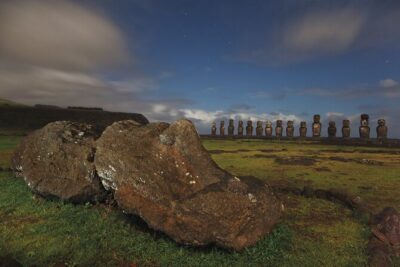
Ahu Ahahanga offers an important contrast to the grand restored platforms. Here, you can see moai connected with their original ceremonial setting, including statues that remain down rather than arranged in a polished row.
The stop is scheduled for about 30 minutes, with a guided visit, walking, and time for photographs. I would pay close attention to the guide here. The value is not only the stone figures, but also the explanation of how the ahu functioned and what changed when the statues were no longer maintained in their original positions.
This is a good stop for anyone who wants more than measurements and statue counts. One criticism directed at a guide on this route was that explanations repeated the height, weight, and number of statues without answering questions. At a site like Ahahanga, that kind of narrow commentary would leave much of the meaning unexplained.
One Makihi, a short stop with an unusual form
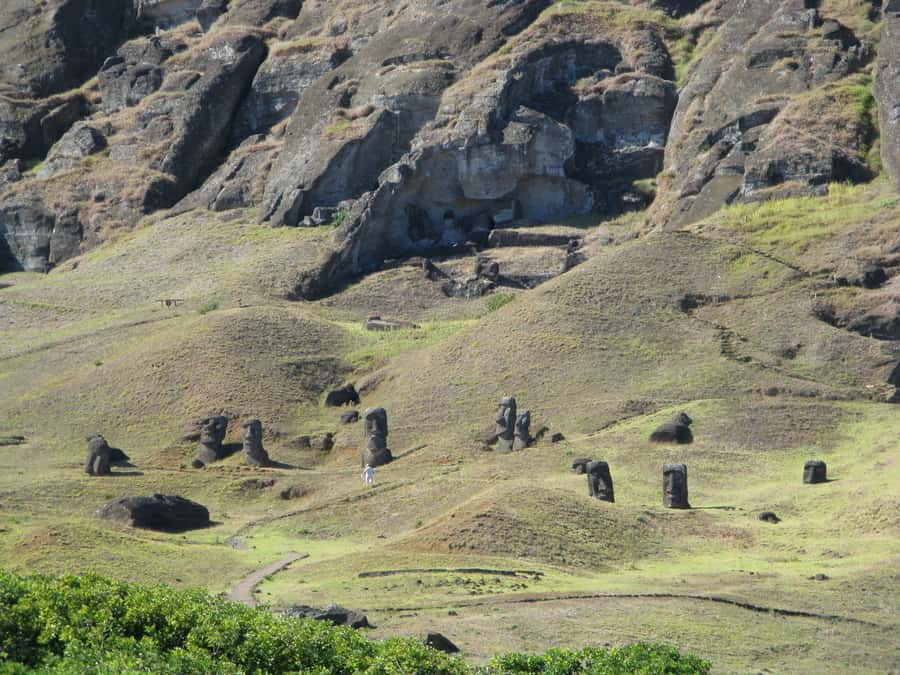
One Makihi is scheduled for 30 minutes and is mainly a photo and sightseeing stop. The feature here is a finely carved moai lying on its back, described as a supine form rather than a statue raised on a platform.
It is a smaller stop, but that is part of its appeal. You get a different view of moai carving and placement than at Tongariki. The route description treats it as an old ahu, and the stop may be especially worthwhile for visitors interested in how statues look outside the familiar upright arrangement.
The practical drawback is that short stops are the first parts of a busy day to be cut. A guest who otherwise enjoyed the tour reported that two of the brief photo stops were missed. If One Makihi matters to you, tell your guide early in the day.
A few more Easter Island trips worth weighing up
- From Hanga Roa: Easter Island Sightseeing Full Day Tour
★ 4.5 · 189 reviews - Full day tour – DREAM
★ 5.0 · 86 reviews - Two days of Full Day Tour of Rapa Nui + Sunrise in Tongariki
★ 4.8 · 55 reviews - Easter Island: Full-Day Tour to Anakena
★ 4.7 · 27 reviews
Rano Raraku is the day’s main archaeological stop
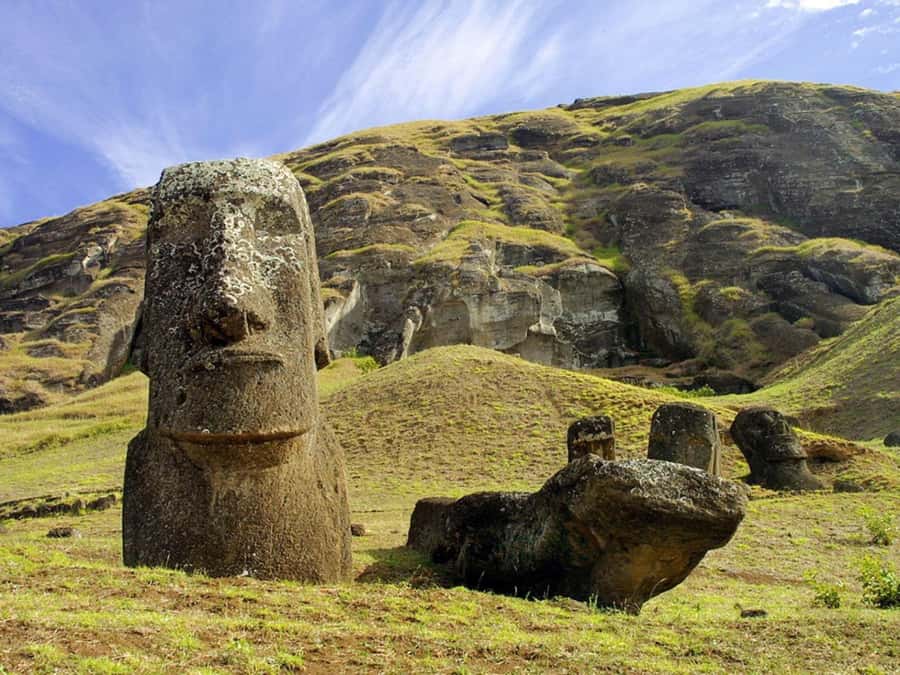
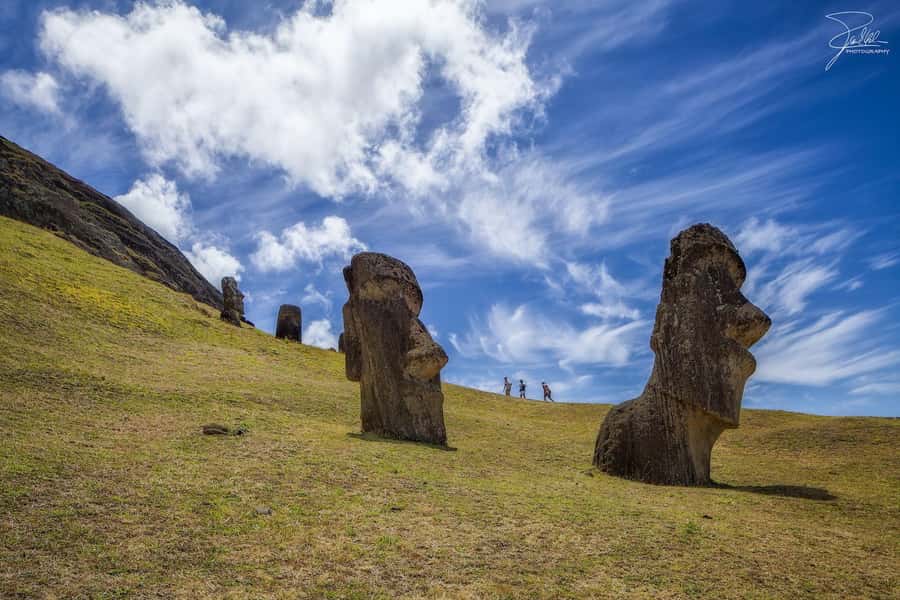
Rano Raraku receives two hours, more than any other site. That is the right call. This volcanic area is known as the moai factory because many of the statues were carved from its stone before being moved elsewhere.
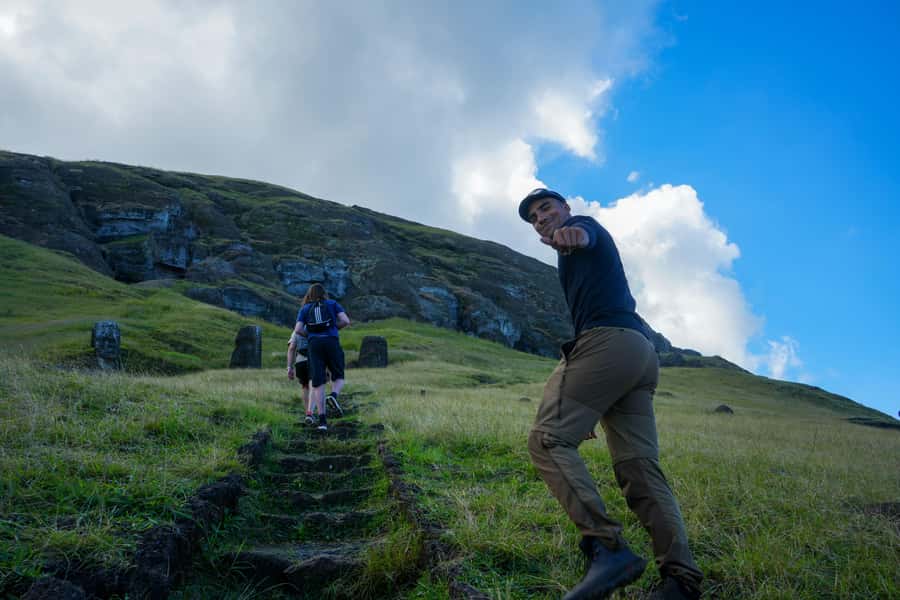
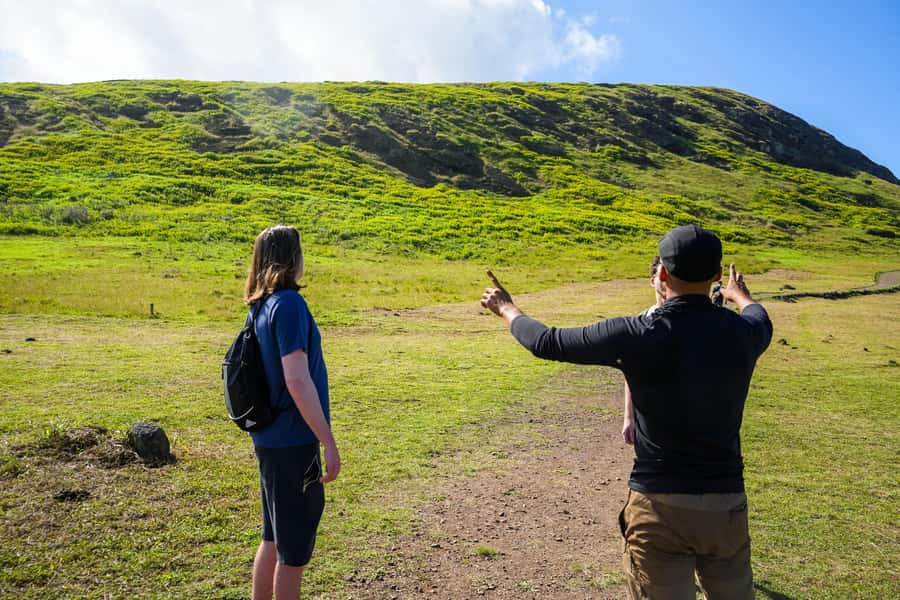
You can walk among unfinished moai and see figures still connected with the carving process. The stop includes a guided visit, walking, and photography, so you should wear footwear suited to uneven ground and expect to spend real time outdoors.
What makes Rano Raraku valuable is the sense of process. At Tongariki, you see completed statues arranged on a monumental platform. At Rano Raraku, you see the work before completion and transport. The two sites make more sense together than either one alone.
Your guide’s interpretation matters most here. Good commentary can explain why some statues were left unfinished, how the stone relates to the carving work, and why the site is central to understanding Rapa Nui culture. The strongest praise for the tour focused on guides who explained the island’s history, culture, and language, including Simon and Flora.
Do not rush this stop for photographs alone. The figures are impressive, but the unfinished forms are where the questions begin. Why were they abandoned? How far were they meant to go? What did the carving process require? A guide who welcomes questions can turn two hours into the intellectual center of the day.
Ahu Tongariki and its row of 15 moai
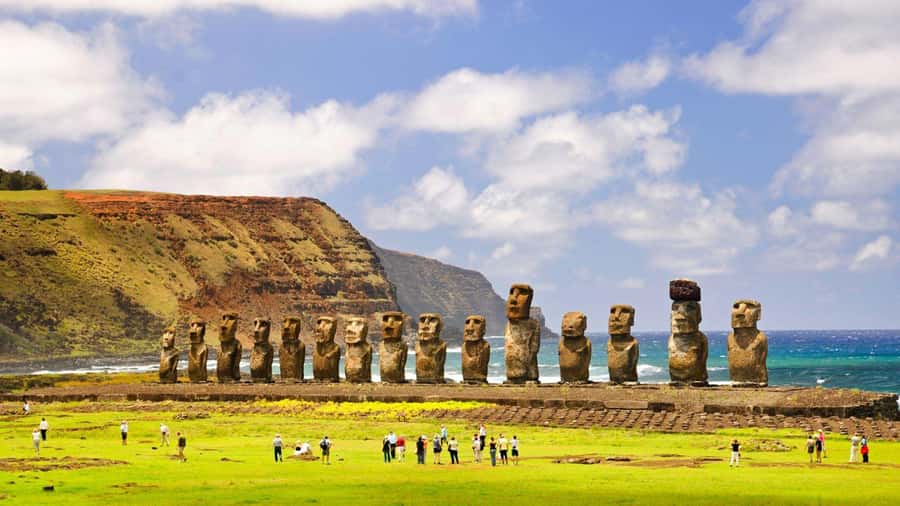
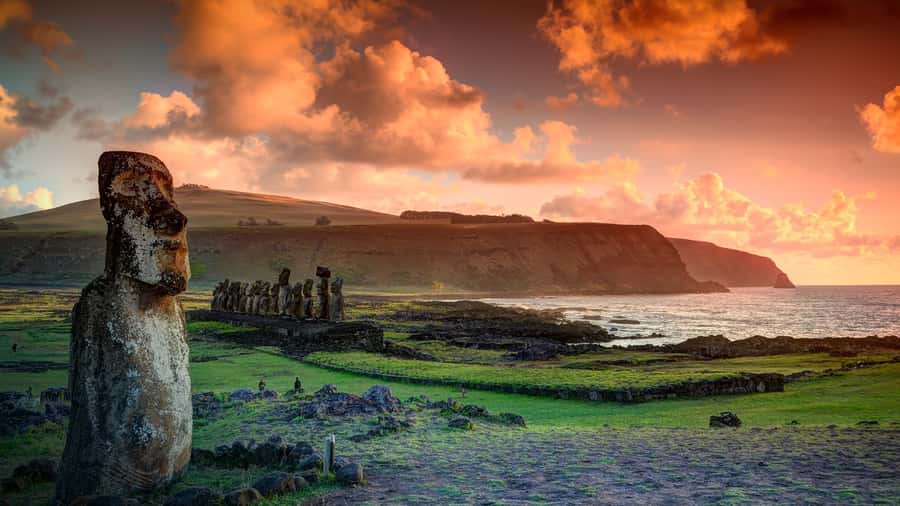
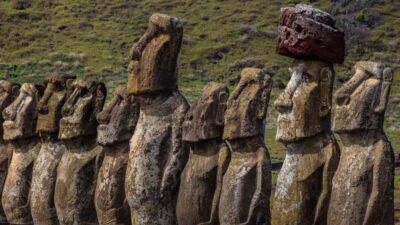
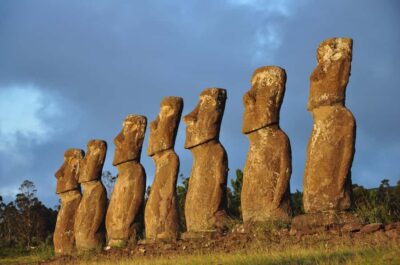
Tongariki is the big visual moment. Fifteen moai occupy one broad ceremonial platform, creating the kind of scene that explains why Easter Island captures the imagination so easily.
The stop lasts about 80 minutes, enough for guided sightseeing, photographs, and a walk around the site. I would use the time for both close views and a little distance. From nearby, you can study the differences in the statues. From farther away, you can take in the scale of the platform and the open setting.
The tour description presents these moai in their original place, while the wider site is known for its restored arrangement. Either way, this is one of the most important places on the route, and it deserves more than a quick roadside photograph.
Tongariki can also become the point where a weak guide feels most obvious. Repeating only how tall or heavy the statues are does not explain their role in Rapa Nui culture. A strong guide should connect the platform, the statues, ceremonial life, and the island’s changing past.
Te Pito Kura and the meaning behind the stone
Ahu Te Pito Kura is scheduled for about 20 minutes. The site is associated with one of the island’s largest moai, making it another useful contrast with the unfinished figures at Rano Raraku and the arranged row at Tongariki.
This is a short stop, so expect a guided explanation, photographs, and a walk rather than a long visit. The best use of the time is to ask your guide about the statue’s intended role and why the site is considered sacred.
The tour promises more than statue statistics. It aims to explain why the moai mattered to Rapa Nui culture. That distinction is important. You can find height and weight figures in a guidebook, but the cultural context is the reason to pay for a live guide.
Ovahe and the island’s softer side
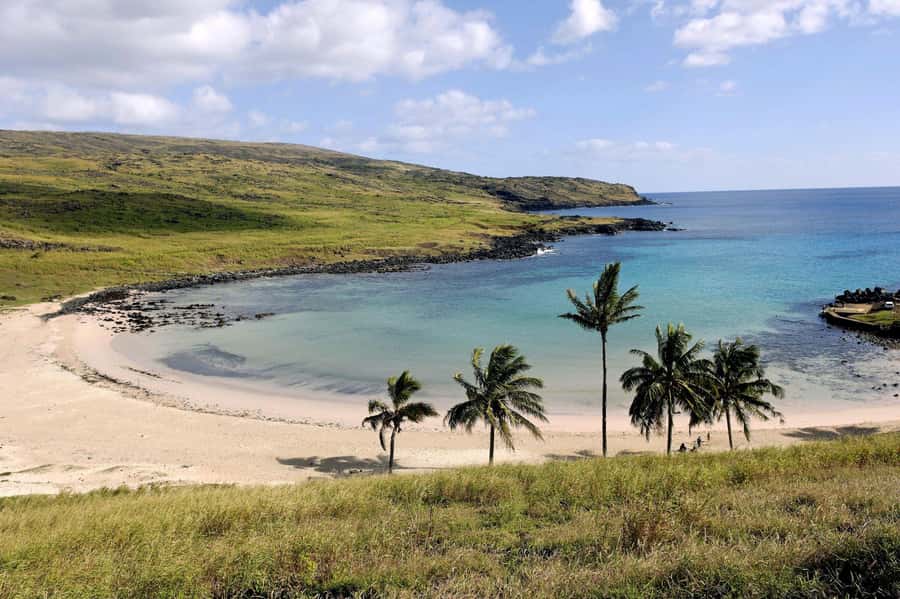
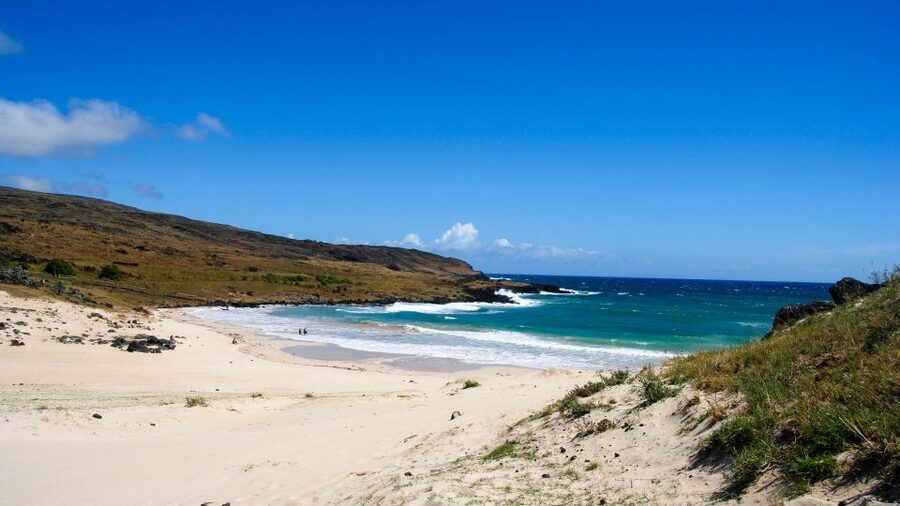
Ovahe brings a change of mood. The stop lasts about 20 minutes and is centered on a beach with pink sand, scenic views, and sightseeing.
I like the inclusion because the day could otherwise become a nonstop sequence of stone platforms. Ovahe reminds you that Easter Island is also a coastal place, with beaches and natural settings that shaped life on the island.
Still, 20 minutes is brief. Treat it as a scenic pause, not a full beach afternoon. If you want extensive swimming or snorkeling, Anakena is the better place in this schedule.
Anakena gives you time to slow down
Anakena receives the most time after Rano Raraku: about 100 minutes for sightseeing and walking, followed by another 30-minute period for a break, photographs, free time, shopping, and scenic views.
This is where the tour becomes less formal. Anakena is described as a beautiful beach with clear water and options such as snorkeling. The schedule also allows an outdoor picnic, though food is not included, so you must arrange that yourself.
I would plan your food before leaving Hanga Roa. The tour provides an individual bottle of water, but not meals. A picnic can make the beach stop much more pleasant, particularly after several hours of archaeological sites and walking.
Anakena is also a useful place to decide how much energy you have left. You can spend the time walking, taking photographs, looking at the views, shopping, or simply sitting by the beach. That flexibility is one of the better benefits of a private group.
What $219 buys you
At $219 per person, this is not a bargain-priced sightseeing ride. The value depends on how many people are sharing the private vehicle and how much you value a guide who can provide context in your preferred language.
You are paying for a full seven-hour circuit, hotel pickup and return, a private group, live guiding, and bottled water. You are not paying for park admission or food, so include those costs in your budget before booking.
The price makes more sense if you have limited time on Easter Island, are traveling as a small private party, or want to combine the major moai sites with beaches in one day. It is less compelling if you prefer slow visits, plan to spend several days on the island, or are comfortable arranging transport independently.
A private tour should also give you a chance to ask questions and adjust the pace within reason. That benefit only appears when communication works. Before departure, confirm pickup, language, included stops, and whether Ahu Vinapu is part of your actual route.
Guide quality can shape the whole day
The best guide feedback is specific. Simon was praised for waiting after a late tender and for explaining the island’s history, culture, and language. Flora was described as friendly and very good at explaining the island’s major sights.
The less positive experience involved poor English, repeated memorized facts, and difficulty understanding questions. That is not a minor issue on a tour built around cultural interpretation. If you choose English, Spanish, or French, make sure the requested language is confirmed clearly.
The overall rating is 4.6 from 12 reviews, which points to a generally strong experience but not a perfectly consistent one. I would treat the guide as the largest variable, along with pickup coordination.
How to prepare for this seven-hour outing
You should plan for walking at Rano Raraku, Tongariki, Ahahanga, Ovahe, Te Pito Kura, and Anakena. Bring food or arrange it in advance, since meals are excluded.
Wear comfortable walking shoes and carry sun protection. The supplied information confirms bottled water, but one bottle may not be enough for a full day outdoors, so ask what additional water you should bring.
Keep your phone available for pickup communication. Wait in your hotel lobby 10 minutes early, and if you are arriving from a tender, reconfirm where the driver will meet you. The delayed pickup reports make this the most useful practical precaution.
The tour offers free cancellation up to 24 hours before departure and allows you to reserve now and pay later. Those terms help if your plans are still shifting, but they do not remove the need to confirm the day’s route.
Who should book this private Moai tour?
I would choose it if you have one full day, want the island’s major archaeological sights, and prefer a private group over a large coach. It also suits couples, families, and small parties that value hotel pickup and a guide who can explain the cultural meaning behind the statues.
It is a good match for cruise passengers only if pickup arrangements are confirmed carefully. Simon’s flexibility with a late tender is encouraging, but another guest experienced a long delay at the harbor.
I would hesitate if you need a slow, highly polished tour in English or if every advertised photo stop is essential. The route is ambitious, and the two shorter stops may not always happen. The experience can be excellent with a strong guide, but the uneven communication reports are worth taking seriously.
Should you book it?
Book this tour if your priority is coverage. In seven hours, you can see Rano Raraku, Tongariki, Te Pito Kura, Ahahanga, One Makihi, Ovahe, and Anakena, with both moai sites and beaches in the same day.
Skip it if you want long, unhurried time at each place or if the $219 price feels high after adding park entry and food. Before paying, confirm the guide language, hotel pickup time, tender meeting point, and whether Vinapu and One Makihi are included on your departure.
For the right visitor, the combination of private transport, strong guides such as Simon or Flora, and access to both famous and quieter sites makes the cost defensible. Just book with realistic expectations: this is a broad, busy portrait of Rapa Nui, not a slow morning beside one ahu.
FAQ
How long does the Easter Island Moai tour last?
The tour lasts seven hours, including pickup, sightseeing, walking, free time, and the return to Easter Island accommodation.
Is hotel pickup included?
Yes. Hotel pickup and return are included. You should wait in the hotel lobby 10 minutes before the scheduled pickup time.
Is this a private tour?
Yes. The activity is offered for a private group.
Which languages are available?
Live guiding is available in English, Spanish, and French.
Is food included?
No. Food is not included. You should plan your own meal or picnic, particularly for the time at Anakena.
Is bottled water provided?
Yes. One individual bottle of water is included for each participant.
Are park entrance fees included?
No. Entrance to the parks is not included in the tour price.
What are the main stops?
The route includes the Hanga Roa area, Ahu Ahahanga, Ahu One Makihi, Rano Raraku, Ahu Tongariki, Ovahe, Ahu Te Pito Kura, and Anakena. The tour description also highlights Ahu Vinapu, so you should confirm whether it is included on your departure.
Can I cancel the booking?
Yes. You can cancel up to 24 hours in advance for a full refund. The activity also offers reserve now and pay later.
Just added around Easter Island
- Easter Island: 2 Full Days Private Tour★ 3.9 · 3 reviews
- Easter Island: Full Day Ancestral Caves and Orongo Village★ 5.0 · 3 reviews
- Easter Island: Customized recreational-tourist diving★ 5.0 · 3 reviews
- Ancestral fishing: Fishing with an experienced Rapa Nui★ 4.4 · 3 reviews
- Birdman Cult and Caves★ 4.0 · 5 reviews
- Easter Island: Moai Full Day Private Tour★ 4.8 · 5 reviews
- Rapa Nui: Polynesian Massage★ 4.8 · 5 reviews
- Rapa Nui: 3 Excursions with Hotel Transfers★ 4.3 · 6 reviews
Easter Island Tours, compared.
Two days of Full Day Tour of Rapa Nui + Sunrise in Tongariki
Read our review →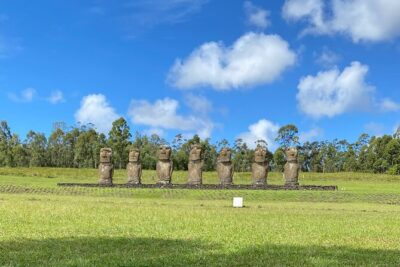
Browse the lists this tour appears in