
Reviewed · EASTER ISLAND TOURS
Full day tour – DREAM
Easter Island makes every stone feel important. Rapa Nui Dream’s full day tour packs the island’s major moai sites into one long circuit, with time at Rano Raraku, Ahu Tongariki, Anakena Beach, and several smaller archaeological sites. The tour costs $120 per person and usually runs for eight to nine hours.
I like the large number of major sites covered in one day, and I especially like the guides’ ability to explain moai culture, village life, and modern Rapa Nui traditions. Guides such as Esteban, Christian, Joaquin, Chris, and Andre have been praised for clear explanations, good pacing, patience, and photography help.
The main caution is timing. The tour can be excellent when the group leaves on schedule, but some departures have run much shorter than advertised or skipped stops. You also need to budget for the National Park ticket, which costs $80 for foreign visitors and is not included in the tour price.
In This Review
- Key points to know before booking
- What this full day on Rapa Nui covers
- Ahu Vaihu and the old fishing bay
- Ahu Akahanga and the remains of a village
- Rano Raraku, the moai factory
- Ahu Tongariki and fifteen moai facing inland
- Te Pito Kura and the magnetic stone
- Ahu Nau Nau beside Anakena Beach
- Anakena Beach and the Hotu Matu’a story
- Guides, language, and the value of local explanation
- Group size, transport, and the importance of a prompt start
- Is the $120 price good value?
- Who should book this Rapa Nui tour?
- Should you book the Full Day DREAM tour?
- FAQ
- How long does the Full Day DREAM tour last?
- What is included in the tour price?
- How much is the National Park ticket?
- Which moai sites are visited?
- Is lunch provided?
- How large is the group?
- What is the cancellation policy?
Key points to know before booking
- Rano Raraku and Ahu Tongariki receive the most time: Plan on two hours at each of these essential moai sites.
- The route may run in reverse: Some guides begin at Anakena to avoid crowds and make the archaeological story flow better.
- The price does not include the park ticket: Foreign visitors pay an additional $80 per person.
- Lunch is not included: Food and drinks are your responsibility, and lunch may happen quite late.
- Small groups can make a big difference: The advertised maximum is 15 people, though some departures have operated with fewer.
- Guide quality is a major strength: Esteban receives especially warm praise for his clear English, cultural knowledge, and friendly manner.
What this full day on Rapa Nui covers
This is an archaeology and culture tour, not mainly a beach outing. The route links seven important places around Easter Island, giving you a useful first look at how moai were made, moved, placed on ceremonial platforms, and connected to village life.
The usual start point is the Catholic Church of Tu’u Koihu in Hanga Roa at 9:30 a.m. The tour returns there at the end of the day. Information about the route is sent by WhatsApp the day before, and confirmation is provided when you book.
The itinerary is ambitious. Even with a full day, much depends on road time, pick-ups, group size, park opening hours, and how long people spend taking photographs. A well-run departure can last around seven to nine hours. Holiday schedules and other operational changes can shorten the day, so I would confirm the departure time and stop list directly before setting out.
You need your National Park ticket before the excursion begins. It can be purchased at the Ma’u Henua offices or through the Rapa Nui National Park website. The tour price covers neither lunch nor drinks.
A few more Easter Island trips worth weighing up
- From Hanga Roa: Easter Island Sightseeing Full Day Tour
★ 4.5 · 189 reviews - Two days of Full Day Tour of Rapa Nui + Sunrise in Tongariki
★ 4.8 · 55 reviews - Easter Island: Full-Day Tour to Anakena
★ 4.7 · 27 reviews
Ahu Vaihu and the old fishing bay
Ahu Vaihu is a good opening stop because it introduces the island as a place where ceremonial life and ordinary village life were closely linked. The platform once held eight moai, and the site sits beside an ancestral bay used by fishermen.
You also see a representative example called Poko Manu Mea, connected with Rapa Nui villages and customs. The scheduled visit lasts about 30 minutes, so this is more of an orientation stop than a long walk.
The site helps you look beyond the familiar image of a moai as an isolated statue. Here, the setting matters. The bay, platform, and village traditions all form part of the story. If your guide explains how the area fit into daily life, you get much more from the stop than a quick photograph.
Ahu Akahanga and the remains of a village
Ahu Akahanga is near a small bay and offers a look at an old village area. The stop is listed at about 30 minutes, which is enough for an introduction and photographs but not a slow archaeological study.
One practical detail matters here: the entrance ticket is not included in the individual stop description, even though the National Park ticket is required for the day. Make sure you have the main park pass with you before the tour starts.
Akahanga is less about one dramatic statue than about seeing a wider settlement area. It gives useful context before the tour reaches the major moai factory and the large ceremonial platforms.
Rano Raraku, the moai factory
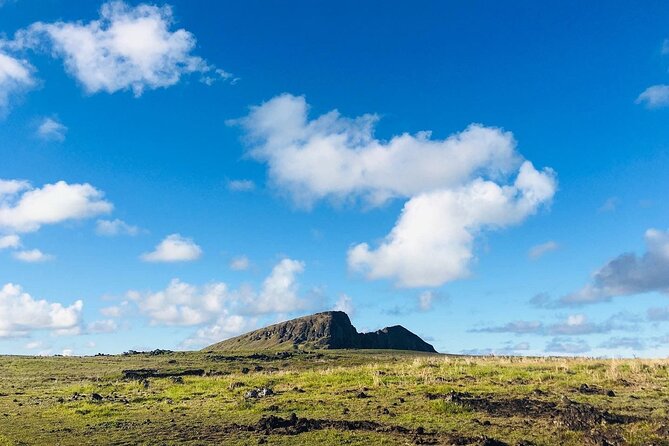
Rano Raraku is the heart of the day for many people. This volcanic quarry contains about 400 unfinished moai, and the tour allows two hours here.
The unfinished statues make the carving process easier to picture. You can see moai at different stages, rather than only finished figures standing on platforms. That changes the usual question from how did the statues get here to how could an entire society organize work on this scale?
Two hours is a sensible amount of time. The site deserves more than a quick roadside stop, and the walking can require a moderate level of fitness. You should allow time to look carefully, listen to your guide, and take photographs without rushing from one statue to the next.
The strongest guides connect the quarry to the rest of the island. Esteban has been praised for explaining ancient Rapa Nui culture in clear English and for answering questions patiently. Other guides, including Chris and Andre, have also been praised for bringing the archaeological sites to life with accurate, relevant explanations.
A completely different sort of day out of Easter Island:
- From Hanga Roa: Rapa Nui Culture Sightseeing Tour
★ 4.6 · 307 reviews - From Hanga Roa: Easter Island Highlights 2-Day Tour
★ 4.3 · 205 reviews - From Hanga Roa: Journey from Orongo to Ana Te Pahu
★ 4.3 · 75 reviews - Rapa Nui Stargazing
★ 4.5 · 62 reviews
Ahu Tongariki and fifteen moai facing inland
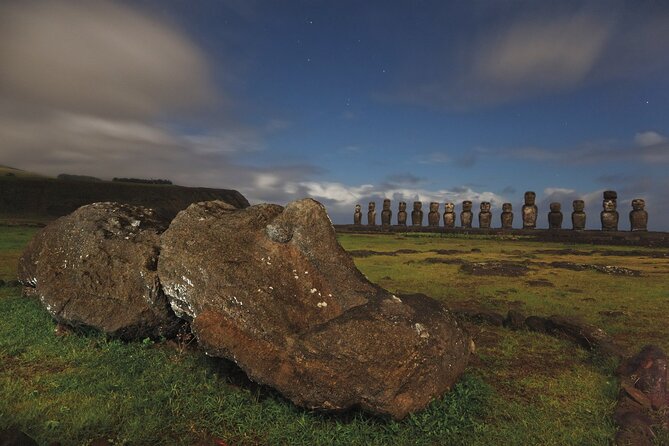
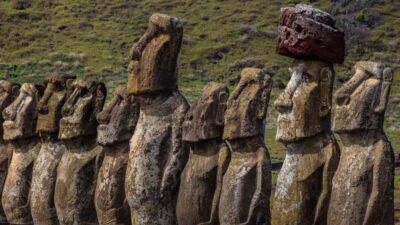
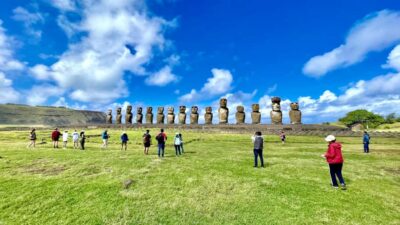
Ahu Tongariki is the grand visual moment of the tour. This is the largest ahu in Polynesia, with 15 upright moai arranged on one broad platform, their backs to the ocean.
The scheduled visit is two hours, matching the time at Rano Raraku. That is welcome. Tongariki is not a place you want to see through a van window, spend five minutes photographing, and leave. The scale becomes clear only when you have time to move around and take in the full line of statues.
This is also where a good guide earns the tour price. The figures can look similar at first glance, but explanations about the platform, the statues, and their place in Rapa Nui ceremonial life give the site more meaning.
Many people consider Rano Raraku and Tongariki the essential pair on Easter Island. If you have only one day for organized sightseeing, this tour puts both on the schedule with enough planned time to make the visits worthwhile.
Te Pito Kura and the magnetic stone
Ahu Te Pito Kura is scheduled for about one hour. The site is associated with a magnetic stone and the longest moai, making it a useful stop for anyone interested in the island’s unusual legends and archaeological details.
The stop is less famous than Tongariki, but it adds variety. You are not seeing another large row of upright statues. Instead, you get a different part of the moai story and a chance to ask your guide about the claims and traditions connected with the stone.
This is one stop I would confirm before departure. At least one reported departure did not visit Te Pito Kura, despite it being part of the planned route. That kind of change may result from timing or park operations, but you should know what is expected before the van leaves Hanga Roa.
Ahu Nau Nau beside Anakena Beach
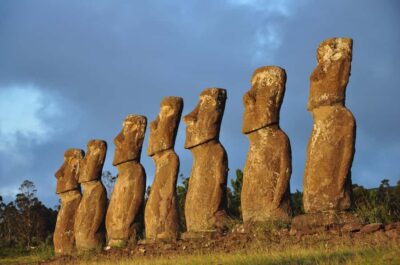
Ahu Nau Nau sits about 150 meters inland from Anakena Beach. The platform has seven moai and provides a final major archaeological setting before the beach portion of the day.
The scheduled visit is around 30 minutes, though the way the stop works may depend on the day’s pace. Some guides use Anakena as the first stop, especially when trying to avoid crowds or make the route more efficient. Others may reach it near the end.
Ahu Nau Nau matters because it connects the moai sites with the story of King Hotu Matu’a and the arrival of the first settlers. The site is not simply a scenic stop beside a beach. It belongs to one of Rapa Nui’s foundational cultural stories.
If your main interest is archaeology, pay attention to the moai before thinking about swimming or lunch. Some past departures have placed beach time ahead of the archaeological explanation, which left people feeling that the statues received too little attention.
Anakena Beach and the Hotu Matu’a story
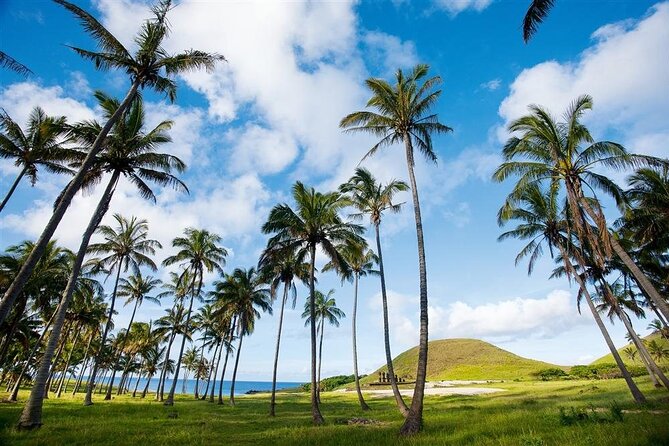
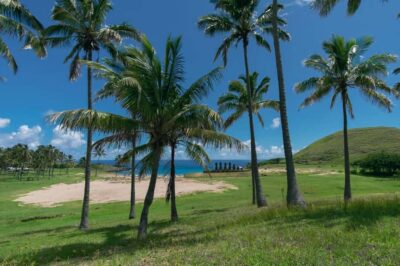
Anakena is the island’s best known beach stop. Its traditional name is Hanga Rau o Te Ariki, and local tradition connects it with the arrival of King Hotu Matu’a.
The beach visit is scheduled for 30 minutes and is free. Food and drinks are not included, so this may also become the practical lunch stop. One important warning: lunch can happen as late as about 3 p.m., and restaurant service may be slow.
If you want to swim, ask your guide early in the day how much time is likely to be available. Swimming is possible when timing and conditions allow, but it is not the central purpose of this excursion. The tour is built around archaeology and culture.
That distinction helps set expectations. If you want a full beach day with a few moai nearby, choose a different plan. If you want to understand why Anakena matters, then a short visit fits the purpose of this tour.
Guides, language, and the value of local explanation
Guide quality seems to be the biggest reason this tour earns strong marks. Esteban is repeatedly praised for his friendly style, excellent English, cultural explanations, and ability to answer questions. He has also been praised as a good photographer who allows enough time for pictures.
Christian, Joaquin, Chris, Andre, and other guides have received similar praise for making the sites easier to understand. The best guides do more than repeat dates and names. They explain how each place relates to Rapa Nui customs, villages, ceremonies, and modern island life.
One particularly useful detail is the mention of Tapati, the island’s major cultural festival. If you visit during that season, a guide such as Esteban may connect what you see at the archaeological sites with current Rapa Nui traditions.
Still, service can vary. Some departures have had weak communication, delayed starts, limited explanations in the vehicle, or a guide who gave too little attention to the final moai site. A good guide can transform this day. A rushed or disorganized one can make the same route feel like a checklist.
Group size, transport, and the importance of a prompt start
The maximum group size is 15 people. That is small enough for questions, though a full minivan can feel crowded. One reported departure involved 16 people, a long wait for late arrivals, and uncomfortable conditions in a parked vehicle.
The operator has also used smaller groups during special holiday schedules. A six-person group can move through archaeological sites more quickly and spend less time on pick-ups and drop-offs. That can make the day feel almost private, but it can also shorten the total duration if the route is completed efficiently.
The advertised start is 9:30 a.m. Arriving early is wise. If other passengers are late, the delay can eat into the day and affect beach time or the final archaeological stops.
The route may be arranged in reverse. Beginning at Anakena can reduce crowding and may make logistical sense, especially during busy periods. It is not automatically a problem if the order changes, but you should ask the guide which sites will receive the longest visits.
Is the $120 price good value?
At $120 per person, the tour is not cheap, especially after adding the National Park ticket. A foreign visitor should expect the total required sightseeing cost to be about $200 per person before lunch and drinks. Chilean visitors pay CLP20,000 for the park ticket instead.
The value depends on what you want from Easter Island. For a first visit, the tour covers a strong collection of major sites and provides transport around a large island. Hiring separate transport and arranging explanations at every site could be less convenient, though no separate transport price is provided here for comparison.
The tour is strongest when it delivers the full route, starts on time, and includes a guide who explains the cultural setting. It is weak value if stops are skipped or the day is cut to four or five hours without a clear adjustment in price.
There have also been reports of different people paying noticeably different amounts for what appeared to be the same departure. I would save your booking confirmation and ask the operator to clarify the final price before travel. This is especially important if you are booking through a third party.
Who should book this Rapa Nui tour?
I would choose this tour if you have one full day, want the major moai sites explained, and prefer not to arrange island transport yourself. It suits solo visitors, couples, and small groups who value a local guide and want time at Rano Raraku and Tongariki.
It is also a good choice if photography matters. Several guides have been praised for allowing time to take pictures, and the route includes the island’s most memorable views.
I would be more cautious if you want a relaxed beach day, need guaranteed swimming time, or dislike fixed group schedules. You should also think twice if your visit falls on a holiday when the National Park may close early.
Before booking, ask three direct questions: Will all seven listed stops be visited? Is the route starting at Anakena or Vaihu? How much time is expected at the beach and for lunch? Clear answers can prevent the main disappointments reported on this tour.
Should you book the Full Day DREAM tour?
Yes, if you want an efficient introduction to Rapa Nui and the chance to see the island’s major moai sites with a guide. The combination of Rano Raraku, Tongariki, Te Pito Kura, Nau Nau, Anakena, Vaihu, and Akahanga gives you a strong one-day foundation.
Book with realistic expectations. The National Park ticket is extra, lunch is extra, the group may be full, and the actual length can depend on park hours and daily operations. Confirm the route and timing, arrive early, and treat the beach as a bonus rather than the main event.
When the logistics work and the guide is as strong as Esteban, Christian, Joaquin, Chris, or Andre, this tour offers very good value for a short stay on Easter Island. If the operator confirms the full route and a proper eight-hour schedule, I would consider it a sensible first-day choice.
FAQ
How long does the Full Day DREAM tour last?
The planned duration is approximately eight to nine hours, starting at 9:30 a.m. and returning to the Catholic Church of Tu’u Koihu in Hanga Roa. Actual timing can change because of park hours, pick-ups, group size, and holiday schedules.
What is included in the tour price?
The tour includes the guided excursion and information sent by WhatsApp the day before the route. Lunch, drinks, and the National Park entrance ticket are not included.
How much is the National Park ticket?
The ticket costs CLP20,000 per Chilean visitor or $80 per foreign visitor. You must have the ticket before the first day of the excursion.
Which moai sites are visited?
The planned route includes Ahu Vaihu, Ahu Akahanga, Rano Raraku, Ahu Tongariki, Ahu Te Pito Kura, Ahu Nau Nau, and Anakena Beach. The order may change, and you should confirm the route before departure.
Is lunch provided?
No. You need to pay for your own food and drinks. Lunch may take place at Anakena Beach and can be quite late in the day.
How large is the group?
The tour has a maximum of 15 people. Smaller groups may operate on some dates, including special holiday departures.
What is the cancellation policy?
You can cancel at least 24 hours before the start time for a full refund. Changes or cancellations made less than 24 hours before the start are not accepted for a refund. If poor weather causes the operator to cancel, you can receive a different date or a full refund.
Just added around Easter Island
- Easter Island: 2 Full Days Private Tour★ 3.9 · 3 reviews
- Easter Island: Full Day Ancestral Caves and Orongo Village★ 5.0 · 3 reviews
- Easter Island: Customized recreational-tourist diving★ 5.0 · 3 reviews
- Ancestral fishing: Fishing with an experienced Rapa Nui★ 4.4 · 3 reviews
- Birdman Cult and Caves★ 4.0 · 5 reviews
- Easter Island: Moai Full Day Private Tour★ 4.8 · 5 reviews
- Rapa Nui: Polynesian Massage★ 4.8 · 5 reviews
- Rapa Nui: 3 Excursions with Hotel Transfers★ 4.3 · 6 reviews
Easter Island Tours, compared.
Two days of Full Day Tour of Rapa Nui + Sunrise in Tongariki
Read our review →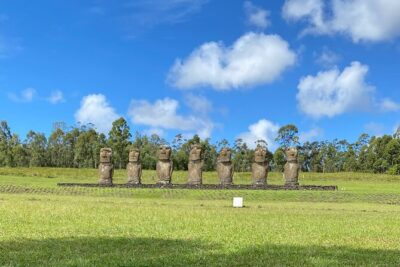
Browse the lists this tour appears in