
Reviewed · EASTER ISLAND TOURS
From Hanga Roa: Rapa Nui Culture Sightseeing Tour
Easter Island rewards a full day. This $80 tour takes you from Hanga Roa to the island’s key moai sites, with local guides adding stories about Rapa Nui traditions, chiefs, and the people who carved these famous statues. I especially like the excellent coverage and the chance to finish at Anakena, where you get 90 minutes to relax by the sea. The main drawback is the pace: you will spend much of the day getting on and off the minibus, and a slow lunch stop can cut into time at the final sites.
I also like the native island guides, who give the tour a personal connection that a printed guidebook cannot match. Guides such as Frank, Hivi, Javiera, Zoe, Enzo, and Franco have been praised for clear English, friendly service, and strong knowledge of local culture. Just keep your expectations sensible: this is a busy one-day circuit, not a slow archaeological walk.
In This Review
- The essential Rapa Nui day in six useful points
- Why this tour makes sense on a short Easter Island visit
- Starting in Hanga Roa and crossing the island
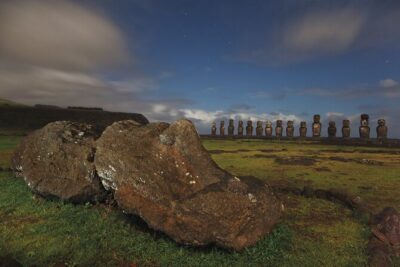
- Vaihu, where fallen moai set the tone
- Akahanga and the island’s stories
- Rano Raraku, the place that explains the moai
- Tongariki and the full row of standing moai
- Te Pito Kura and the magnetic stone
- Anakena Beach gives the day a welcome change
- The local guides are the heart of the experience
- Comfort, timing, and what to carry
- Who should book this Rapa Nui tour?
- FAQ
- Where does the tour begin and end?
- How long does the tour last?
- What sites are included?
- Is transportation included?
- Is a local guide included?
- Is the National Park ticket included?
- Is lunch included?
- How much free time do I get at Anakena?
- Is the tour wheelchair accessible?
- Can I cancel the tour for a full refund?
The essential Rapa Nui day in six useful points
- Six major stops: Visit Vaihu, Akahanga, Rano Raraku, Tongariki, Te Pito Kura, and Anakena in one 8-hour outing.
- Rano Raraku is the star: See unfinished moai still emerging from the volcanic quarry where they were carved.
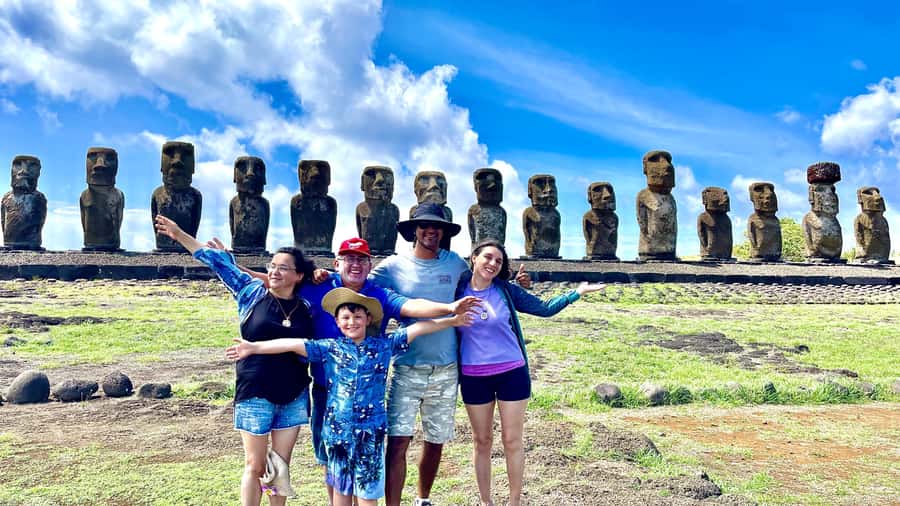
- Tongariki delivers the famous view: Face the largest row of standing moai on Easter Island.
- A local guide changes the experience: The best guides connect the stones to Rapa Nui customs and daily life.
- Anakena adds breathing room: You get about 1.5 hours of free time at the island’s best-known beach.
- Plan for lunch: Food is not included, and one reported late lunch reached about 3 p.m.
Why this tour makes sense on a short Easter Island visit
Easter Island, or Rapa Nui, is not a place where you can casually wander between major sights. The archaeological sites are spread around the coast and interior, and public transport is not part of this experience. A guided vehicle lets you cover a large portion of the island without spending your limited time working out routes.
For $80 per person, the value is strong if you want the main sights in one day. Hotel pickup, transport, and a live guide are included. You still need to pay for the National Park ticket and lunch, so the real cost will be higher, but the basic price covers the parts that are hardest to arrange independently.
The tour is especially useful if you have only one full day on Rapa Nui. It also works well as an orientation day early in your stay. You can see the famous sites first, then decide where you want to return for more time.
The tradeoff is simple. You see a lot, but the day is structured around a fixed route. You cannot linger at every ahu, take a long walk at Rano Raraku, or wait for perfect light at Tongariki. The 4.6 rating from 307 bookings reflects the broad appeal, but the less positive comments point to the same issue: some stops feel brief, while minor attractions can take time from the most important ones.
A few more Easter Island trips worth weighing up
- From Hanga Roa: Easter Island Highlights 2-Day Tour
★ 4.3 · 205 reviews - From Hanga Roa: Easter Island Sightseeing Full Day Tour
★ 4.5 · 189 reviews - Full day tour – DREAM
★ 5.0 · 86 reviews
Starting in Hanga Roa and crossing the island
Pickup is included from hotels in Hanga Roa. You are asked to wait in the lobby 10 minutes before the scheduled time, which is good advice on an island where a late start can affect the final beach stop.
The first bus ride lasts about 45 minutes. The vehicle is described in the feedback as a good-quality minivan, and pickup was reported as punctual. That matters here because the route covers a large stretch of the island, with repeated short rides between archaeological sites.
You may share the vehicle with English and Spanish speakers. Several guides have handled both languages well, and one guide was praised for speaking English, Spanish, and Rapa Nui. The quality of the day depends heavily on the guide assigned to your group, so the strongest part of the experience is not simply the vehicle. It is the explanation given along the way.
Vaihu, where fallen moai set the tone
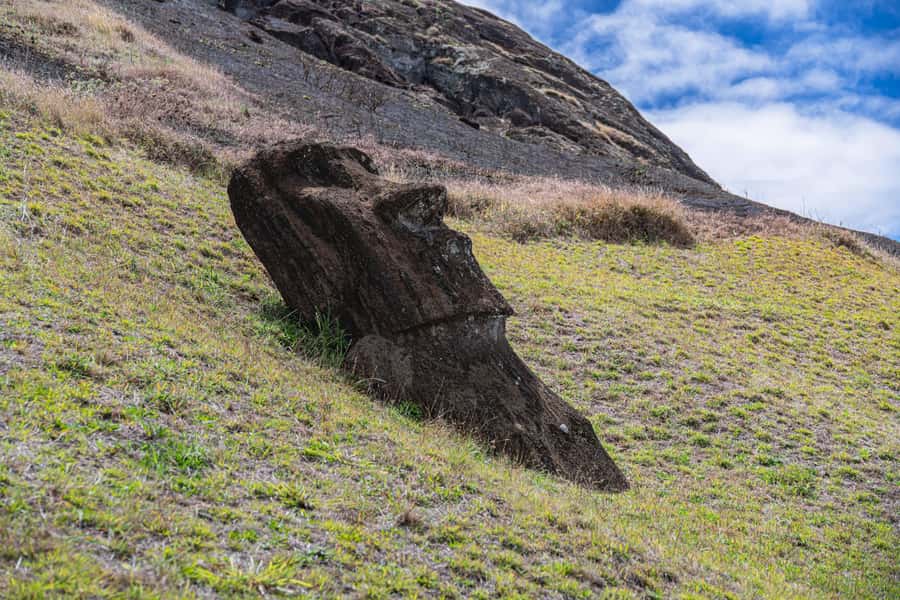
The first cultural stop is listed as a traditional village, with about 45 minutes of guided walking. The route description also identifies Vaihu as the opening site, where you see moai scattered across the ground.
Vaihu gives you an early lesson in the island’s archaeological story. The statues are not presented as isolated photo props. Their fallen positions make the site feel less polished and more revealing. You begin to understand that Rapa Nui is not only about rows of upright statues. It is also about abandoned platforms, broken monuments, and the traces of a society that changed over time.
This may be one of the quieter stops for you. One detailed assessment called the first two destinations less impressive than the later locations, while still finding the overall route worthwhile. I would treat Vaihu as an introduction rather than the day’s main event.
The 45-minute visit should be enough for a guided explanation and photographs. If you want long walks or detailed study of every stone, you may find the schedule tight.
Akahanga and the island’s stories
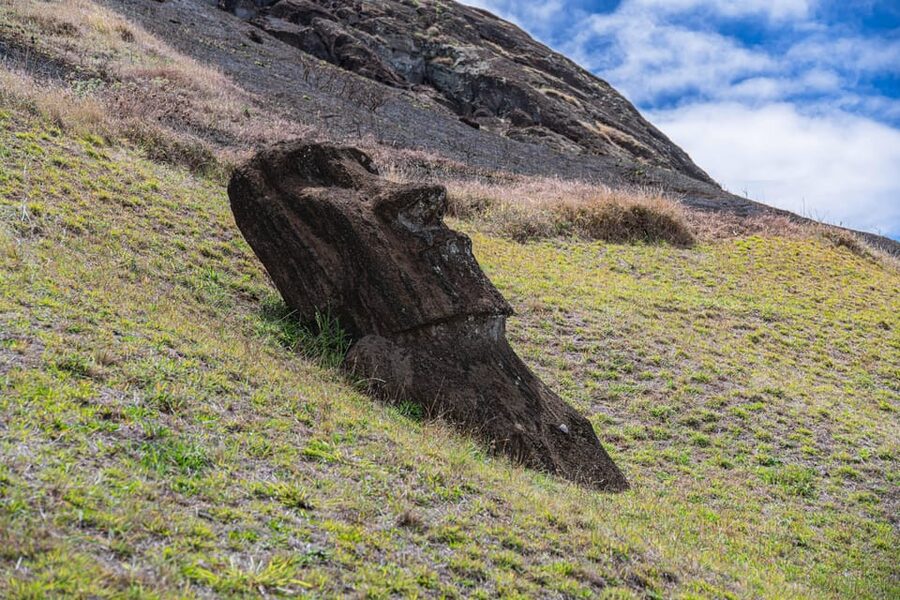
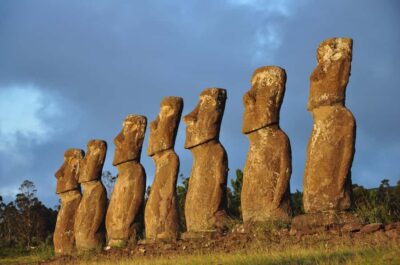
The next stop is Ahu Akahanga, another 45-minute guided visit. This archaeological site is tied to local legends and features more fallen moai, with rough coastal scenery around the ceremonial platform.
Akahanga helps place the statues in their cultural setting. The guide’s job is not just to point out sizes and shapes, but to explain how the ahu functioned and why the moai mattered to the people who made them. The best guides add context about local traditions and early inhabitants, which is where this tour can become more than a checklist.
The stop can feel similar to Vaihu if your main goal is to see standing moai. That is the case for several sites on the route, so you should expect variation rather than six completely different attractions. The reward is the accumulation of details. By the time you reach Rano Raraku, you have already seen statues in several states and settings.
A completely different sort of day out of Easter Island:
- From Hanga Roa: Journey from Orongo to Ana Te Pahu
★ 4.3 · 75 reviews - Rapa Nui Stargazing
★ 4.5 · 62 reviews - Two days of Full Day Tour of Rapa Nui + Sunrise in Tongariki
★ 4.8 · 55 reviews - Half Day Tour in Rapa Nui
★ 5.0 · 48 reviews
Rano Raraku, the place that explains the moai
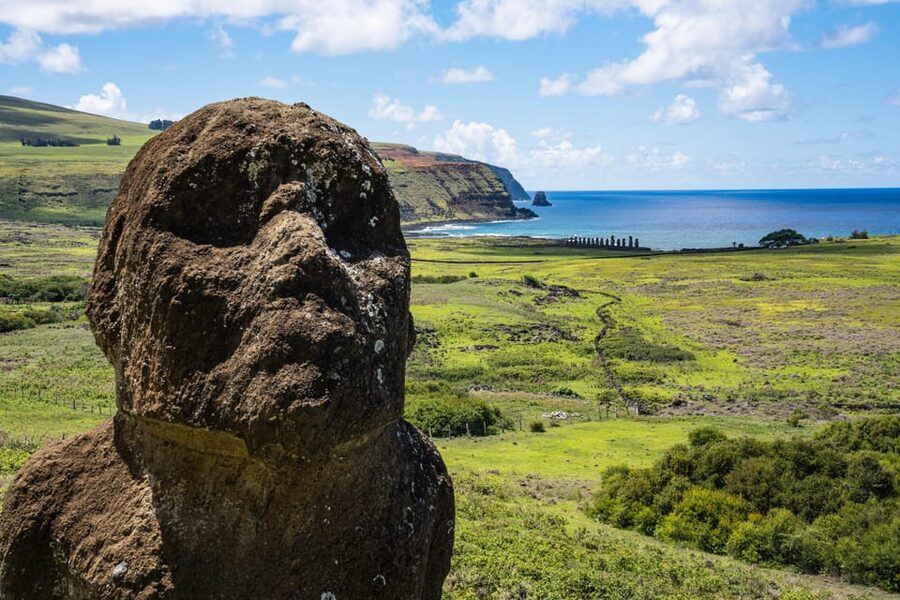
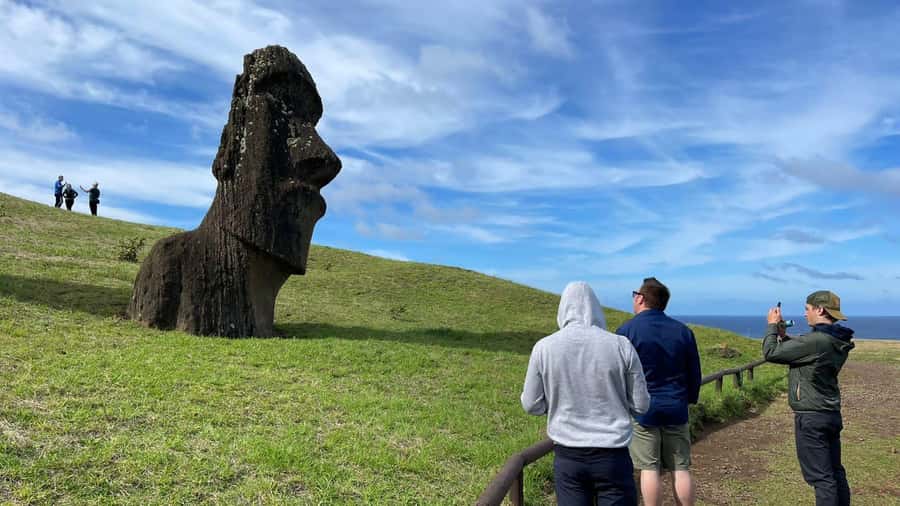
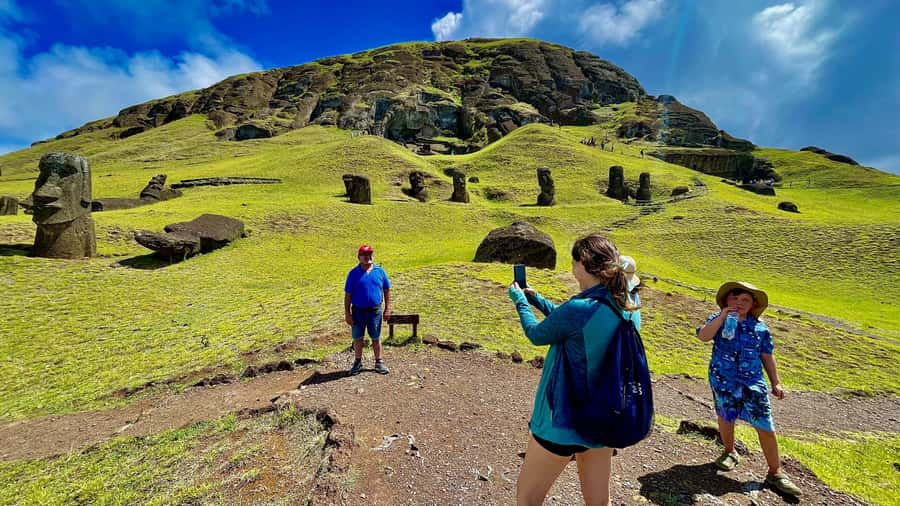
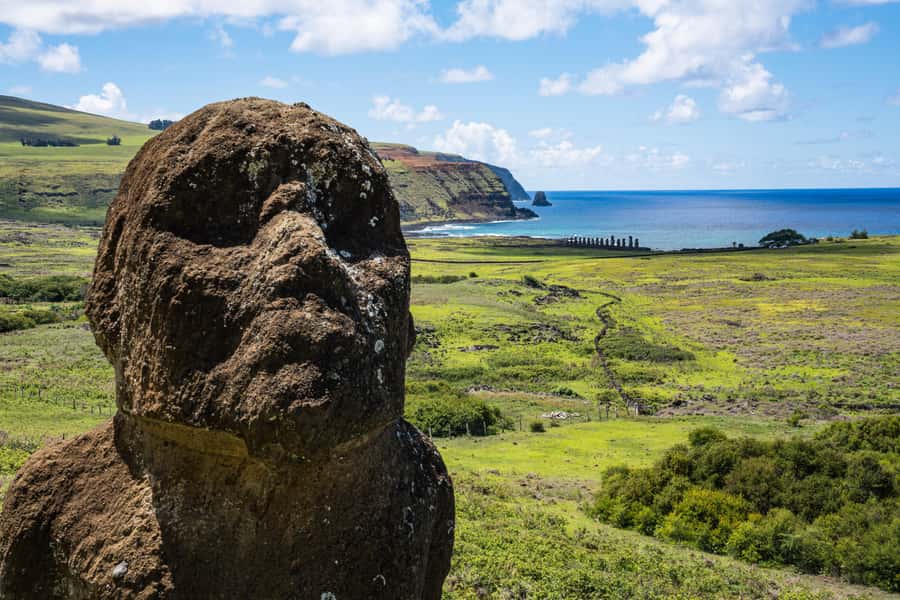
Rano Raraku receives about one hour, making it one of the most important stops of the day. This is the quarry where many moai were carved, and unfinished statues remain partly embedded in the volcanic rock.
I consider this the tour’s most revealing site. At a completed ahu, you mainly see the finished result. At Rano Raraku, you see the work in progress. Unfinished figures rising from the earth give you a clearer sense of scale, labor, and ambition than a single statue ever could.
The one-hour visit includes a guided walk, so comfortable shoes matter. You will want time to look closely, listen, and take photographs. The terrain may require walking over uneven ground, even though the activity is listed as wheelchair accessible. If mobility is a concern, confirm how much of the quarry route can be covered comfortably before booking.
Lunch is not included. One common arrangement is a restaurant stop near the moai quarry, where food was described as tasty and reasonably priced by one person, while another reported a late meal at about 3 p.m. I would bring water and a small snack, then ask your guide early about the lunch timing.
Tongariki and the full row of standing moai
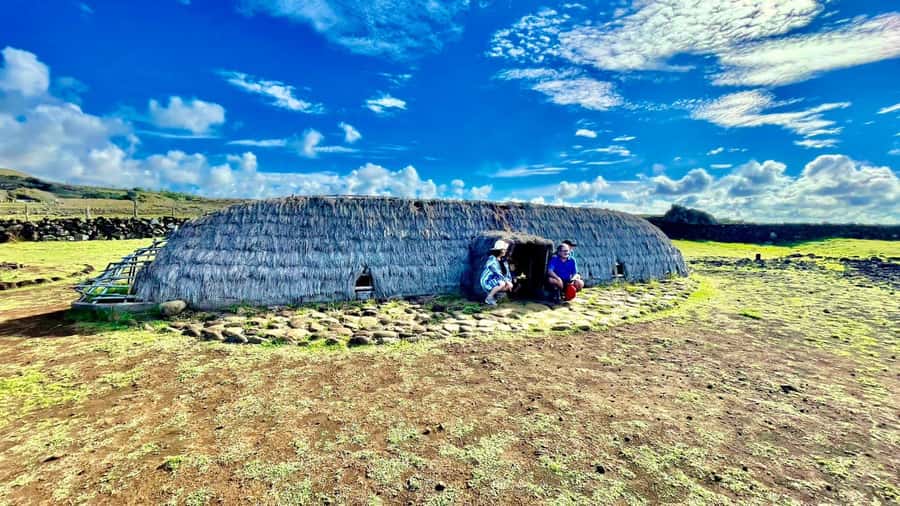
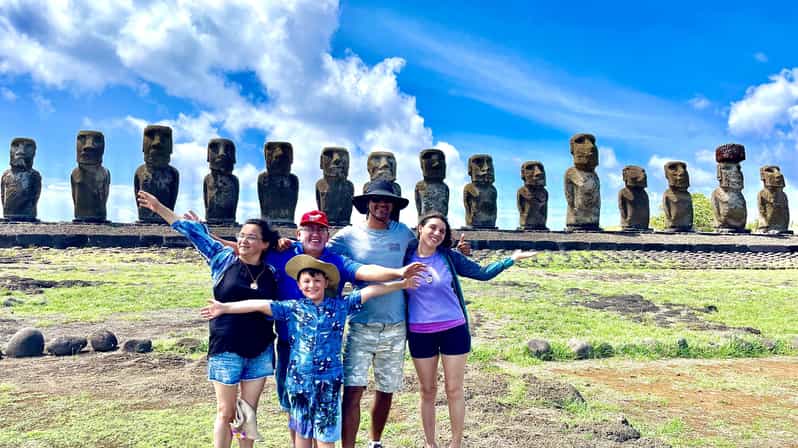
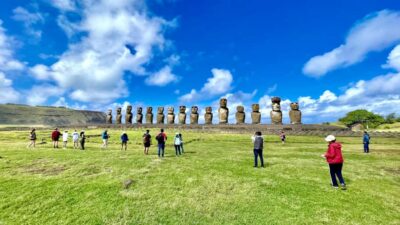
Ahu Tongariki is scheduled for 45 minutes. This is the view many people picture before arriving on Rapa Nui: a long ceremonial platform lined with standing moai, facing inland.
Tongariki is the tour’s big visual payoff. The scale is hard to grasp in photographs, and standing in front of the full row gives you the clearest sense of the island’s monumental building program. You get time for the classic group photograph, but the guide’s explanation also helps you see the platform as a ceremonial place rather than a backdrop.
Forty-five minutes is enough for an introduction and photographs, but not endless wandering. If the light is beautiful or the group is large, you may wish for more time. Still, the organized visit keeps the day moving and ensures you do not miss this essential stop.
Te Pito Kura and the magnetic stone
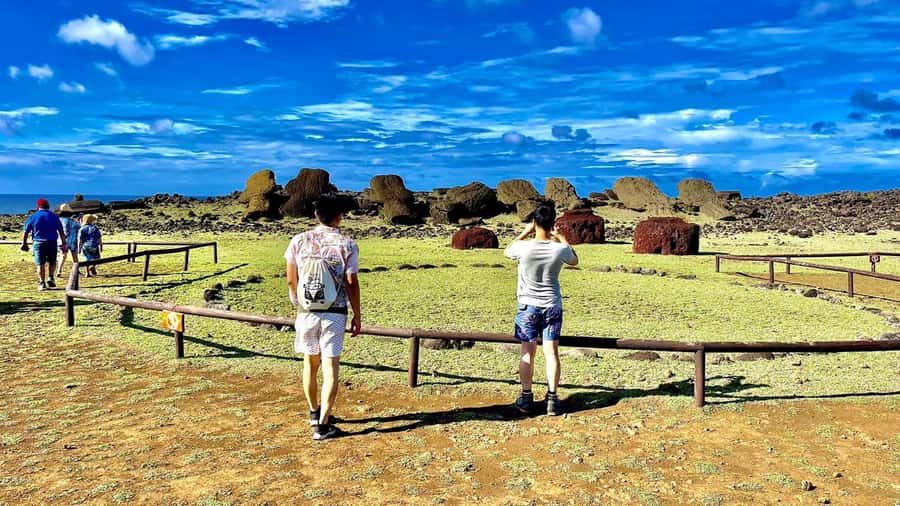
The route continues to Ahu Te Pito Kura for another 45-minute guided walk. This site is connected with an unusual rounded stone, often described as magnetic and given spiritual importance by Rapa Nui people.
This stop adds variety after the grand scale of Tongariki. Instead of another long line of statues, you get a site built around a particular object and its meaning. Listen closely here, because the story matters as much as the stone itself.
The tour’s cultural quality depends on the guide’s ability to explain local beliefs with care. Most feedback praises the guides for respectful, clear storytelling, but one account described a guide giving inaccurate information and making an insulting remark. That appears to be an exception, yet it is fair to say that guide quality can vary. If something sounds doubtful, ask politely for clarification rather than accepting every statement without question.
Anakena Beach gives the day a welcome change
The final major stop is Anakena, where you get about 90 minutes of free time. This is the longest single stop and a welcome change after a day of guided archaeology.
Anakena combines palm trees, sand, and clear blue water with nearby ahu and moai. It lets you connect the island’s cultural sites with its natural beauty. Several people have singled out the beach as a major highlight, and one practical suggestion is worth following: bring swim shorts and a towel if you want to go into the water.
Do not assume you will have unlimited beach time. A long lunch or delays earlier in the day can reduce the time at Anakena. One person missed the final stop after lunch took too long, while another said the schedule gave enough time to explore and take photographs. The safest approach is to keep lunch efficient and remind your guide that you want the full beach stop.
Free time here also means less direct instruction. That is a plus if you want to rest, swim, or take your own photographs. It is less useful if you expect a long guided explanation of every nearby feature.
The local guides are the heart of the experience
The strongest praise goes to the guides. Frank, also called Franco in one account, was described as friendly, patient, and able to explain the island in good English. Hivi was praised for solving problems and helping the group throughout the day. Javiera was noted for being respectful and well informed, while Zoe was credited with making the entire island visit feel worthwhile.
Other positive comments mention Enzo, Jose, and guides who moved comfortably between English and Spanish. The common thread is personal interpretation. A local islander can explain customs, family traditions, and the meaning of sites in a way that a basic audio guide cannot.
Still, I would not promise the same experience with every guide. One person felt the explanations were too shallow and objected to the guide’s conduct. That warning is important because a site-heavy tour needs a good narrator. The route remains worthwhile on its own, but the guide can turn it from sightseeing into cultural learning.
Comfort, timing, and what to carry
The day lasts eight hours and includes transportation from and back to Hanga Roa. Expect repeated short walks, several entries and exits from the vehicle, and about 45 minutes of driving at the beginning.
Wear shoes suitable for walking and carry sun protection and water. A hat is useful, and a swimsuit and towel make sense for Anakena. Since lunch is not included, bring a snack in case the meal comes late.
The activity is listed as wheelchair accessible, but the itinerary includes guided walks at several archaeological sites. Ask for specific access details if you use a wheelchair, since the listing does not explain which paths, quarry areas, or beach sections are fully accessible.
Free cancellation up to 24 hours before departure and the option to reserve now and pay later make the booking less risky. Pickup is available in Hanga Roa, and live guiding is offered in English and Spanish.
Who should book this Rapa Nui tour?
I would book it if you have one day and want to see the essential moai sites without arranging a private vehicle. It is also a good choice if you value local stories, prefer a guided visit, or want transport and hotel pickup handled for you.
I would think twice if you dislike fixed schedules, want long hikes, or already know you need hours at Rano Raraku and Tongariki. A private tour could give you more control, but it would likely cost more than $80 per person.
The best way to enjoy this outing is to see it as a broad introduction. You get the quarry, the great platform, fallen statues, the magnetic stone, and a beach finish in one day. The price is fair for that coverage, especially when a strong local guide such as Frank, Hivi, Javiera, or Zoe is leading the group.
FAQ
Where does the tour begin and end?
The tour includes pickup and drop-off in Hanga Roa. You should wait in your hotel lobby 10 minutes before the scheduled pickup.
How long does the tour last?
The tour lasts eight hours, including transportation and visits to the archaeological sites and Anakena.
What sites are included?
The route includes Vaihu, Ahu Akahanga, Rano Raraku, Ahu Tongariki, Ahu Te Pito Kura, and Anakena.
Is transportation included?
Yes. Transportation by bus or coach is included, along with hotel pickup and return to Hanga Roa.
Is a local guide included?
Yes. A live local guide is included. Guiding is available in English and Spanish.
Is the National Park ticket included?
No. The National Park ticket is not included in the tour price.
Is lunch included?
No. Lunch is not included. The itinerary includes a restaurant stop, but you pay for your own meal.
How much free time do I get at Anakena?
The schedule provides about 1.5 hours of free time at Anakena.
Is the tour wheelchair accessible?
The activity is listed as wheelchair accessible. Since several stops include walking, you should confirm the exact access arrangements when booking.
Can I cancel the tour for a full refund?
Yes. You can cancel up to 24 hours in advance for a full refund. You can also reserve now and pay later.
Just added around Easter Island
- Easter Island: 2 Full Days Private Tour★ 3.9 · 3 reviews
- Easter Island: Full Day Ancestral Caves and Orongo Village★ 5.0 · 3 reviews
- Easter Island: Customized recreational-tourist diving★ 5.0 · 3 reviews
- Ancestral fishing: Fishing with an experienced Rapa Nui★ 4.4 · 3 reviews
- Birdman Cult and Caves★ 4.0 · 5 reviews
- Easter Island: Moai Full Day Private Tour★ 4.8 · 5 reviews
- Rapa Nui: Polynesian Massage★ 4.8 · 5 reviews
- Rapa Nui: 3 Excursions with Hotel Transfers★ 4.3 · 6 reviews
Easter Island Tours, compared.
Two days of Full Day Tour of Rapa Nui + Sunrise in Tongariki
Read our review →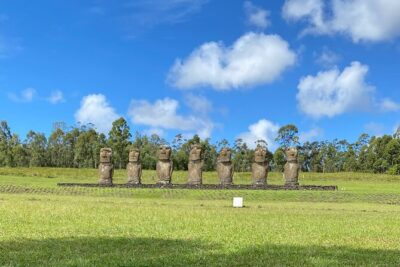
Browse the lists this tour appears in