
Reviewed · EASTER ISLAND TOURS
Birdman Cult and Caves
Easter Island rewards a full day of looking closer. I like the way this six-hour route links moai platforms, a volcanic crater, caves, and the Birdman ceremonial village instead of treating each site as a separate stop. I also like the focus on native guides and local culture, which can add meaning to places that might otherwise look like stones and grass.
The main concern is guide quality. The experience has a listed score of 4 out of 5 from five ratings, but one 3 out of 5 assessment called the guide bad. The national park ticket is also not included, so the $90 price is not the complete cost of the day.
In This Review
- Key points at a glance
- Why this route gives you a broad view of Rapa Nui
- Ahu Akivi and the meaning of seven moai
- Ana Te Pahu, a cave with a ceremonial past
- Puna Pau and the red stone topknots
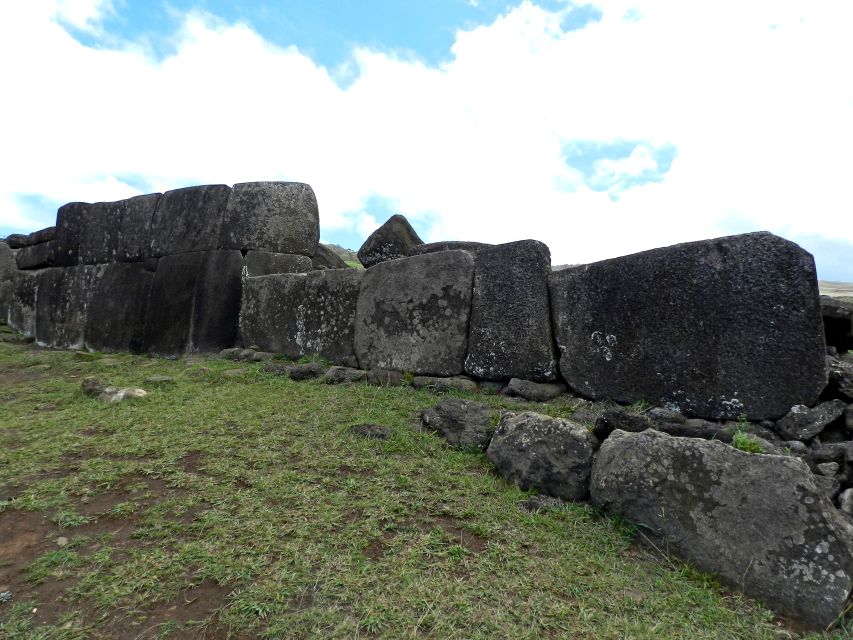
- Vinapu and the island’s debated stonework
- Rano Kau, a crater that changes the pace
- Orongo and the Birdman cult
- What the $90 price includes
- Language, access, and the guide question
- Who should book this six-hour outing?
- Should you book Birdman Cult and Caves?
- FAQ
- How long does Birdman Cult and Caves last?
- What sites are included?
- Is the national park ticket included?
- Is transportation provided?
- What languages are available?
- Is the tour wheelchair accessible?
- Can I cancel for a full refund?
Key points at a glance
- Seven moai at Ahu Akivi: Learn about the platform’s unusual celestial orientation and the island’s moai tradition.
- Ana Te Pahu cave: See a ceremonial site with petroglyphs and paintings connected to Rapa Nui customs.
- Puna Pau’s red scoria: Understand where many moai topknots came from and why these stone additions mattered.
- Vinapu’s precise masonry: Examine large fitted stones and the site’s often-discussed similarities to South American construction.
- Rano Kau and Orongo: Finish with a volcanic crater, Pacific views, and the Birdman cult’s ceremonial center.
- Useful six-hour format: Transportation, pickup, drop-off, and a live guide in English or Spanish are included, but the park ticket is extra.
Why this route gives you a broad view of Rapa Nui
Many Easter Island outings focus almost entirely on the moai. This one gives you a wider look at how people, stone, volcanoes, caves, and ceremony fit together. You move from a moai platform to a cave, then to a quarry, a ceremonial sector, a crater, and finally Orongo.
That order matters. At Ahu Akivi, you begin with the island’s most famous cultural symbol. At Puna Pau, you see one part of the production process. At Vinapu, you consider the island’s stonework from another angle. Rano Kau and Orongo then shift the focus from moai building to ritual and political life.
I would choose this outing if you want a first substantial introduction to Easter Island rather than a short visit to one famous monument. Six hours is long enough to create a clear sense of the island’s range, though it also means you should be ready for a full half-day of sightseeing.
The experience is listed in the Valparaiso Region, while the itinerary itself is clearly for Easter Island, also called Rapa Nui. Check the meeting details carefully before paying, especially if the booking page displays a general Chile location rather than a precise island address.
A few more Easter Island trips worth weighing up
- From Hanga Roa: Rapa Nui Culture Sightseeing Tour
★ 4.6 · 307 reviews - From Hanga Roa: Easter Island Highlights 2-Day Tour
★ 4.3 · 205 reviews - From Hanga Roa: Easter Island Sightseeing Full Day Tour
★ 4.5 · 189 reviews
Ahu Akivi and the meaning of seven moai
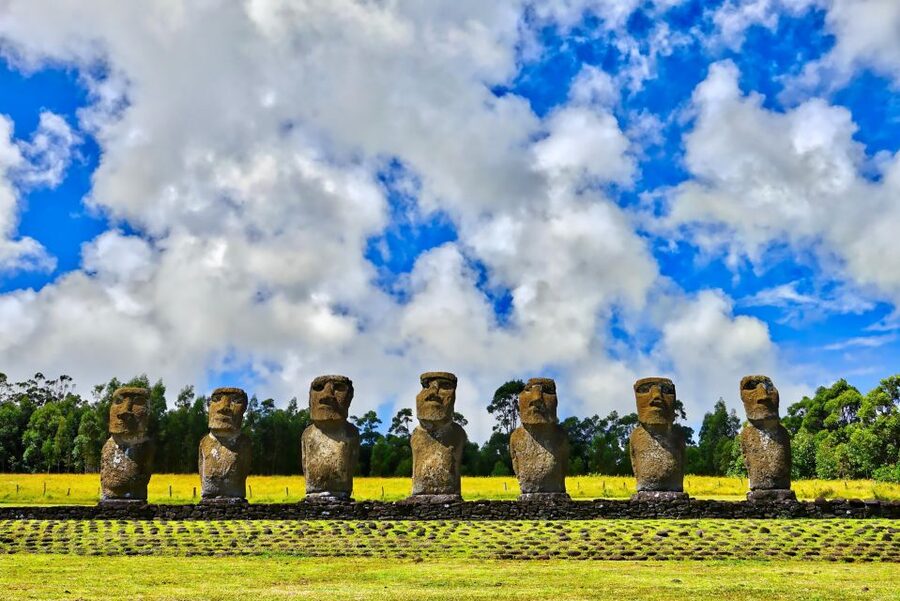
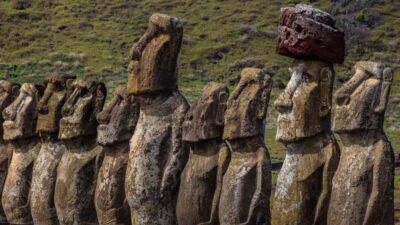
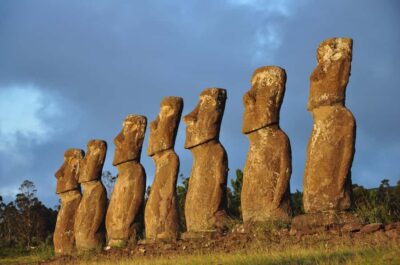
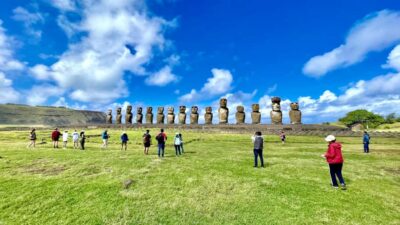
Ahu Akivi opens the cultural side of the day with a platform carrying seven moai. The site is useful for understanding that these statues were not simply placed at random. The guide explains their orientation and the connection between the platform and the sky.
That detail gives you a better starting point than simply taking photographs. You can look at the statues as part of a planned ceremonial setting, not only as giant stone figures. The stop also introduces the questions that shape the rest of the tour: How were the statues made? Why were they positioned in particular places? What did they mean to the people who built them?
The supplied information does not give a precise amount of time at Ahu Akivi, so you should not expect a guaranteed long photo session. The guide’s explanations will be especially important here. If the commentary is strong, this can be one of the most useful stops because it provides the basic context for the later quarries and ceremonial sites.
Ana Te Pahu, a cave with a ceremonial past
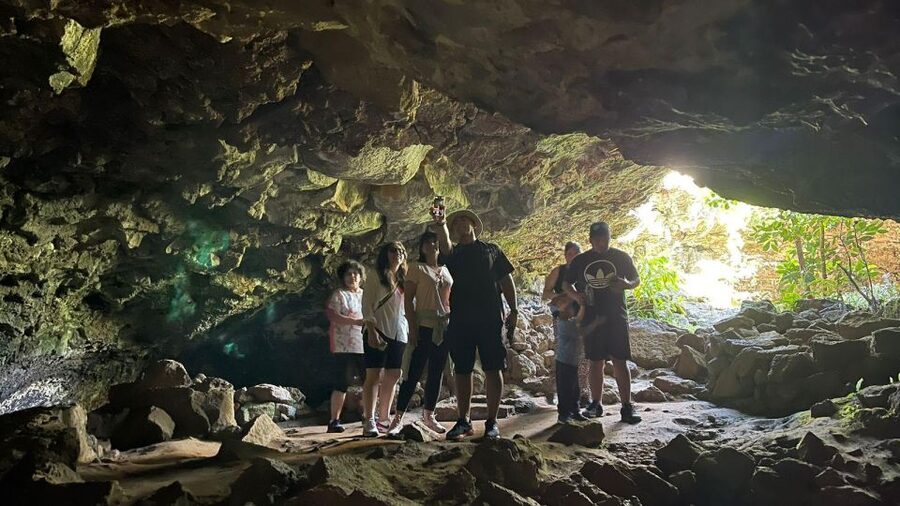
Ana Te Pahu brings you into a very different setting. This cave lies on the slopes of Rano Kau and is described as a ceremonial site with petroglyphs and paintings.
Caves on Rapa Nui add a more intimate side to the island’s past. Instead of looking across an open field at a monumental platform, you encounter a place shaped by rock, shadow, and human marking. The petroglyphs and paintings connect the physical site with local traditions and ritual practice.
You should listen closely here, since the meaning of the markings may not be obvious from a quick look. The quality of the guide can make a large difference. One weak point in the feedback specifically concerns the guide, and Ana Te Pahu is the sort of place where limited explanation would leave you with only a dark cave and a few visible marks.
The provided details do not promise a particular amount of walking inside the cave or describe the exact condition underfoot. If mobility is a concern, the tour is listed as wheelchair accessible, but you should still confirm how that applies to the cave portion before booking. Accessibility at a natural site can depend on the route used that day.
Puna Pau and the red stone topknots
At Puna Pau, the subject changes from moai bodies to the distinctive red scoria topknots placed on many of them. The quarry shows that different parts of the statues were connected with different sources of stone and different stages of craftsmanship.
This is an important stop because the topknots can look like a small decorative detail when you see a finished moai. Here, you learn that the red stone had its own quarry and symbolic role. The stop helps you notice the technical skill behind the statues, including the work needed to shape and move large stone elements.
I like this part of the route because it adds a practical question to the familiar moai story: how did the island’s builders manage such demanding materials? The available information does not state how close you get to individual quarry features or how much walking is involved, so expect interpretation rather than a detailed hands-on demonstration.
Puna Pau also helps break up the day. After a platform and a cave, the quarry gives you another way to read the island’s monuments. It is less about a single iconic view and more about understanding how the pieces were made.
A completely different sort of day out of Easter Island:
- Full day tour – DREAM
★ 5.0 · 86 reviews - From Hanga Roa: Journey from Orongo to Ana Te Pahu
★ 4.3 · 75 reviews - Rapa Nui Stargazing
★ 4.5 · 62 reviews - Two days of Full Day Tour of Rapa Nui + Sunrise in Tongariki
★ 4.8 · 55 reviews
Vinapu and the island’s debated stonework
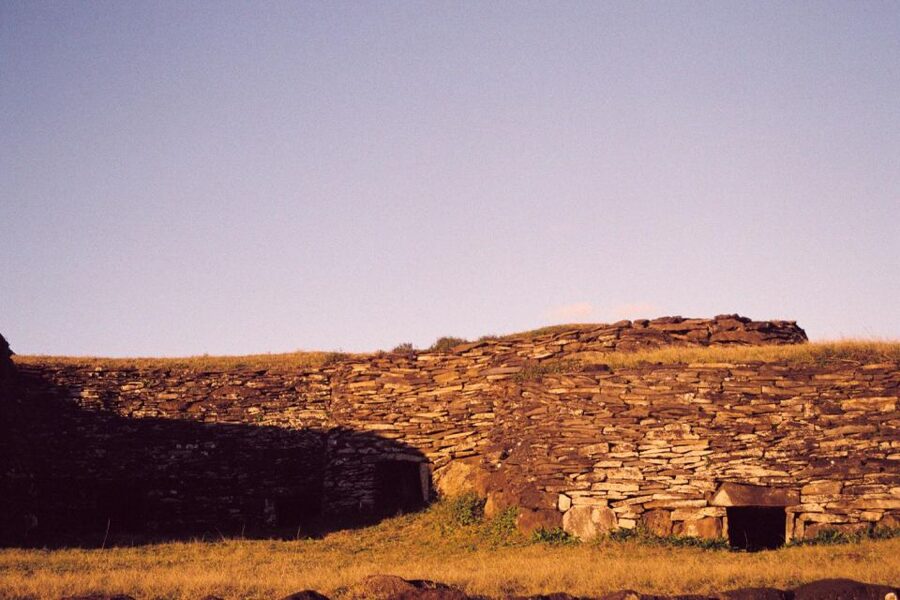
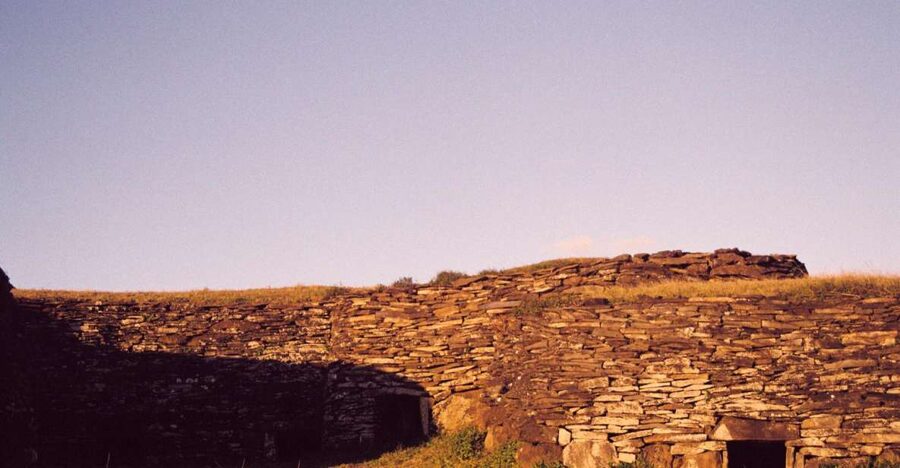
Vinapu is presented as a place where precision and artistry meet. Its large stone construction has been compared with South American structures, including those associated with Cuzco.
The comparison is useful, but it should be handled carefully. The tour description says the similarities may make you think about links and influences. That does not mean the site provides a simple answer about direct contact or shared builders. You should treat the comparison as a question to consider, not as a settled conclusion.
This is one of the better places to pay attention to the actual masonry. Look for the way large stones meet and how their surfaces were shaped. The interest comes from the workmanship itself, as well as from the wider discussion about how Rapa Nui fits into the story of the Pacific and South America.
For me, Vinapu adds intellectual variety. The day is not only about admiring statues or views. It also asks you to compare building methods and think about how ideas may have moved across the ocean. A good English or Spanish-speaking guide should make that discussion clear without turning it into an overconfident claim.
Rano Kau, a crater that changes the pace
Rano Kau offers a natural pause after several cultural sites. This large volcanic crater has broad views and its own unusual ecosystems, giving you a chance to consider the island’s geological origins.
The crater is not merely a scenic stop. It explains the volcanic foundation beneath the ceremonial sites and gives you a different sense of Rapa Nui’s scale. From here, the island’s connection to the Pacific becomes easier to feel. You are no longer looking only at carved stone. You are looking across a massive natural formation shaped by volcanic activity.
The tour description promises panoramic views, but it does not specify weather conditions, visibility, or the exact lookout used. On a cloudy day, the view may be less dramatic. Even so, the crater remains valuable because it connects the island’s natural setting with the human activity that follows at Orongo.
I would save a little energy for this section. Six hours can pass quickly when every stop carries cultural meaning, and Rano Kau is the point where you may want time to slow down and look around rather than hurry to the next explanation.
Orongo and the Birdman cult
The final stop, Orongo, is the emotional center of the tour. The ceremonial village sits on the rim of Rano Kau, with the Pacific spread out beyond it. Here, the focus turns to the Birdman cult, its rituals, its carved imagery, and the village connected with those ceremonies.
Orongo shows how location shaped belief. The village’s position beside the crater and above the sea is not incidental. The setting forms part of the experience, and the site’s petroglyphs help connect ritual practice with birds, authority, and the natural world.
This is where the day’s separate subjects come together. The earlier stops introduced moai culture, caves, stone quarries, and volcanic geology. Orongo shows a different chapter of Rapa Nui society, one centered on ceremony and competition rather than only on statue building.
The views should be one of the strongest visual rewards of the outing, but the setting also deserves quiet attention. If your guide explains the Birdman cult well, you will leave with a more complete understanding of Easter Island’s past. If the commentary is thin, Orongo can still impress you, but much of its meaning may remain out of reach.
What the $90 price includes
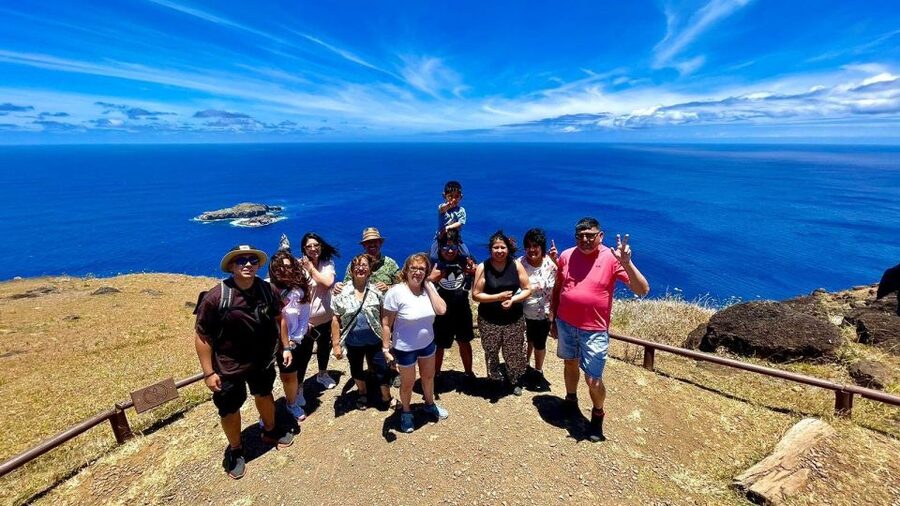
At $90 per person, the cost is reasonable if you want transportation, pickup, drop-off, and a live local guide bundled into one half-day outing. Getting between Ahu Akivi, Ana Te Pahu, Puna Pau, Vinapu, Rano Kau, and Orongo would be difficult to organize efficiently without transport.
The value depends heavily on the guide. This is not a tour where transportation alone makes the experience. The sites need context, especially Ana Te Pahu, Vinapu, and Orongo. A strong guide turns the route into a connected story. A poor one leaves you paying mainly for a vehicle and access to places you may not fully understand.
Remember to add the national park ticket to your budget. It is not included, and the tour provider does not sell it. Since no ticket price is supplied here, check the current amount before booking.
The reserve-now, pay-later option can help if your schedule is still changing. Free cancellation is available up to 24 hours before the activity for a full refund. Starting times vary, so check availability rather than assuming a fixed departure.
Language, access, and the guide question
The tour has a live guide in English or Spanish. That gives you a practical choice, but you should select the language in which you can comfortably follow cultural and archaeological explanations. The most important information is not just the names of the sites. It is the connection between them.
The experience is listed as wheelchair accessible. That is helpful, but the itinerary includes a natural cave, volcanic terrain, and outdoor archaeological sites. The supplied details do not explain the exact accessible route at each stop, so contact the provider if you need specific information about surfaces, entrances, or vehicle access.
Hotumatur Rapa Nui is the experience provider. No guide names are supplied, so you cannot request a particular guide based on the available information. Because one rating directly criticized the guide, I would make guide quality part of your decision rather than treating it as a minor detail.
You can improve your odds of a good outing by choosing the language you understand best and arriving ready with questions. Ask about the celestial orientation at Ahu Akivi, the purpose of the Ana Te Pahu markings, the red scoria at Puna Pau, the evidence behind the Vinapu comparison, and the ceremonies at Orongo.
Who should book this six-hour outing?
I think this tour suits you if you want a broad cultural introduction to Easter Island in one organized day. It is especially useful if you have limited time and want more than a single moai platform or a basic scenic drive.
You will probably appreciate it most if you enjoy asking how places worked, not just photographing them. The route covers stone production, ceremonial use, volcanic geology, and the Birdman cult, so it offers more variety than a tour focused only on statues.
It may be less suitable if you prefer a slow visit to one or two sites. Six stops in six hours creates a full schedule, and the supplied details do not promise long stays at each location. It may also disappoint you if you expect a guide with consistently strong commentary, since one piece of feedback raises a clear concern.
The tour is also a reasonable choice for visitors who want an organized vehicle and local interpretation rather than arranging transport themselves. Just remember that the national park ticket costs extra and that the listed location should be checked carefully because the itinerary is for Easter Island.
Should you book Birdman Cult and Caves?
Book it if you want a wide-ranging first look at Rapa Nui and value having transport and a local guide handle six major cultural and natural sites. Ahu Akivi, Puna Pau, Vinapu, Rano Kau, and Orongo create a strong route, while Ana Te Pahu adds a quieter and more unusual stop.
I would book with two conditions: confirm the exact pickup details and budget for the separate national park ticket. I would also keep expectations realistic about guiding. The route is excellent on paper, but the quality of the explanation will determine how much you take away from it. If those points work for you, $90 is fair value for a six-hour introduction to Easter Island’s moai, caves, volcanoes, and Birdman traditions.
FAQ
How long does Birdman Cult and Caves last?
The tour lasts six hours. Starting times vary, so you need to check availability for the date you want.
What sites are included?
The route includes Ahu Akivi, Ana Te Pahu, Puna Pau, Vinapu, Rano Kau, and Orongo.
Is the national park ticket included?
No. The national park ticket is not included, and the provider does not sell it.
Is transportation provided?
Yes. Transportation, pickup, and drop-off are included.
What languages are available?
A live guide is available in English or Spanish.
Is the tour wheelchair accessible?
The experience is listed as wheelchair accessible. The supplied information does not give detailed access conditions for each site, including the cave.
Can I cancel for a full refund?
Yes. You can cancel up to 24 hours in advance for a full refund. You can also reserve now and pay later.
Just added around Easter Island
- Easter Island: 2 Full Days Private Tour★ 3.9 · 3 reviews
- Easter Island: Full Day Ancestral Caves and Orongo Village★ 5.0 · 3 reviews
- Easter Island: Customized recreational-tourist diving★ 5.0 · 3 reviews
- Ancestral fishing: Fishing with an experienced Rapa Nui★ 4.4 · 3 reviews
- Easter Island: Moai Full Day Private Tour★ 4.8 · 5 reviews
- Rapa Nui: Polynesian Massage★ 4.8 · 5 reviews
- Rapa Nui: 3 Excursions with Hotel Transfers★ 4.3 · 6 reviews
- Volcanic Refuges: Excursion to Underground Civilization★ 4.7 · 8 reviews
Easter Island Tours, compared.
Two days of Full Day Tour of Rapa Nui + Sunrise in Tongariki
Read our review →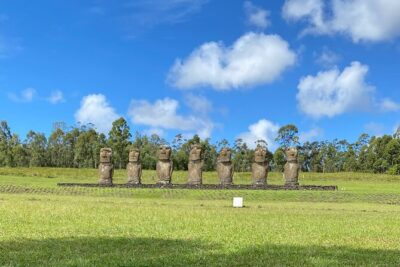
Browse the lists this tour appears in