
Reviewed · EASTER ISLAND TOURS
From Hanga Roa: Easter Island Highlights 2-Day Tour
Moai are only the beginning. This two-day tour gives you a broad, well-planned look at Rapa Nui, from toppled statues and volcanic quarries to caves, beaches, and sacred villages. I especially like the local guides, who explain both archaeology and present-day island life, and the small groups, capped at 14 people. The main tradeoff is that the two days are not perfectly even: day one feels spacious, while day two can be shorter and rushed.
At $170 per person, this is a strong-value way to see the island’s major sites if you are visiting for the first time. The national park setting makes a guide especially useful, and several sites are best understood with local context. Bring sun protection, water, and substantial snacks, since lunch is not included and the second day may offer no proper meal stop.
In This Review
- Key points to know before booking
- Why two days works well on Rapa Nui
- Day one: from Vaihu to Anakena
- Vaihu and Akahanga: moai in repose
- Rano Raraku: the workshop behind the statues
- Tongariki: fifteen statues facing inland
- Te Pito Kura and Anakena: sacred stone and a beach finish
- Day two: Orongo, Vinapu, and Puna Pau
- Orongo and Rano Kau: ceremony above the crater
- Vinapu: precise stonework and careful interpretation
- Puna Pau: where the red topknots came from
- Ana Te Pahu and Ahu Akivi
- Ana Te Pahu: a cooler, more hidden side of the island
- Ahu Akivi: seven moai with an unusual view
- Guides who add more than facts
- What the $170 price really covers
- What to pack for two full sightseeing days
- Who should book this tour?
- FAQ
- How long is the tour?
- What languages are available?
- How many people are in the group?
- Is transportation included?
- Are meals included?
- Are entrance fees included?
- Is the tour suitable for wheelchair users?
- Can I bring a drone?
- Should you book the Rapa Nui two-day tour?
Key points to know before booking
- Local voices make the moai easier to understand: Guides such as Jeremías, Javier’s Hucke, Enerike Hey, Zoe, Roberto, Simon, and Franko bring archaeology, family tradition, songs, and modern island life into the commentary.
- Day one covers the classic eastern and southern route: Vaihu, Akahanga, Rano Raraku, Tongariki, Te Pito Kura, and Anakena are the main attractions.
- Day two adds the island’s volcanic, ceremonial, and cave sites: Orongo, Vinapu, Puna Pau, Ana Te Pahu, and Ahu Akivi fill in much of the larger story.
- Lunch and entrance fees are extra: You have freedom to choose your food, but you need to budget for park admission and carry snacks.
- The group size is manageable: The minibus holds no more than 14 participants, though pickup can take time when the vehicle is full.
- Plan for sun and changing weather: Rain capes and cave lanterns are supplied, but you should still pack sunscreen, a hat, and sturdy walking shoes.
Why two days works well on Rapa Nui
Rapa Nui is easy to underestimate. On a map, the island looks small, but its important sites are spread around the coast and across the interior. A rental motorcycle or car can show you the basic shape of the island, yet a guide gives meaning to what can otherwise look like a field of stones and scattered statues.
This tour divides the sightseeing across two days. The first day is the big moai circuit, with the most famous platforms and the quarry that produced many of the statues. The second day shifts toward ceremonial sites, stonework, caves, and the unusual placement of the seven moai at Ahu Akivi.
I like this structure because it gives you time to see the major places without trying to cram the entire island into one very long outing. You are picked up at your accommodation and ride in a spacious minibus, so you do not need to worry about directions or rougher island roads.
The small-group format is another real advantage. With up to 14 people, you can usually hear the guide and ask questions without the outing feeling like a large coach excursion. Group size does affect the morning, though. One full vehicle took almost an hour and a half to collect everyone, so do not assume your pickup will happen at the first stated minute.
A few more Easter Island trips worth weighing up
- Two days of Full Day Tour of Rapa Nui + Sunrise in Tongariki
★ 4.8 · 55 reviews - Santiago: 2-Day Hop-On Hop-Off Bus Ticket and Cable Car
★ 4.3 · 162 reviews - 2 Days in Patagonia. Torres del Paine and Balmaceda and Serrano Glacier.
★ 4.1 · 4 reviews
Day one: from Vaihu to Anakena
Vaihu and Akahanga: moai in repose
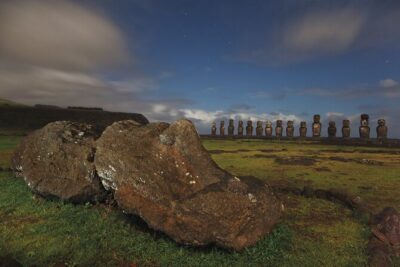
Vaihu is a striking first stop because the statues are not presented in their original upright positions. Here, the remains of the ceremonial platform and fallen moai show the island after the collapse of its old statue culture. The scene feels quiet and severe, with the Pacific nearby and the figures lying where they fell.
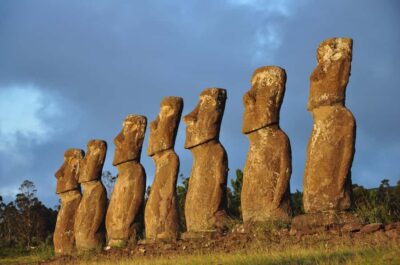
Akahanga adds another layer. It is an archaeological site where toppled moai remain among the stones of an old settlement and ceremonial area. Your guide can help you picture the original arrangement and explain how the island’s social and religious life was tied to these platforms.
These early stops are valuable because they prevent the tour from becoming a simple parade of upright statues. You see damage, abandonment, and change, not just polished monuments. I would pay close attention to the guide here, since the physical remains alone do not tell the whole story.
Rano Raraku: the workshop behind the statues
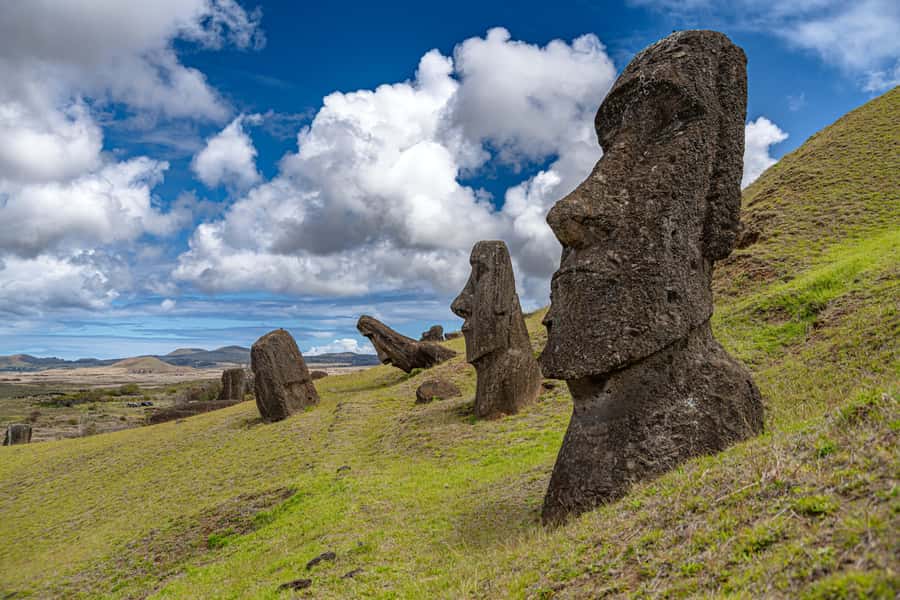
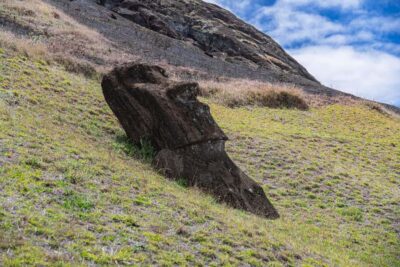
Rano Raraku is the essential stop of day one. This volcanic quarry is where many moai were cut from hardened volcanic ash, and the hillsides still hold unfinished or partly buried figures. It is one of the few places where you can see the statues at different stages of production.
The quarry changes your understanding of the moai. Instead of imagining each statue appearing fully formed at its final platform, you can see the work involved in shaping huge bodies from the rock. Some figures remain attached to the quarry wall, while others sit in the surrounding slopes.
This stop can take time, and the ground is exposed to the sun. Wear a hat and use plenty of sunscreen. One practical note comes from the meal schedule: there may be a café stop near the quarry, but it can be busy. If the group moves on rather than waiting, you may not eat until Anakena, so keep a filling snack in your day bag.
A completely different sort of day out of Easter Island:
- From Hanga Roa: Rapa Nui Culture Sightseeing Tour
★ 4.6 · 307 reviews - From Hanga Roa: Easter Island Sightseeing Full Day Tour
★ 4.5 · 189 reviews - Full day tour – DREAM
★ 5.0 · 86 reviews - From Hanga Roa: Journey from Orongo to Ana Te Pahu
★ 4.3 · 75 reviews
Tongariki: fifteen statues facing inland
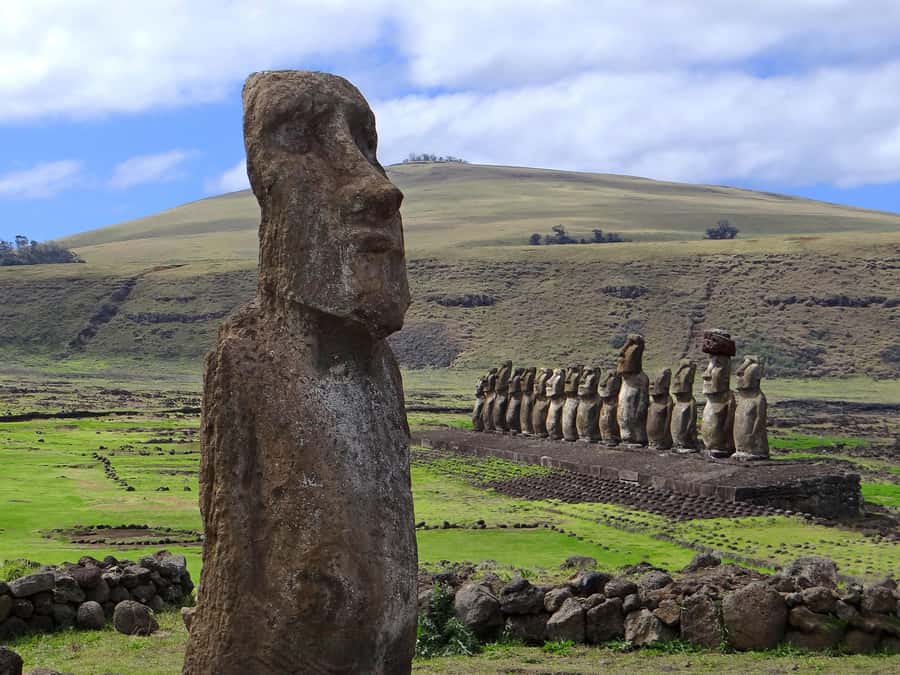
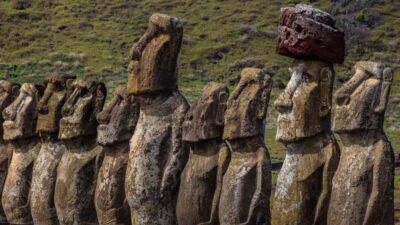
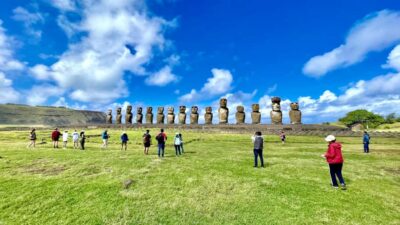
Ahu Tongariki is the visual centerpiece for many people. Its platform carries 15 moai, lined up in a powerful row against the open countryside. The scale is hard to grasp until you are standing in front of it.
Your guide can point out differences in size, posture, and restoration. The site also gives you a sense of how carefully the moai were arranged, rather than scattered at random. Allow yourself a quiet moment here. The broad view and the ordered row do much of the work.
Tongariki can feel like a photography stop, but it rewards more than a quick picture. Listen for the explanation of the ahu, the ceremonial platform, and the way the statues relate to the communities that built them.
Te Pito Kura and Anakena: sacred stone and a beach finish
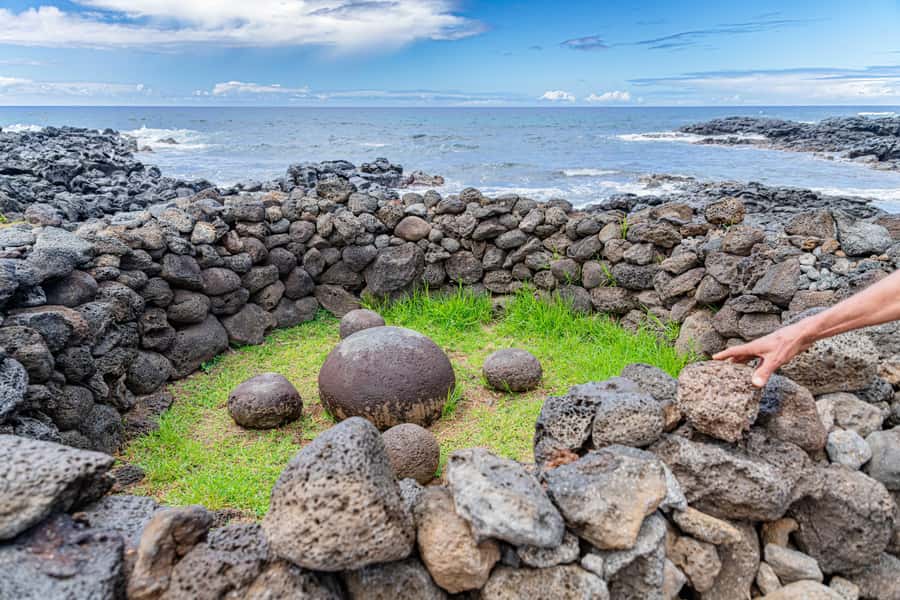
Te Pito Kura brings you to another important moai site, along with legends tied to a sacred stone. It is a smaller and more symbolic stop than Tongariki, but that contrast is useful. Rapa Nui’s ancient places are not all monumental plazas. Some carry importance through stories, ritual, and local belief.
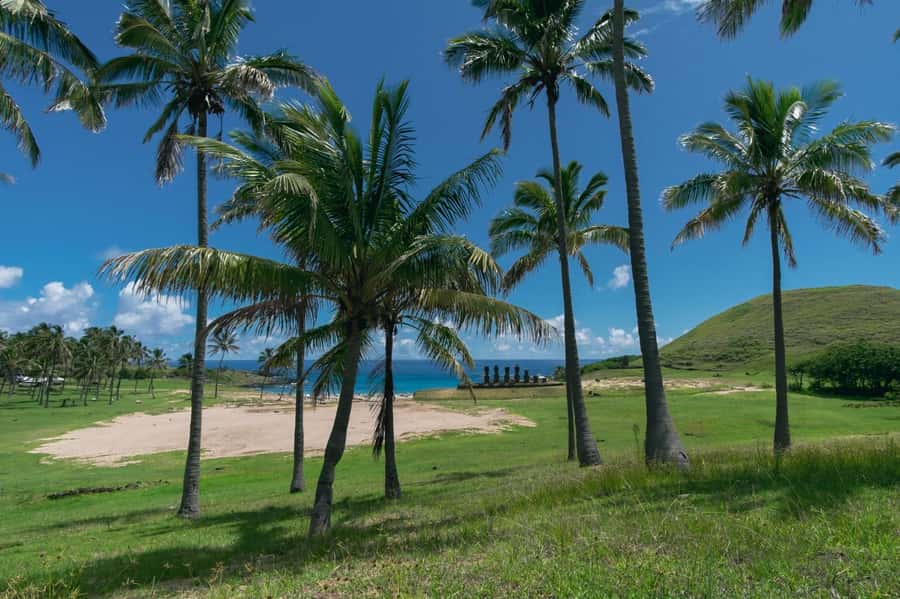
Anakena changes the mood completely. Palm trees, sand, the Pacific, and ancient moai make this one of the island’s most appealing settings. It is also where the day may finish, and a long stop here can provide a welcome chance to rest after several hours in direct sun.
Do not count on a normal lunch hour. One schedule placed the meal at about 4:30 in the afternoon after the group continued through the quarry. If you need regular meals, pack something substantial rather than relying on the available café.
Day two: Orongo, Vinapu, and Puna Pau
Orongo and Rano Kau: ceremony above the crater
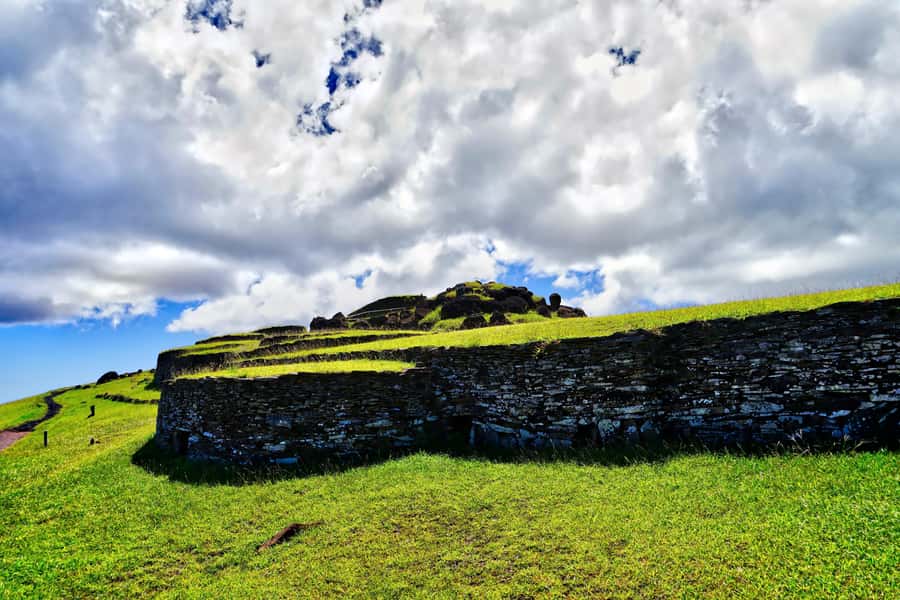
Orongo is one of the most memorable sites on the island. The ceremonial village sits near the cliffs of Rano Kau, with wide views over the volcanic crater and the sea. The setting alone is impressive, but the guide’s explanation is what makes the place meaningful.
The village is connected with the birdman tradition, an important chapter in Rapa Nui ceremonial life. Stone houses, cliffs, crater views, and offshore islets combine into one of the tour’s strongest stops.
Several schedules place Orongo at the end of the second day, while the described route begins there. That tells you something useful: the exact order may vary. Either way, make sure you have enough time at Orongo. It is the sort of site that deserves more than a quick walk from the minibus to the viewpoint.
Vinapu: precise stonework and careful interpretation
Vinapu is known for its large fitted stones and the close joins between them. The masonry has prompted comparisons with construction in parts of South America, and it has also fueled theories about links between distant cultures.
This is where a good guide earns the price of the tour. You can admire the stonework on your own, but you need help separating established evidence from speculation. Guides explain the competing ideas without reducing the site to a simple mystery story.
The stop also offers a useful reminder that Rapa Nui achievement was not limited to carving moai. The island’s builders handled enormous stones with care and purpose, creating ceremonial structures that remain impressive even after centuries of exposure.
Puna Pau: where the red topknots came from
Puna Pau is a red scoria quarry. It supplied the cylindrical topknots, or pukao, placed on some moai. The red stone gives the quarry a different look from Rano Raraku and shows that several stages of statue production took place in separate parts of the island.
I enjoy this stop because it fills in a detail that is easy to miss. The moai are not simply large heads with decorative caps. The topknots were substantial pieces, made from another material and transported to the platforms.
The site is also a reminder to look closely at the statues when you visit other ahu. Once you know where the red scoria came from, those caps become part of the engineering story rather than an afterthought.
Ana Te Pahu and Ahu Akivi
Ana Te Pahu: a cooler, more hidden side of the island
Ana Te Pahu is a cave system with chambers and links to earlier island life. Lanterns are provided, which is a practical touch and makes it easier to move through the darker sections. The cave visit adds variety after so many open-air archaeological sites.
This part of the tour requires sensible footwear and care with your footing. The cave is not just a quick photo stop. It offers a glimpse of how volcanic formations could provide shelter and private spaces away from the ceremonial platforms.
Rain can sometimes change the feel of a day on Rapa Nui. One guide, Zoe, adapted the schedule during wet weather and led the group into caves away from the usual path. That kind of flexibility can turn poor conditions into one of the more memorable parts of the outing.
Ahu Akivi: seven moai with an unusual view
Ahu Akivi is famous for its seven moai, positioned to look toward the ocean. That placement differs from the more common arrangement of moai facing inland toward their communities.
The site is a good final lesson in how much variety exists among Rapa Nui’s statues. You have already seen fallen figures, quarry statues, a row of 15, and statues beside a beach. At Ahu Akivi, the orientation itself becomes the main point.
The second day may end around 3 p.m., and the schedule can feel compressed, especially when commentary is given in both English and Spanish. One bilingual guide may explain each point twice, which is useful for a mixed group but can reduce your time at the sites if you speak only one language.
Guides who add more than facts
The strongest part of this experience is the human element. Guides such as Jeremías explain moai theories, island culture, and daily life in clear detail. Enerike Hey brings visible pride in Rapa Nui and its past, while Zoe connects historical information with family tradition and personal experience.
Roberto has also been praised for adding songs and ukulele music at different stops. Those moments can make the tour feel less like a sequence of museum labels and more like a meeting with a living culture.
Guides may change between the two days. That is normal for this format, but it means the tone and language balance can shift. If your group includes English and Spanish speakers, expect repeated explanations. I would see this as a fair trade for access to local guides, but English-only participants should know that day two may not be purely in English.
The best guides also adjust to real conditions. Rain, delays, group needs, and meal timing can force changes. A guide who explains the change and keeps the day moving is worth far more than one who follows a printed schedule rigidly.
What the $170 price really covers
At $170 per person for two days, the tour offers good value if you want an organized introduction to Rapa Nui. You receive accommodation pickup, minibus transport, a small group, live guiding in English or Spanish, cave lanterns, and rain capes.
The biggest value is access to interpretation across a wide set of sites. You could rent a motorcycle and visit places independently, and that can be enjoyable. But a self-guided day may leave you without the background needed to understand why a fallen moai matters, how Puna Pau relates to the statues, or why Ahu Akivi is unusual.
You still need to pay site entrance fees separately. Lunch is also excluded, so add both costs to your planning. The flexible meal arrangement has one benefit: you can choose local food or bring a picnic. The drawback is that meal timing may be late or limited, especially on day two.
Free cancellation up to 24 hours before the start and a reserve-now, pay-later option make the booking less rigid. The tour is listed as wheelchair accessible, though the cave and outdoor archaeological terrain may still require you to confirm what level of access you need.
What to pack for two full sightseeing days
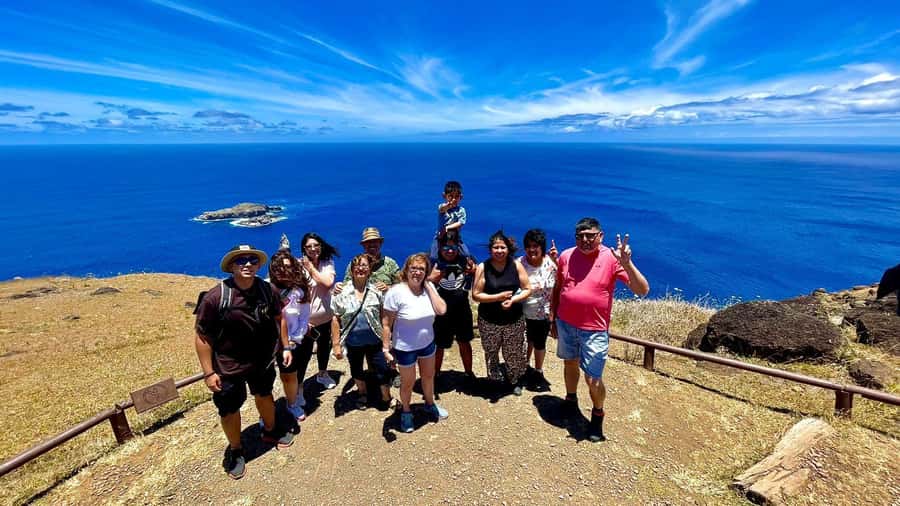
Rapa Nui can expose you to strong sun for long periods. Pack sunscreen, a hat, sunglasses, water, and snacks that will not suffer in your bag.
A rain cape is supplied, but a light waterproof layer may still be useful. The island’s weather can change, and wet ground may make outdoor walking less comfortable.
Wear shoes with a firm sole for the quarry, cave areas, and uneven archaeological ground. Drones are not allowed, so leave yours at home.
If you want to eat at a café, carry some backup food anyway. Day one may have a late meal at Anakena, while day two may run until the end of the route without a proper lunch stop.
Who should book this tour?
I would choose this tour if you are visiting Rapa Nui for the first time, have only two days for sightseeing, or want local explanation rather than a drive-by tour. It suits people who value cultural context, historic sites, and a practical route more than private touring.
It is also a good choice if you do not want to arrange transport around the island. The minibus and accommodation pickup remove much of the logistical work, while a group limit of 14 keeps the experience reasonably personal.
You may prefer to arrange your own days if you need a completely private schedule, speak only English and dislike bilingual commentary, or want to linger for hours at one site. A motorcycle or car can give you more control, but it will not replace the local stories and archaeological guidance.
FAQ
How long is the tour?
The experience lasts two days. Starting times vary, so you need to check availability when booking.
What languages are available?
Live guiding is available in English and Spanish. Mixed-language groups may receive commentary in both languages.
How many people are in the group?
The tour is limited to 14 participants. Pickup may take longer when the vehicle is close to full.
Is transportation included?
Yes. Pickup is provided directly from your accommodation, and transport is by spacious minibus.
Are meals included?
No. Lunch is not included. The route includes opportunities to stop for food, but you should carry snacks because meal times and availability can vary.
Are entrance fees included?
No. Entrance fees for the sites are separate from the tour price.
Is the tour suitable for wheelchair users?
The activity is listed as wheelchair accessible. Because some locations include outdoor archaeological ground and a cave visit, confirm the specific access requirements before booking.
Can I bring a drone?
No. Drones are not allowed on this experience.
Should you book the Rapa Nui two-day tour?
Book it if you want the broadest useful introduction to the island in a short stay. The combination of Rano Raraku, Tongariki, Anakena, Orongo, Vinapu, Ana Te Pahu, and Ahu Akivi gives you far more than a quick moai checklist.
The tour’s real strength is its local guiding. Names and schedules can change, but the best guides bring archaeology, island traditions, songs, and modern life into the same conversation. Pack food, expect some bilingual commentary, protect yourself from the sun, and budget separately for entrance fees. With those details handled, $170 is a sensible price for two days of well-organized sightseeing on Rapa Nui.
Just added around Easter Island
- Easter Island: 2 Full Days Private Tour★ 3.9 · 3 reviews
- Easter Island: Full Day Ancestral Caves and Orongo Village★ 5.0 · 3 reviews
- Easter Island: Customized recreational-tourist diving★ 5.0 · 3 reviews
- Ancestral fishing: Fishing with an experienced Rapa Nui★ 4.4 · 3 reviews
- Birdman Cult and Caves★ 4.0 · 5 reviews
- Easter Island: Moai Full Day Private Tour★ 4.8 · 5 reviews
- Rapa Nui: Polynesian Massage★ 4.8 · 5 reviews
- Rapa Nui: 3 Excursions with Hotel Transfers★ 4.3 · 6 reviews
Easter Island Tours, compared.
Two days of Full Day Tour of Rapa Nui + Sunrise in Tongariki
Read our review →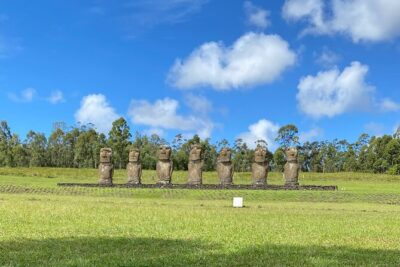
Browse the lists this tour appears in