
Reviewed · ATACAMA STARGAZING & ASTRONOMY TOURS
Rapa Nui Stargazing
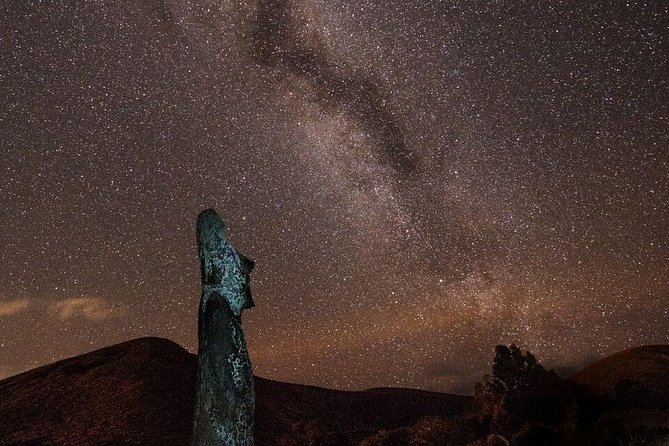
The stars here feel startlingly close. Rapa Nui Stargazing pairs a dark-sky telescope session with special nighttime access near Anakena Beach, where you can see the Moai under the southern sky and learn how Polynesian navigators read the heavens. I especially like the small groups, limited to 12 people, and the local guides who connect astronomy with Rapa Nui culture.
I also like the thoughtful finish: hot chocolate, local cake, and photographs near the Moai. The main drawback is weather. This outing can be canceled with little notice, sometimes only an hour or two before departure, and a clear sky in Hanga Roa does not guarantee good conditions near Anakena.
- Special night access: The final stop includes access to Ahu Nau near Anakena Beach after dark.
- Small groups: A maximum of 12 people makes telescope viewing and questions easier.
- More than stargazing: Guides explain Polynesian navigation and the role of stars in ocean travel.
- Telescope highlights: Past outings have included views of Jupiter, Saturn, the Moon, star clusters, the Milky Way, and the Horsehead Nebula.
- A warm finish: Hot chocolate and local cake are included, with souvenir photographs available to buy.
- Plan around the weather: Booking early in your stay gives you a better chance to reschedule if clouds or wind cancel the tour.
In This Review
- Why Easter Island Is a Fine Place for Stargazing
- Meeting at Katipare Library in Hanga Roa
- A Remote Telescope Site Far From Hanga Roa Lights
- Polynesian Navigation Makes the Tour More Than a Telescope Visit
- Anakena Beach and Ahu Nau After Dark
- Hot Chocolate, Local Cake, and a Late Return
- Is $140 a Fair Price?
- Weather and Moonlight Are the Main Risks
- Who Will Enjoy This Most?
- My Practical Tips for a Better Night
- Should You Book Rapa Nui Stargazing?
- FAQ
- Where does Rapa Nui Stargazing meet?
- Is hotel pickup included?
- How long does the tour last?
- What time does the tour start?
- How many people can join the tour?
- What is included in the price?
- Are souvenir photos included?
- Can the tour be canceled because of weather?
- What happens if I need to cancel my booking?
Why Easter Island Is a Fine Place for Stargazing
Rapa Nui sits far from the bright city skies that wash out stars in much of the world. Away from Hanga Roa, the night can become wonderfully dark, allowing the Milky Way and southern-sky objects to show more clearly.
That darkness is only part of the appeal. Rapa Nui is also a place where astronomy carries cultural weight. The guides explain how Polynesian navigators used stars, horizons, and ocean knowledge to move across the Pacific. You are not simply looking through a telescope at bright objects. You are learning how the sky helped people find islands across a huge ocean.
The setting gives the experience a strong sense of place. Looking at Saturn or a star cluster is enjoyable anywhere, but doing it on Easter Island, then seeing Moai at Anakena under the stars, adds a memorable local connection.
Still, this is not an observatory with a roof, fixed equipment, and perfect conditions every night. Clouds, rain, wind, and moonlight matter. The company also does not operate close to full moon dates because bright moonlight hides many stars. I would treat the tour as a special opportunity, not a guaranteed astronomy show.
Meeting at Katipare Library in Hanga Roa
You meet in front of the Katipare library, also called Centro Lector Katipare, in Hanga Roa. Hotel pickup is not included, so you need to make your own way to the meeting point.
The listed start time is 8:00 p.m., but the actual departure window varies by season and operating conditions. Summer departures are listed at 8:00 p.m., winter departures at 7:30 p.m., and another notice gives a September to April start between 8:30 and 9:00 p.m. Confirm the exact time when you book, and check your messages on the day of the tour.
That last point matters. Weather conditions are assessed near Anakena, not just in town. A clear evening around your hotel may still lead to a cancellation if clouds or strong wind are expected at the telescope site.
The timing can also shift if the company is waiting for enough people to join. One departure was confirmed less than an hour before the revised start time after an earlier date was changed because the group was too small. This is useful to know if you have a strict evening schedule.
More nights under the Atacama sky:
- Easter Island: Rapa Nui Stargazing Tour
★ 4.8 · 16 reviews - San Pedro de Atacama: Etno-Stargazing Tour with Transfer
★ 4.8 · 629 reviews - San Pedro de Atacama: Stargazing Experience
★ 4.7 · 489 reviews
A Remote Telescope Site Far From Hanga Roa Lights
Before going to Anakena, the guide and driver set up telescopes at a remote site. This is the core of the evening, and the lack of nearby lights makes a real difference.
The telescope viewing is not limited to one object. Depending on the sky, you might see the Moon’s craters, Jupiter, Saturn and its rings, Sirius, the Pleiades, other star clusters, the Milky Way, or more distant objects such as the Horsehead Nebula. The exact selection depends on the season, cloud cover, and what is visible that night.
The guides also bring binoculars, and the small group helps here. With no more than 12 people, you have a better chance to take your turn without feeling rushed. A group of five made it easier to gather around the guide’s laptop for maps and explanations, though one person found the screen too small for everyone to read comfortably.
That is a fair limitation. This is a field setup, not a formal planetarium. You may spend some time waiting for the telescope, especially if the group is full. One useful improvement would be more clearly shared viewing time, since one outing offered less telescope time than expected.
Bring a jacket or long-sleeved layer. Even after a warm day, the open site can feel chilly late at night. A flashlight or headlamp is also strongly recommended. You will need light to move around safely, but keep it pointed down so you do not spoil someone else’s night vision.
Polynesian Navigation Makes the Tour More Than a Telescope Visit
The strongest part of the experience is the link between the stars and Rapa Nui culture. Guides explain how Polynesian people used the night sky to navigate among Pacific islands, turning the session into a practical lesson in ocean travel.
Mark has been praised for his clear explanations of Polynesian navigation, astronomy, and the objects visible through the telescope. His presentation has included maps and laptop images, helping connect the points of light above you with the routes Polynesian explorers crossed below them.
Some guides also add music to the evening. One outing ended with Marc singing and playing guitar during the photograph session. That will not necessarily be part of every departure, but it shows the kind of local touch that can make this feel less like a standard sightseeing transfer.
The cultural material is accessible even if you know little about astronomy. You do not need to identify constellations or understand telescope controls before arriving. The guides take questions and help you look for particular stars or planets.
I would have liked a larger shared screen for the maps and photos, but that is a small-group presentation issue rather than a problem with the subject itself. If Polynesian history and navigation interest you, this part may matter as much as the telescope views.
Anakena Beach and Ahu Nau After Dark
Anakena is the final stop, and the tour has special nighttime access to Ahu Nau. This is a rare chance to see a Moai site after dark, away from the normal daytime crowds and bright sunlight.
The beach setting also creates the tour’s most memorable photographs. The guides use long-exposure photography to capture you near the Moai with the stars behind you. Souvenir photos are not included in the $140 price, but they can be purchased.
The photo session can take longer than expected. If you are eager to return to your hotel, this may feel slow, especially after a late night outside. If you want a distinctive keepsake from Easter Island, though, the image can be worth the extra time.
A practical point: keep your expectations realistic about the photographs. Long-exposure pictures are carefully made, so you may need to hold still while the camera works. The result can show stars that are not obvious to the naked eye, along with the Moai and your group.
The itinerary lists about 40 minutes for the Anakena stop, although the full experience lasts about three and a half hours. That total includes transport, telescope setup, explanations, viewing time, and photography. You return to your lodging after the tour, with some outings reaching hotels around 1:00 a.m.
A few more Easter Island trips worth weighing up
- From Hanga Roa: Rapa Nui Culture Sightseeing Tour
★ 4.6 · 307 reviews - From Hanga Roa: Easter Island Highlights 2-Day Tour
★ 4.3 · 205 reviews - From Hanga Roa: Easter Island Sightseeing Full Day Tour
★ 4.5 · 189 reviews - Full day tour – DREAM
★ 5.0 · 86 reviews
Hot Chocolate, Local Cake, and a Late Return
A hot drink and local cake are included at the remote viewing site. This is a small detail, but it matters when you are standing outside in the cool night air.
The hot chocolate has earned special praise, with Tuhii credited by the company as the person who makes it. The treat gives everyone a natural pause between explanations and telescope viewing. It also keeps the experience from feeling like a long technical lecture.
Plan for a late finish. A three-and-a-half-hour tour that begins around 8:00 or 8:30 p.m. can bring you back close to midnight, and one outing returned around 1:00 a.m. The company provides hotel drop-off, which is helpful at that hour, but you should not schedule an early morning activity immediately afterward if you want a comfortable night.
Is $140 a Fair Price?
At $140 per person, this is not a cheap evening. The price needs to be judged against what is included: a local driver-guide, live commentary, transport to a remote dark site, telescope equipment, small-group access, nighttime entry near Ahu Nau, hotel drop-off, hot chocolate, and cake.
The price is easier to justify if you care about astronomy, photography, or Rapa Nui culture. You are paying for a specialized outing that requires equipment, a remote location, local access, and guides who can explain both the sky and Polynesian navigation.
It is harder to justify if you simply want to sit on a beach and look upward. You can see stars independently from many parts of the island, assuming you have transport and a safe place to go. The tour’s added value comes from the telescopes, interpretation, nighttime access, and photographs.
Souvenir photos cost extra. Ask about that option if the picture is important to you, and remember that the advertised price does not include the photo purchase.
Weather and Moonlight Are the Main Risks
The company requires favorable weather, and this is not a minor condition. Strong wind can make telescope work impossible and can make the whole evening uncomfortable. Clouds and rain may also block the sky.
The operator may cancel only a short time before departure because conditions near Anakena can differ from Hanga Roa. This explains why you might see stars from town after receiving a cancellation notice. The decision is based on the actual operating site and the needs of the telescopes, not only on the sky above your hotel.
Full moon dates are another concern. The tour does not operate close to a full moon because moonlight makes many stars disappear. An alternative full moon hike to Terevaka may be offered, but it is a different activity, not an equal substitute for telescope viewing.
If poor weather cancels the outing before it begins, you can choose another date or receive a full refund. If conditions change after the tour has started, the company may try to offer another night free of charge, depending on space. The practical solution is to book this near the beginning of your Easter Island stay, leaving room for a second attempt.
The standard cancellation rule allows a full refund if you cancel at least 24 hours before the start time. Changes or cancellations inside that period are normally not refunded, except when the company cancels because of weather or an insufficient minimum group.
Who Will Enjoy This Most?
I would recommend Rapa Nui Stargazing to:
- People who enjoy astronomy but do not need a formal observatory
- Anyone interested in Polynesian navigation and Rapa Nui culture
- Couples or families who want a distinctive night photograph with the Moai
- Visitors with at least one flexible evening
- People comfortable staying out late and standing outdoors
- Anyone willing to bring warm clothing and a flashlight
It may not suit you if your schedule is packed, you need firm departure times, or you would be very upset by a last-minute cancellation. It is also less appealing if you dislike waiting for telescope turns or prefer a polished indoor presentation.
Families can participate, and most people can take part. The tour is limited to 12 people, which helps keep the night personal, but a full group may still mean slower telescope access.
My Practical Tips for a Better Night
Book this for your first evening or two on Easter Island, not your final night. That gives you a chance to move the booking if the weather fails.
Check the moon phase before choosing a date. A bright full moon may cancel the stargazing even if the weather looks perfect.
Bring a warm layer, closed shoes, and a flashlight or headlamp. Keep the light pointed toward the ground while the guide is using the telescope.
Confirm the meeting time and watch for same-day messages. The seasonal information is not perfectly consistent, so rely on the latest instruction from the operator.
If you want the souvenir photograph, ask how it will be delivered and make sure your email address is clear. The photo process has occasionally felt confusing, so a quick check can prevent a missed image.
Do not judge the weather only from Hanga Roa. The stargazing site is near Anakena, and wind or cloud there can be much worse than in town.
Should You Book Rapa Nui Stargazing?
Yes, if you can give the evening some flexibility. The combination of a dark remote site, telescope views, Polynesian navigation, hot chocolate, and Moai photographs is unusual and strongly tied to Easter Island.
I would book early in your stay, check the moon phase, and accept that weather may decide the matter. The $140 price is reasonable for a small, equipment-based cultural outing, but the value depends on your interest in the stars and your tolerance for uncertainty.
This is best treated as one of Rapa Nui’s special nights, not a guaranteed appointment. When the sky clears, it can leave you looking upward differently for the rest of your trip.
FAQ
Where does Rapa Nui Stargazing meet?
You meet in front of the Katipare library, also called Centro Lector Katipare, in Hanga Roa on Easter Island.
Is hotel pickup included?
No. Hotel pickup is not included, so you must reach the Katipare library meeting point yourself. Hotel drop-off after the tour is included.
How long does the tour last?
The experience lasts approximately three hours and 30 minutes.
What time does the tour start?
The listed start time is 8:00 p.m., but seasonal information also gives 7:30 p.m. in winter and between 8:30 and 9:00 p.m. from September through April. Confirm the exact time when you book.
How many people can join the tour?
The maximum group size is 12 people.
What is included in the price?
The price includes a driver-guide, live commentary, transport during the tour, hotel drop-off, and the small-group format. Hot chocolate and local cake are also included.
Are souvenir photos included?
No. Souvenir photos are available to purchase separately.
Can the tour be canceled because of weather?
Yes. The experience requires favorable weather. If it is canceled completely because of poor weather, you can choose an alternative date or receive a full refund.
What happens if I need to cancel my booking?
You can cancel for a full refund if you cancel at least 24 hours before the local start time. Cancellations or changes made less than 24 hours before the start are normally not accepted or refunded.
Just added around Easter Island
- Easter Island: 2 Full Days Private Tour★ 3.9 · 3 reviews
- Easter Island: Full Day Ancestral Caves and Orongo Village★ 5.0 · 3 reviews
- Easter Island: Customized recreational-tourist diving★ 5.0 · 3 reviews
- Ancestral fishing: Fishing with an experienced Rapa Nui★ 4.4 · 3 reviews
- Birdman Cult and Caves★ 4.0 · 5 reviews
- Easter Island: Moai Full Day Private Tour★ 4.8 · 5 reviews
- Rapa Nui: Polynesian Massage★ 4.8 · 5 reviews
- Rapa Nui: 3 Excursions with Hotel Transfers★ 4.3 · 6 reviews
Atacama Stargazing & Astronomy Tours, compared.
Astronomical Tour with Guide and Pick Up San Pedro de Atacama
Read our review →
“Astronomical Adventure in San Pedro de Atacama”
Read our review →
Pisco Elqui: Mountaintop Stargazing and Night Portrait
Read our review →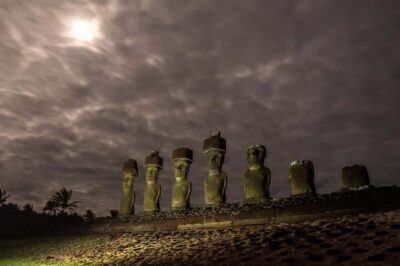
Browse the lists this tour appears in