
Reviewed · ATACAMA STARGAZING & ASTRONOMY TOURS
Astronomical Tour with Guide and Pick Up San Pedro de Atacama
The Atacama night sky does the heavy lifting. This 2.5-hour evening outing takes you outside San Pedro de Atacama for telescope viewing, constellation lessons, hot drinks, snacks, and a keepsake photo beneath one of the world’s clearest skies. I especially like the clear, friendly astronomy explanations and the chance to see planets, clusters, the Moon, and other objects through proper telescopes rather than only by eye. I also like that hotel pickup is included. The main catch is that your experience depends heavily on the Moon, clouds, group size, and how much time each person gets at the telescopes.
The tour begins around 9:30 p.m., and the price is about $38 per person. That is a fair deal if you want a guided introduction to the southern sky and do not have your own car, telescope, or camera. It is less convincing if you expect a private observatory session, long telescope turns, or guaranteed views of the Milky Way.
In This Review
- Key points before you book
- Why San Pedro is a fine place for stargazing
- What happens from the 9:30 p.m. pickup
- Taking turns at the telescopes
- The guide’s astronomy lesson
- Moonlight, clouds, and the best night to go
- Photos beneath the southern sky
- Warm drinks, snacks, and the cold desert air
- Is $38 a good value?
- Who should book this night out?
- My booking advice
- Should you book the San Pedro astronomy tour?
- FAQ
- Where does the astronomical tour take place?
- What time does the tour start?
- How long does the experience last?
- Is hotel pickup included?
- How many people can join?
- What can I see through the telescopes?
- Is photography included?
- Are drinks and snacks provided?
- Can I cancel for a full refund?
Key points before you book
- The Moon changes the whole experience: A dark or nearly Moon-free night gives you the best chance of seeing the Milky Way, faint clusters, and galaxies.
- You look through computerized and manual telescopes: The guides may show planets, stars, clusters, galaxies, nebulae, or the Moon, depending on the season and conditions.
- Patricio is a major strength: His simple explanations and passion for astronomy have been praised repeatedly, along with the work of guides such as Nathan.
- Pickup is convenient but can take time: The tour collects you in San Pedro, then drives roughly 10 to 15 minutes to the viewing site. Hotel pickups and returns can add much longer on crowded nights.
- Photos are part of the value: Professional-looking night-sky portraits are included, with astronomy photography offered when the Moon is absent.
- English service can vary: Some sessions are fully in English, while others use Spanish with English translation. Ask about the language setup when booking.
Why San Pedro is a fine place for stargazing
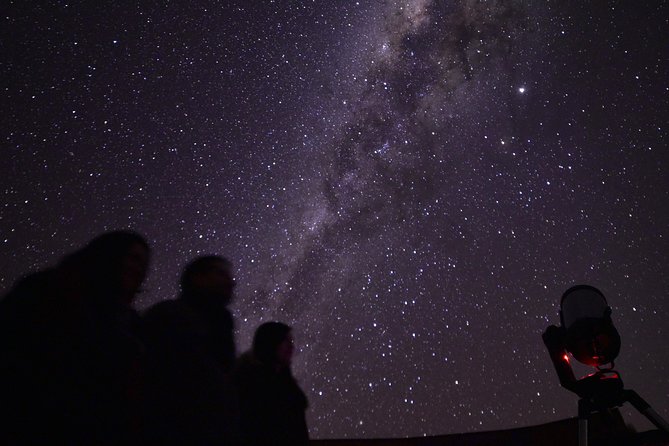
San Pedro de Atacama sits in northern Chile’s high desert, far from the bright lights of a large city. That gives the night sky a real advantage. On a clear, dark night, you can see far more stars than you would from most towns, and a telescope can turn a bright point into a planet, a star cluster, or a textured lunar surface.
The experience is not the same as visiting a major research observatory. You are not looking through a giant scientific instrument that produces processed space images. These are practical reflecting telescopes set up for public viewing, with the atmosphere still between you and the sky. That matters because the image may be smaller or less colorful than you expect from space photography.
Still, the appeal is easy to understand. You get a guide who can point out the main southern constellations with an astronomical laser, explain how stars and galaxies work, and then show selected objects through the telescope. For many people, the lesson is as memorable as the view.
More nights under the Atacama sky:
- San Pedro de Atacama: Etno-Stargazing Tour with Transfer
★ 4.8 · 629 reviews - San Pedro de Atacama: Stargazing Experience
★ 4.7 · 489 reviews - “Astronomical Adventure in San Pedro de Atacama”
★ 4.5 · 96 reviews
What happens from the 9:30 p.m. pickup
The listed start time is 9:30 p.m., with pickup from accommodation in San Pedro de Atacama. You should be ready before then, since collecting people from several hotels can take time. One of the less positive accounts described about 15 to 20 minutes spent on pickups, followed by a 10 to 15 minute ride to the site. On especially busy holiday weekends, the total transfer time can be much longer.
The tour does not collect from the ayllus of Cucuter, Tulor, Coyo, Solor, or Quitor. If you are staying in one of those areas, you will need to check the meeting arrangement before paying.
The short drive is useful because you leave the center and its lights behind. The viewing area is described as a specially arranged courtyard near San Pedro, with chairs around the telescopes. You are not hiking into a remote desert camp, so this is a fairly easy activity for families and most people who can sit, stand, and take turns at an eyepiece.
Taking turns at the telescopes
Once the equipment is set up, the guide aims the telescopes at selected objects. Depending on the night and time of year, you might see Saturn, Jupiter, the Moon, star clusters, galaxies, nebulae, or individual stars. The program is not fixed, because clouds, wind, the Moon, and the position of the planets all affect what can be shown.
Several people praised the guides for finding targets quickly and explaining them in a way that beginners could follow. Patricio is often singled out for his astronomy lessons and his ability to answer questions. Another guide, Nathan, was praised for his strong command of English and for helping a visitor set up a personal camera for basic astrophotography.
The telescopes are shared. That is the key practical point. A session might include two or three telescopes for a small group, but each person still waits while others look, ask questions, or take photos. One participant felt that only a few minutes were spent actually looking through the eyepiece. Others had enough time and never felt rushed.
This difference probably comes down to the night’s group size and the guide’s pacing. The stated maximum is 16 people, though one account described more than 20 during a crowded period. I would confirm the expected group size if telescope time is your main reason for booking. A smaller group should give you more chances to look and ask questions.
The guide’s astronomy lesson
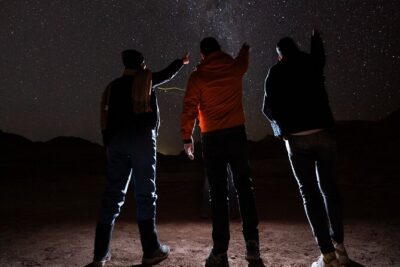
The laser-pointer section gives the night some structure. Rather than simply showing you bright stars, the guide identifies southern constellations and explains what you are seeing. This is useful in the Atacama because the sky can be so full of stars that it is hard to know where to begin.
The best sessions seem to use the telescope as part of a larger lesson. You may hear about the scale of the cosmos, the life of stars, planets, galaxies, and the distances involved. The strongest praise has gone to the guides’ ability to make those huge numbers understandable, even for children.
Language deserves attention. Some groups receive the full explanation in English. In other sessions, the main guide speaks Spanish and a second guide translates. That can work well when the group is small and the guides take turns. It can become confusing when the Spanish explanation, English translation, telescope viewing, and side conversations happen at once.
If you are not comfortable in Spanish, ask in advance if the tour will be conducted fully in English or bilingually. The quality of the language service can affect your experience almost as much as the clouds.
A few more San Pedro de Atacama trips worth weighing up
- San Pedro de Atacama: El Tatio Geysers Tour
★ 4.7 · 943 reviews - Piedras Rojas, Altiplanics Lagoons & Salar Full-Day Tour
★ 4.7 · 592 reviews - San Pedro Atacama: Baltinache Lagoons
★ 4.6 · 359 reviews - San Pedro de Atacama: Valle de la Luna Guided Tour
★ 4.4 · 312 reviews
Moonlight, clouds, and the best night to go
The most useful booking tip is simple: check the Moon phase. A full or bright Moon can wash out faint stars and make the Milky Way hard or impossible to see. You can still have a good outing, especially if the guide focuses on the Moon, bright planets, and objects that remain visible. Several people enjoyed detailed lunar views even under a full Moon, and children in particular were impressed by what the telescope revealed.
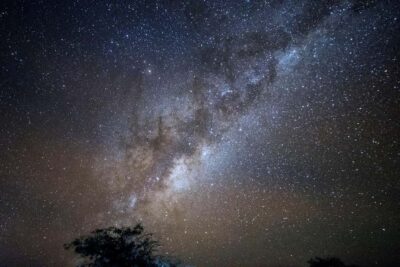
But if your dream is a thick band of Milky Way overhead, choose a night near the new Moon. One successful session under a new Moon and cloudless sky was described as a favorite part of a visit to Atacama. Another person who went during a half Moon felt the sky looked less different from home than expected.
Clouds and wind are just as important. The operator may cancel when weather reports and satellite images suggest poor conditions. This can be frustrating, especially if the sky later clears or looks clear from town. A cancellation may result in another date or a full refund, but you should watch for messages and confirm what happens through the booking platform.
The months from December through March can bring unstable weather and high-altitude rain in the region. That does not mean every summer night fails, but it does mean you should keep some flexibility. April through August was suggested as a quieter period, except around holiday weekends, and may also bring fewer crowds.
Photos beneath the southern sky
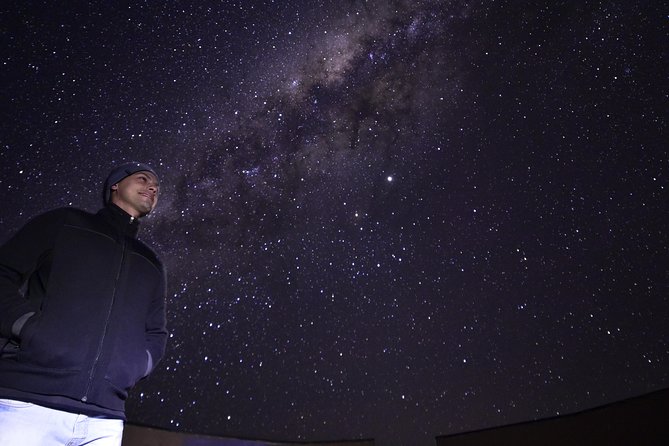
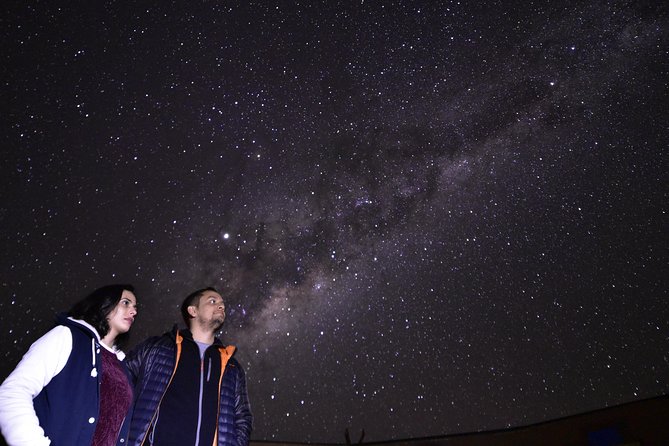
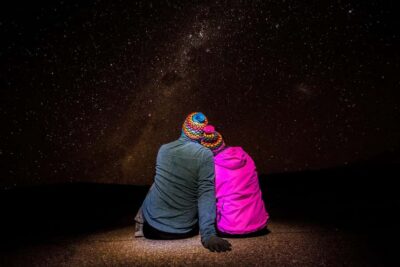
Astrophotography is one of the tour’s useful extras. When there is little or no Moon, the setup can produce a portrait with the starry sky behind you. Several people praised the final photos, and a professional camera is used rather than relying only on a phone.
The photo process can take a surprising amount of time. Everyone may gather around the camera, pose repeatedly, and wait for adjustments. One otherwise positive account felt too much of the evening was spent managing photos. Another person received a blurry Milky Way photo, so results are not guaranteed.
Think of the picture as a bonus, not the main reason to come. If the Moon is bright, the photo may focus more on the Moon or use a different night-sky setup. If you want the best chance of a dramatic star portrait, choose a Moon-free night and be patient while the guide works.
You may also be able to photograph the Moon through the telescope with your own phone. A guide helped one visitor with a camera, and others captured lunar images on their phones. Bring your phone charged and ready, but do not expect a personal photography workshop unless the guide has time.
Warm drinks, snacks, and the cold desert air
Atacama can feel cold at night, even after a warm day. Chairs and blankets are provided, which makes a real difference while you wait for the telescope. Coffee and tea, soft drinks, alcoholic beverages, and snacks are also included.
The refreshments are generally served after the viewing, not as a continuous open bar during the telescope session. Some people enjoyed wine, whiskey, coffee, and tea at the end. Others found the drink choice basic, with hot beverages to prepare yourself and simple alcohol rather than a full hospitality service.
A glass of wine under the stars is a pleasant finish, and special touches may be possible for occasions such as a honeymoon. Still, bring warm layers. A blanket helps, but it should not replace a jacket, long trousers, and covered shoes.
There is a bathroom at the site, another small but helpful comfort during a late-night activity.
Is $38 a good value?
At about $38 per person, this sits in the affordable range for a guided astronomy outing with transport, equipment, refreshments, and a photo. You are paying for access to the setup and the guide’s ability to find and explain objects in the sky. You are also saving yourself the trouble of arranging transport outside town and learning the sky alone.
The value improves when you have a dark, clear night, a smaller group, and a guide who speaks your language well. It improves again if you care about understanding what you see rather than only taking a quick look through a telescope.
The value drops if your hotel is far from the center, the pickup route is crowded, or the session has more people than expected. It also drops if you mainly want the Milky Way but book during a bright Moon. You could rent a car, find a dark place near San Pedro, use a constellation app, and bring a tripod. That gives you freedom, but not the telescopes, instruction, drinks, or ready-made photograph.
I see this as a good first astronomy experience, not a specialist observing session. Families, couples, curious beginners, and people without camera equipment should get the most from it.
Who should book this night out?
I would recommend it to families because the guide can turn the sky into a story, and children often enjoy seeing the Moon and planets enlarged through the telescope. It also suits couples, especially those who want a photo and a quiet evening outside town.
It is a good choice for solo visitors who want an organized activity and do not want to arrange a car. The group format makes it easy to meet other people, though a solo visitor should be prepared to share telescope time.
Photography enthusiasts may enjoy the chance to learn a few basic techniques, but serious night-sky photographers may find the scheduled group format limiting. If you already own a good camera and know the constellations, you may prefer a private or self-guided outing.
The tour also works for people who know little about astronomy. You do not need technical background. The guides aim their explanations at a general audience, and the strongest sessions make complicated ideas easy to follow.
My booking advice
Choose a night close to the new Moon if the Milky Way is your priority. If you are visiting during a bright Moon, book only if you will be happy seeing the Moon, bright planets, and selected stars instead.
Ask about the group size and language before confirming. Arrive ready for delays, since hotel collection can run long when San Pedro is busy. Wear warm clothing, keep your phone charged for possible lunar photos, and treat the professional portrait as an extra rather than a promise of perfect astrophotography.
Free cancellation is available up to 24 hours before the start time. Cancellations made later are not refunded, and changes inside that period are not accepted. Poor weather can lead to a new date or a full refund, but stay alert for updates because weather decisions may be made on the evening itself.
Should you book the San Pedro astronomy tour?
Yes, if you want an easy, fairly priced introduction to the Atacama sky, especially with children or a partner. The guides, telescope access, refreshments, blankets, pickup, and photo make it more useful than simply stepping outside your hotel and looking up.
I would hesitate only if you need guaranteed Milky Way views, private attention, or long telescope sessions. For the best chance of a memorable night, choose a Moon-free date, avoid the busiest holiday periods, and confirm that the English service suits you. With those expectations in place, this can be one of San Pedro’s most rewarding evening activities.
FAQ
Where does the astronomical tour take place?
The tour begins in San Pedro de Atacama and travels to a viewing site outside the town center. The listed itinerary has one stop, San Pedro de Atacama.
What time does the tour start?
The listed start time is 9:30 p.m.
How long does the experience last?
The activity lasts approximately 2 hours and 30 minutes, including transportation and the astronomy session.
Is hotel pickup included?
Yes. Pickup from accommodation is included, although the operator does not collect from the ayllus of Cucuter, Tulor, Coyo, Solor, or Quitor.
How many people can join?
The stated maximum is 16 people.
What can I see through the telescopes?
Depending on the season and sky conditions, you may see planets, star clusters, galaxies, nebulae, stars, or the Moon. The exact objects change with the weather and the position of celestial bodies.
Is photography included?
Astrophotography is included when there is no Moon, and the experience includes a professional-style photo beneath the stars. The guides may also help with phone or camera photos in suitable conditions.
Are drinks and snacks provided?
Yes. The inclusions list blankets, chairs, snacks, coffee or tea, soft drinks, and alcoholic beverages. A bathroom is also available.
Can I cancel for a full refund?
You can cancel at least 24 hours before the local start time for a full refund. If poor weather causes the operator to cancel, you are offered a different date or a full refund.
Just added around San Pedro de Atacama
- San Pedro de Atacama: Valle de la luna★ 3.0 · 3 reviews
- Cejar & Tebenquiche Lagoons Tour with Ojos del Salar Atacama★ 3.4 · 3 reviews
- Atacama Desert: Floatation in Laguna Cejar and Sunset★ 3.1 · 3 reviews
- Astronomical Tour: San Pedro de Atacama – Chile★ 4.5 · 3 reviews
- San Pedro de Atacama: Astronomical Tour★ 3.9 · 3 reviews
- Valle de la Luna: A Moon-Like Escape in Atacama★ 5.0 · 3 reviews
- Piedras Rojas, Altiplanics Lagoons & Salar Full Day Tour★ 4.4 · 3 reviews
- Full Desert. The most complete program you will find★ 3.2 · 3 reviews
Atacama Stargazing & Astronomy Tours, compared.
“Astronomical Adventure in San Pedro de Atacama”
Read our review →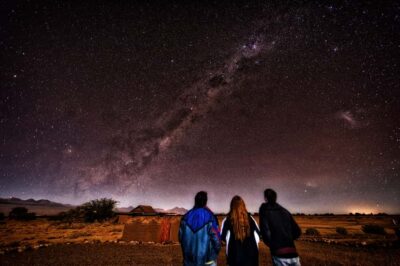
Pisco Elqui: Mountaintop Stargazing and Night Portrait
Read our review →
Browse the lists this tour appears in