
Reviewed · ATACAMA STARGAZING & ASTRONOMY TOURS
San Pedro de Atacama: Etno-Stargazing Tour with Transfer
Stars look different from the desert. San Pedro de Atacama’s Etno-Stargazing Tour combines exceptionally dark skies with two useful ways of understanding them: modern astronomy and Andean sky knowledge. I like the chance to use large telescopes with an astronomy specialist, and I like the respectful focus on how Indigenous Andean communities read animals, rivers, seasons, and life after death in the Milky Way. The main caution is simple: the desert gets very cold at night, and moonlight can reduce the number of stars you see.
The $41 price is strong value for a 150-minute evening that includes transport, a guide, telescope access, drinks, and a souvenir sky photo. Guides such as Felipe, Claudio, Salvador, Yvonne, and Margarete have received praise for making difficult ideas easy to follow, often in both English and Spanish. I would check the meeting point carefully, though, since one visitor had trouble finding Restaurant Tara, the usual pickup point.
I especially like that the tour does not treat stargazing as a silent photo stop. You learn where to look, what you are seeing, and why the Southern Cross and other sky patterns mattered to people living in the Andes long before Spanish arrival. Just keep your plans flexible, since cloud cover or other weather conditions can shift the start time or cancel the outing.
In This Review
- Key things to know before you book
- Leaving San Pedro for a darker sky
- The first lesson: reading the sky with modern astronomy
- The Andean sky: animals, rivers, and the Milky Way
- Taking your turn at the telescope
- The cold, the fire, and the evening’s final touch
- The souvenir photo and moonlight warning
- Is the $41 price good value?
- Who should book this Atacama stargazing tour?
- Should you book it?
- FAQ
- How long does the Etno-Stargazing Tour last?
- Where does pickup take place?
- What time does pickup begin?
- Is the tour offered in English?
- What can I see through the telescope?
- Should I check the moon phase before booking?
- What should I bring?
Key things to know before you book
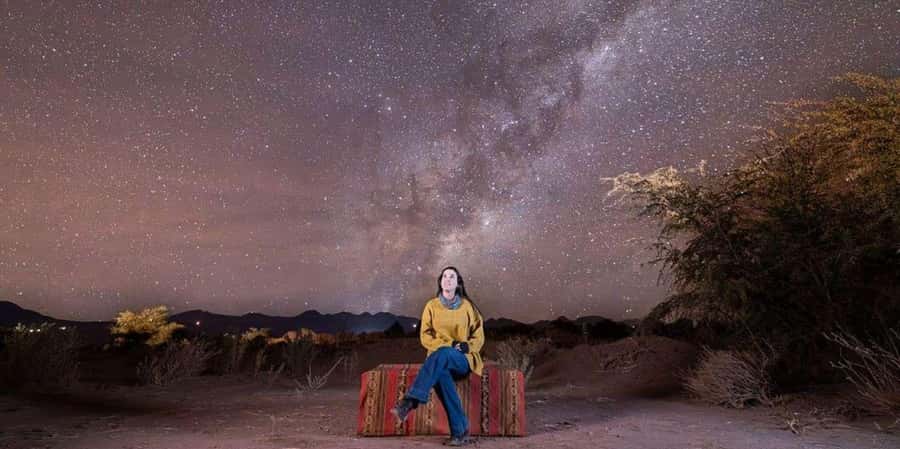
- Two sky traditions in one evening: You begin with Western astronomy, then learn how ancient Andean cultures interpreted the Milky Way and the dark spaces between stars.
- Telescope viewing is hands-on: The guide helps you focus and explains each object before you look, with possible sightings including planets, binary stars, clusters, nebulae, and galaxies.
- The Atacama cold matters: Bring warm layers, even if the afternoon in San Pedro felt hot. Ponchos or blankets may be provided, but you should not rely on them alone.
- The moon changes the experience: A bright moon can wash out faint stars. On moonlit nights, the included photo may be taken only through the telescope eyepiece.
- The guides make the difference: Felipe, Claudio, Salvador, Margarete, and Yvonne have been praised for clear explanations, patience, good English, and enthusiasm.
- The ending can be social: Coffee, tea, or red wine are included. Recent departures have also featured a fire, snacks, warm drinks, and pisco sour, though you should confirm the current refreshments.
Leaving San Pedro for a darker sky
The evening begins with pickup in San Pedro de Atacama, generally at Restaurant Tara on Licancabur 10. The van ride to the viewing area takes about 15 minutes. At the end, the return ride takes about 25 minutes, with drop-off at Licancabur 10 or Restaurant Tara.
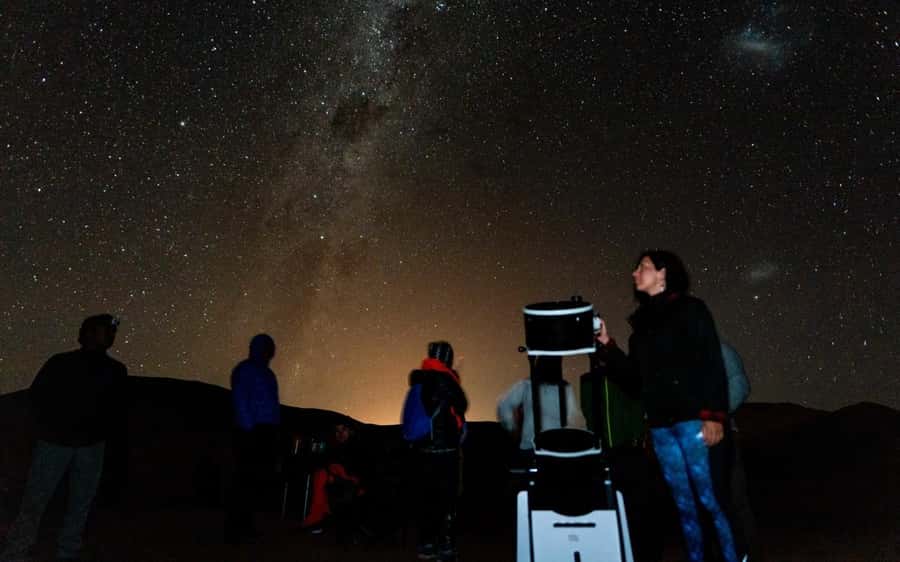
That short drive matters. San Pedro is small, but even a few minutes outside town can reduce stray light and make the sky feel much larger. The exact viewing property is described in recent accounts as a dark private site, sometimes identified as the guide Felipe’s property. The important point for you is that this is not a pavement-side telescope session in the middle of town.
Pickup times change by season. During April through August, pickup is listed at 7 p.m. During Chilean summer time, pickup is around 9 to 9:20 p.m. Confirm the exact time when booking, and arrive early. One person had trouble locating Restaurant Tara because the name was not familiar to nearby residents. The guide came looking, but you do not want to begin the night with a treasure hunt through San Pedro.
The tour is wheelchair accessible, according to the activity details. Still, the information does not describe the ground surface at the observation site, so anyone needing specific mobility arrangements should confirm those details before paying.
More nights under the Atacama sky:
- San Pedro de Atacama: Stargazing Experience
★ 4.7 · 489 reviews - Astronomical Tour with Guide and Pick Up San Pedro de Atacama
★ 4.5 · 145 reviews - “Astronomical Adventure in San Pedro de Atacama”
★ 4.5 · 96 reviews
The first lesson: reading the sky with modern astronomy
At the viewing site, the first section follows the Western astronomy tradition. Your guide explains the brightness and colors of stars, how planets differ from stars, and how scientists think about the formation of the cosmos.
This opening lesson gives you a useful framework. Instead of seeing a scatter of bright points, you start learning what kinds of objects are above you. The guide may point out planets, constellations, star clusters, or other objects visible during that season. The exact menu changes with the date, time, and weather.
The explanations are intended for general visitors, not only people who already know astronomy. Felipe has been praised for connecting current research with ancient ideas, while Claudio has been singled out for keeping children involved with just enough information. That makes this a good choice for families with older children, including the 10 to 15 age range mentioned by one family.
You should expect a live lesson rather than a recorded presentation. Ask questions. The guides have been praised for welcoming difficult ones, and the best part of the tour is often the conversation between telescope viewings. Felipe, Claudio, Salvador, Margarete, and Yvonne are all named guides associated with particularly positive experiences, but guide assignments can change.
The Andean sky: animals, rivers, and the Milky Way
The second viewpoint is the tour’s most distinctive feature. You learn how Indigenous Andean observers understood the night sky many centuries before the arrival of the Spanish.
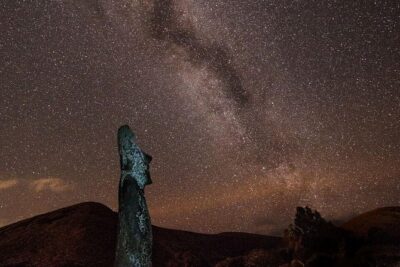
In this tradition, meaning was not found only in bright stars. The dark sections of the Milky Way could form figures linked to animals, water, rivers, daily schedules, and the world after death. That is a useful change in perspective. Modern astronomy often asks what an object is made of and how far away it sits. Andean astronomy also asks what the sky says about daily life and the natural world.
The Southern Cross is one of the key sights from the Southern Hemisphere. Your guide can help you recognize it and explain why southern skies feel so different if you normally observe from Europe or North America. The lesson is not just a list of constellations. It connects the sky to agriculture, movement, time, and belief.
I appreciate this part because it gives the night cultural meaning without pretending that one system cancels out the other. You get science, history, and Indigenous interpretation in the same session. Listen carefully, since the darkness between stars may be just as important as the bright patterns.
Taking your turn at the telescope
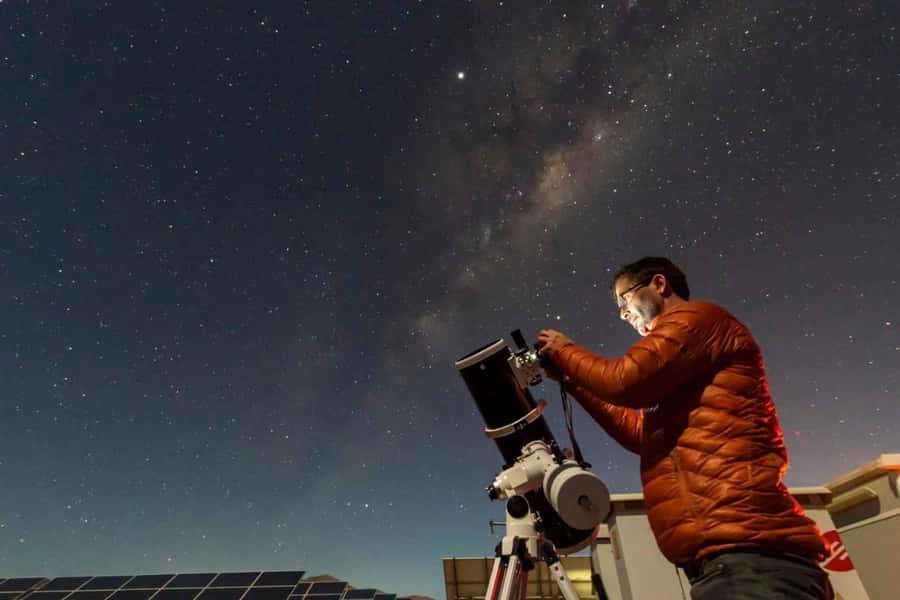
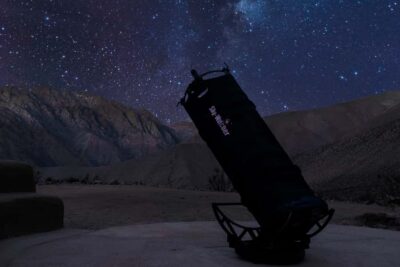
The telescope session is the practical center of the evening. You are not simply shown a picture on a screen. You take turns looking through the equipment while the guide aims and focuses it.
The possible sights depend on the season and conditions. The program lists planets, stars, binary stars, star clusters, nebulae, and galaxies. Recent observations have included Saturn, Antares, the crescent moon, and star clusters. Seeing Saturn through a telescope was a major highlight for some people, while others enjoyed comparing different types of stars.
The guide explains what you are about to see before you look. That preparation helps, especially when a telescope view is small or unfamiliar. Claudio and Felipe have been praised for patiently refocusing the instrument and making sure each person gets a clear turn. One departure used two large telescopes, which reduced waiting time, but the number of telescopes and the pace may vary.
Do not expect every listed object on every date. Clouds, moonlight, the season, and the telescope’s position all affect the program. A galaxy or nebula may appear as a faint patch rather than a bright, colorful photograph. That is normal. The value is in seeing a real celestial object with your own eye and understanding what makes it special.
The activity also mentions binoculars as something to bring. They are optional, but they can help you scan the sky between telescope turns. Comfortable shoes matter too, since the evening takes place away from town and includes movement between viewing areas.
More private drivers:
- San Pedro de Atacama: Stargazing Experience with Transfer
★ 3.5 · 8 reviews - San Pedro de Atacama: Etno-Stargazing Tour with Transfer
★ 3.5 · 5 reviews - Santiago: Concha y Toro Vineyard Tour w/ Transfer & Tasting
★ 4.2 · 455 reviews - Private Transfer from Santiago Airport to Santiago
★ 4.0 · 330 reviews
The cold, the fire, and the evening’s final touch
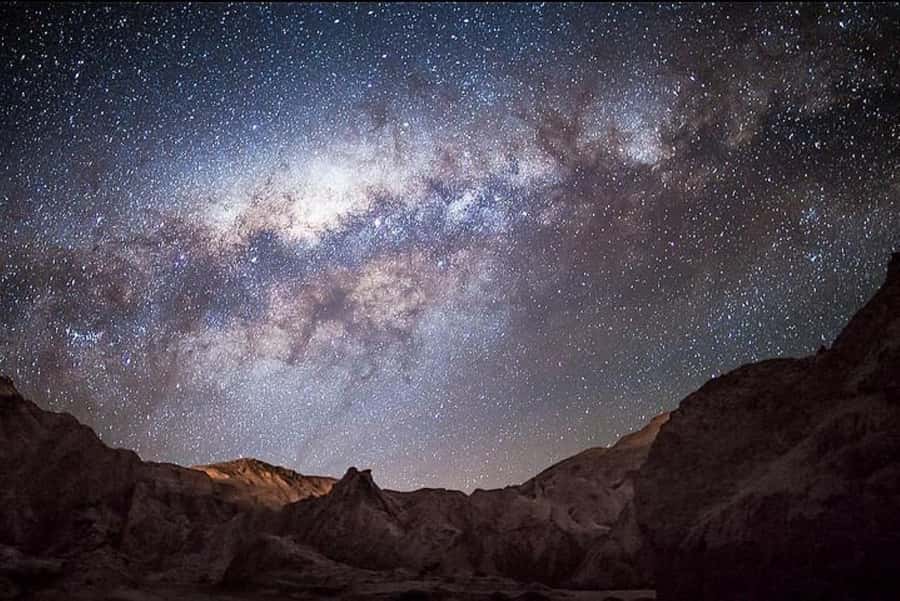
The Atacama is dry and warm by day, but the temperature can fall sharply after sunset. Several people have stressed the cold, even when ponchos, blankets, or other warm coverings were supplied. Wear several layers, a hat, and warm shoes. Comfortable clothing is more useful than looking stylish for the first ten minutes.
The published inclusions list coffee, tea, or red wine. Recent departures also included warm drinks, snacks, and time around a bonfire. Some people described a small picnic-style finish, while another mentioned homemade pisco sour. Because the details vary, treat the refreshments as a pleasant extra rather than the main reason to book.
The fire works well after the telescope session. You have been sitting or standing in the dark, concentrating on distant objects, and then you can warm up and talk with the group. It turns the program from a lecture into a relaxed evening out. The setting can feel carefully arranged, with benches, rocks, drinks, and snacks, but you should still bring your own warm layer.
Alcohol and drugs are not allowed as general behavior, although red wine is listed as an included drink. Smoking is also prohibited. Follow the guide’s instructions, particularly around the fire and telescope equipment.
The souvenir photo and moonlight warning
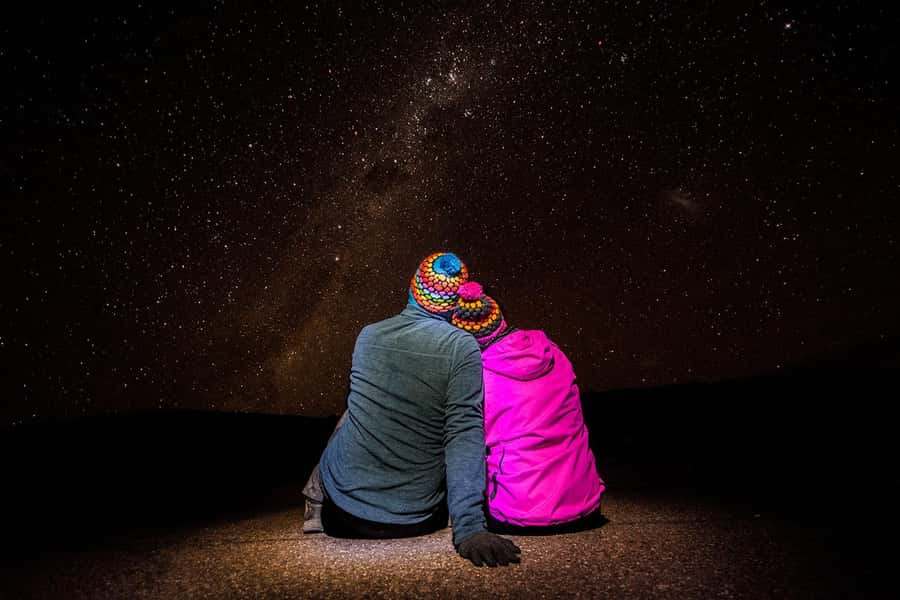
At the end, you receive a courtesy photo with the night sky, sent by email. The photo session is more than a quick snapshot. Recent departures included help with poses and several attempts to create a strong image under the stars.
The quality of the final result depends heavily on the moon. On a dark night, the stars should form a strong background. In periods of high moonlight, the included photo may be taken only through the telescope eyepiece, so it will not necessarily be the same portrait-style image you see in promotional material.
Check the lunar calendar before booking if photography is a priority. A full or nearly full moon does not make the tour worthless. The moon itself can be a fine telescope subject, and Felipe adapted the program successfully for people who visited during bright moon conditions. Still, faint stars and the Milky Way will be less dramatic.
I would choose a darker night if you want the classic wall of stars, and a moonlit night if you are more interested in planets, the moon, and a gentler evening with better visibility for moving around.
Is the $41 price good value?
At $41 per person, this is one of the easier Atacama activities to justify. The price covers pickup and drop-off within San Pedro, an astronomy guide, telescope equipment, drinks, the cultural explanation, and the emailed photo. It also fills 150 minutes, which is long enough to feel like a proper evening rather than a quick look through one telescope.
The strongest value comes from the guide. A telescope by itself can be frustrating. You may not know where to look, what you are seeing, or why the object matters. Here, guides such as Felipe and Claudio explain the subject, adjust the equipment, answer questions, and connect modern astronomy with Andean ideas.
The price is especially fair for families and first-time stargazers. Children can look through the telescope, ask questions, and warm up at the fire. People who already know a great deal about astronomy may want a more technical observatory visit, but the combination of science, culture, photos, and transport gives this tour broad appeal.
The main value limit is weather. You are paying for an experience that depends on clear skies. The operator may move the tour to later the same night or the next night, and if conditions force a cancellation, other options are offered. Free cancellation up to 24 hours in advance and the option to reserve now and pay later make planning less risky.
Who should book this Atacama stargazing tour?
I would recommend it to you if you are curious about the night sky but do not own a telescope or know much astronomy. It also suits families, couples, and anyone who wants a calm evening after a day of desert excursions.
It is a particularly good pick if you have never seen southern constellations. The Southern Cross, Andean sky stories, and possible views of Saturn or star clusters give the program a strong sense of place. You are not receiving a generic astronomy talk that could happen anywhere.
You may want to reconsider if you dislike late nights, cold outdoor conditions, or changes to a fixed schedule. Summer pickup can begin around 9 p.m., and poor weather may push the activity to 11 p.m. One group accepted a late change because the skies cleared, but that timing could be hard if you have an early start the next morning.
Bring your passport or ID, warm clothing, comfortable shoes, and, if useful, binoculars. Check the moon phase. Confirm the pickup point. Those small steps will protect the experience from the most common avoidable problems.
Should you book it?
Yes, I would book this tour if you want more than a quick look at the stars. The best parts are the clear guides, the chance to use serious telescope equipment, and the Andean interpretation of the sky. The photo and fire are welcome extras, but the real payoff is learning to look upward with better questions.
Book on a darker night if stars and photography are your priority. Choose it anyway during a brighter moon if your schedule is fixed and you would enjoy planets, the moon, cultural stories, and a warm drink by the fire. At $41, with transport and equipment included, this is a strong-value evening for most visitors to San Pedro de Atacama.
FAQ
How long does the Etno-Stargazing Tour last?
The tour lasts 150 minutes, including transportation, the astronomy presentation, telescope viewing, photography, and the return transfer.
Where does pickup take place?
Pickup is listed at Restaurant Tara on Licancabur 10 in San Pedro de Atacama. Drop-off is available at Licancabur 10 or Restaurant Tara. The tour does not include pickup or drop-off in the ayllus.
What time does pickup begin?
Pickup is listed at 7 p.m. from April through August. During Chilean summer time, pickup is around 9 to 9:20 p.m. Check the confirmed start time because weather and seasonal scheduling can affect it.
Is the tour offered in English?
Yes. Live guiding is available in English and Spanish.
What can I see through the telescope?
Depending on the season and conditions, you may see planets, stars, binary stars, star clusters, nebulae, and galaxies. Recent departures viewed Saturn, Antares, the crescent moon, and star clusters.
Should I check the moon phase before booking?
Yes. Bright moonlight can reduce the number of visible stars and change the included photo. During periods of high moonlight, the photo may be taken only through the telescope eyepiece.
What should I bring?
Bring your passport or ID card, warm clothing, comfortable clothes, comfortable shoes, and optional binoculars. Smoking, alcohol and drugs are not allowed, although coffee, tea, or red wine are listed among the included refreshments.
Just added around San Pedro de Atacama
- Cejar & Tebenquiche Lagoons Tour with Ojos del Salar Atacama★ 3.4 · 3 reviews
- San Pedro de Atacama: Valle de la luna★ 3.0 · 3 reviews
- Atacama Desert: Floatation in Laguna Cejar and Sunset★ 3.1 · 3 reviews
- Astronomical Tour: San Pedro de Atacama – Chile★ 4.5 · 3 reviews
- San Pedro de Atacama: Astronomical Tour★ 3.9 · 3 reviews
- Valle de la Luna: A Moon-Like Escape in Atacama★ 5.0 · 3 reviews
- Piedras Rojas, Altiplanics Lagoons & Salar Full Day Tour★ 4.4 · 3 reviews
- Full Desert. The most complete program you will find★ 3.2 · 3 reviews
Atacama Stargazing & Astronomy Tours, compared.
Astronomical Tour with Guide and Pick Up San Pedro de Atacama
Read our review →
“Astronomical Adventure in San Pedro de Atacama”
Read our review →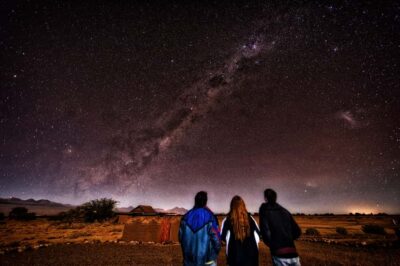
Pisco Elqui: Mountaintop Stargazing and Night Portrait
Read our review →
Browse the lists this tour appears in