
Reviewed · ATACAMA STARGAZING & ASTRONOMY TOURS
Easter Island: Rapa Nui Stargazing Tour
The best view of Easter Island comes after dark. This three-hour Rapa Nui stargazing tour connects the island’s famous stone figures with the night sky that guided Polynesian voyagers across the Pacific. I like the mix of hands-on telescope viewing and clear lessons about navigation, and I like that you can see Ahu Nau Nau at night, with hot chocolate, local cake, and a digital photo included. The main drawback is value: at $140 per person, the tour may feel expensive if clouds limit the stars or the night offers little to see through the telescope.
You meet in front of Katipare Library in Hanga Roa, not at your hotel. The start time changes with the season, at 9 p.m. in summer and 7 p.m. in winter, so check your booking carefully. This is a small outing, capped at 12 people, and it ends with hotel drop-off, but you must bring your own National Park ticket.
In This Review
- What makes this night different
- Meeting at Katipare Library after sunset
- Why Polynesian navigation gives the tour its purpose
- Reaching a remote observation site
- Telescope viewing and the Southern Hemisphere sky
- Ahu Nau Nau under the night sky
- Hot chocolate, local cake, and a personal finish
- Is $140 per person a fair price?
- Weather, moonlight, and what to bring
- Who will enjoy this Rapa Nui evening most?
- Booking advice for the best chance at a good night
- Should you book the Rapa Nui Stargazing Tour?
- FAQ
- Where does the Rapa Nui Stargazing Tour meet?
- What time does the tour start?
- Is hotel pickup included?
- Is the National Park ticket included?
- What happens if the weather is poor?
- Can I book this tour near the full moon?
What makes this night different
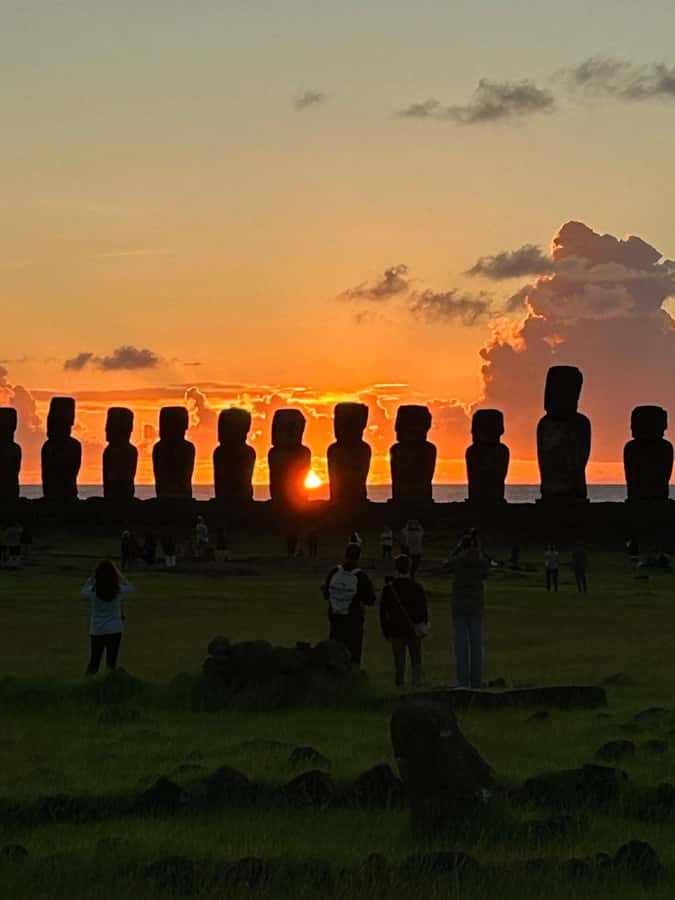
- Ahu Nau Nau after dark: Visit one of Rapa Nui’s important ceremonial sites when the moai are lit by moonlight and stars rather than daytime crowds.
- Polynesian navigation: Learn how voyagers used stars, constellations, and basic astronomy to cross huge stretches of ocean.
- Southern Hemisphere skies: See stars and constellations that are not visible from much of the Northern Hemisphere.
- Telescope time: Look at stars and planets from a remote observation site with guidance from the tour leader.
- Small group format: The maximum of 12 people keeps the evening more personal and makes it easier to ask questions.
- A gentle finish: Hot chocolate, local cake, and a digital photo add a friendly touch to an otherwise serious astronomy lesson.
Meeting at Katipare Library after sunset
Your evening begins in front of Katipare Library, also called Centro Lector Katipare, in Hanga Roa. Hotel pickup is not included, so you need to make your own way to this meeting point.
That detail matters on Easter Island. The meeting time is 9 p.m. in summer and 7 p.m. in winter, and the tour’s darkness depends on the season. Check the exact start time before you set out, especially if you are arranging dinner or another evening activity.
The return ride to your hotel is included. That is useful after a late night, since you do not need to arrange a taxi or find your way back through Hanga Roa. The group can have up to 12 people, which is small enough for live commentary to feel more direct than a large coach excursion.
The tour operates in English and Spanish. The driver also serves as guide, so transportation and the evening explanation come together in one compact experience.
More nights under the Atacama sky:
- Rapa Nui Stargazing
★ 4.5 · 62 reviews - San Pedro de Atacama: Etno-Stargazing Tour with Transfer
★ 4.8 · 629 reviews - San Pedro de Atacama: Stargazing Experience
★ 4.7 · 489 reviews
Why Polynesian navigation gives the tour its purpose
A basic stargazing session can become a list of star names. This experience aims for something more meaningful: it explains how Polynesian voyagers read the sky while traveling between distant islands.
You learn the principles of basic astronomy, the history of Polynesian voyaging and settlement, navigation methods, and the archeo-astronomy of Rapa Nui. The useful part is the connection between these subjects. The stars are not presented only as pretty points of light. They become tools that helped people understand direction, position, and movement across the sea.
That context changes how you look at the island’s ceremonial sites. Rapa Nui is often treated as a place of moai alone, but the night sky was part of the culture’s wider system of time, travel, and place. I like that this tour gives you a reason to look up before you look at the telescope.
The guide’s style can shape the evening. One particularly memorable guide, identified as Mark in one account and Marc in another, was praised for explaining constellations and navigation, singing a traditional song, and even performing a song he had written. A personal touch like that can turn a technical lesson into a warm cultural experience, though the exact guide and presentation may vary.
Reaching a remote observation site
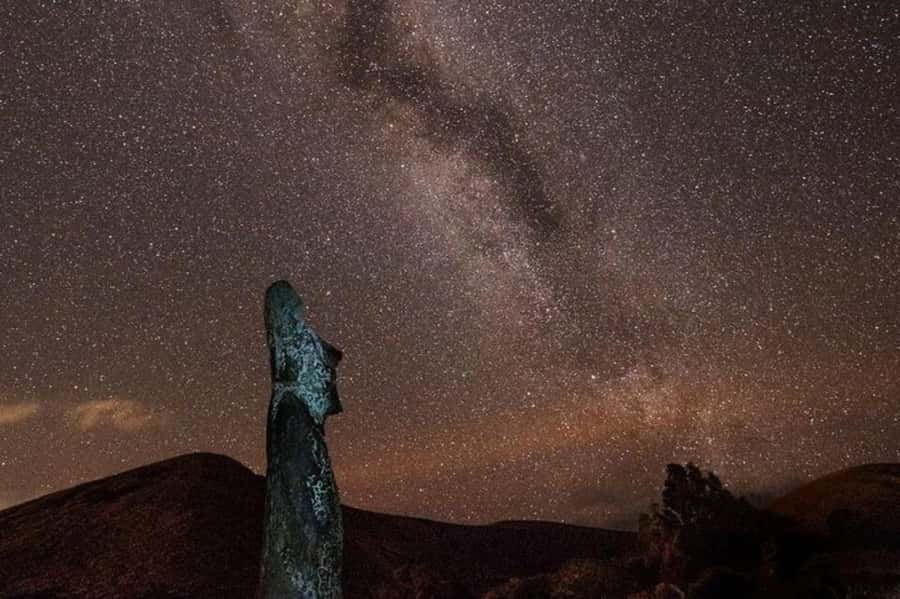
After meeting in Hanga Roa, you head toward traditional observation sites away from the town’s lights. The point is not simply to drive somewhere dark. These sites connect the astronomy lesson with the places where Rapa Nui people understood and used the sky.
The remote setting is a major part of the value. Artificial light makes it harder to see faint stars, while a darker site gives the telescope and the naked eye a better chance. You can expect the guide to point out Southern Hemisphere stars and constellations, then explain how they relate to Polynesian wayfinding.
Do not expect a planetarium-style production with a fixed show every night. The experience depends on the actual sky. Some evenings offer clear, busy views and strong telescope subjects. Other nights may have fewer highlights, even if the guide gives a good explanation.
That weather dependence is important. If conditions are poor, the experience can be canceled and you will be offered another date or a full refund. The same applies if the minimum group size is not reached. Keep some flexibility in your schedule if stargazing is a major reason for booking.
Telescope viewing and the Southern Hemisphere sky
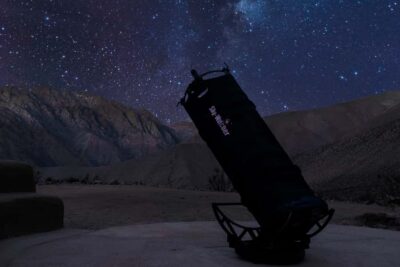
The telescope is the evening’s main hands-on feature. You get time to look at stars and planets from the observation site, rather than simply listening to a guide point at the sky.
The telescope time can be excellent when the sky cooperates. One account praised the improved telescope and described the night as a memorable chance to see the stars while learning how they guided ocean voyages. Another account found the telescope session worthwhile but felt that not much else happened that night. Both reactions are useful: the quality of the sky and the guide’s commentary will strongly affect how much you enjoy the price.
You should also have a chance to take your own photographs. The tour allows personal photos, including phone pictures with a tripod. That is a valuable detail for anyone hoping to capture the sky rather than only receive the included digital image.
Still, night photography needs modest expectations. The supplied information does not promise professional astrophotography or a particular camera setup. Think of the digital photo as a welcome souvenir, while your own camera or phone gives you extra options if conditions are right.
The tour is not available from four days before the full moon through two days after it. That rule protects the dark-sky purpose of the evening. A bright moon can wash out many stars, so check the lunar calendar when you choose your date.
A few more Easter Island trips worth weighing up
- From Hanga Roa: Rapa Nui Culture Sightseeing Tour
★ 4.6 · 307 reviews - From Hanga Roa: Easter Island Highlights 2-Day Tour
★ 4.3 · 205 reviews - From Hanga Roa: Easter Island Sightseeing Full Day Tour
★ 4.5 · 189 reviews - Full day tour – DREAM
★ 5.0 · 86 reviews
Ahu Nau Nau under the night sky
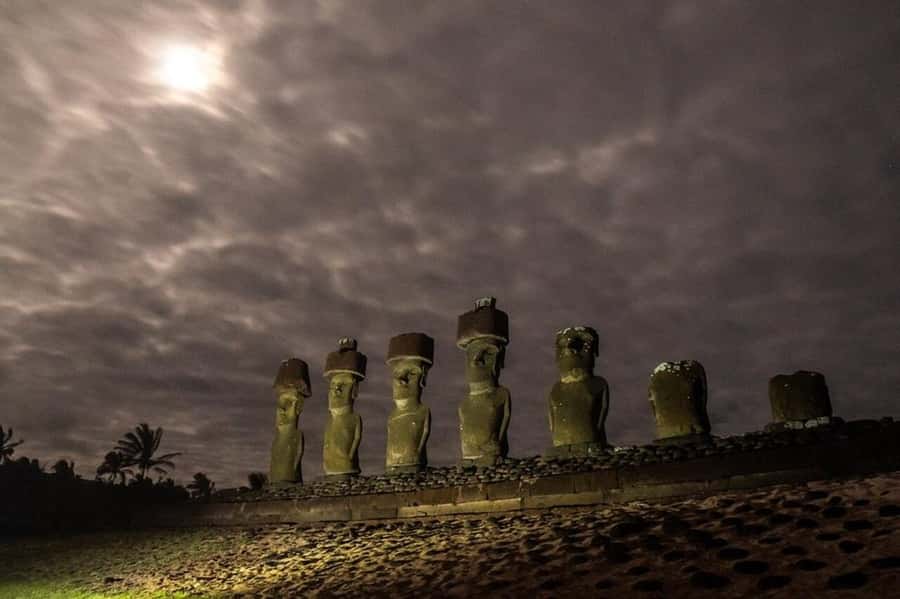
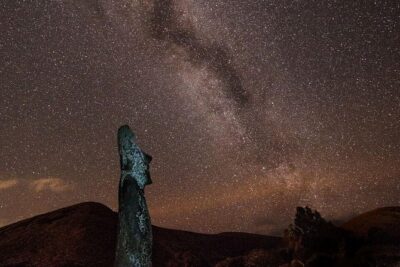
Access to Ahu Nau Nau at night is one of the strongest reasons to consider this outing. During the day, a ceremonial platform and its moai are easy to place on a sightseeing route. At night, the setting changes completely.
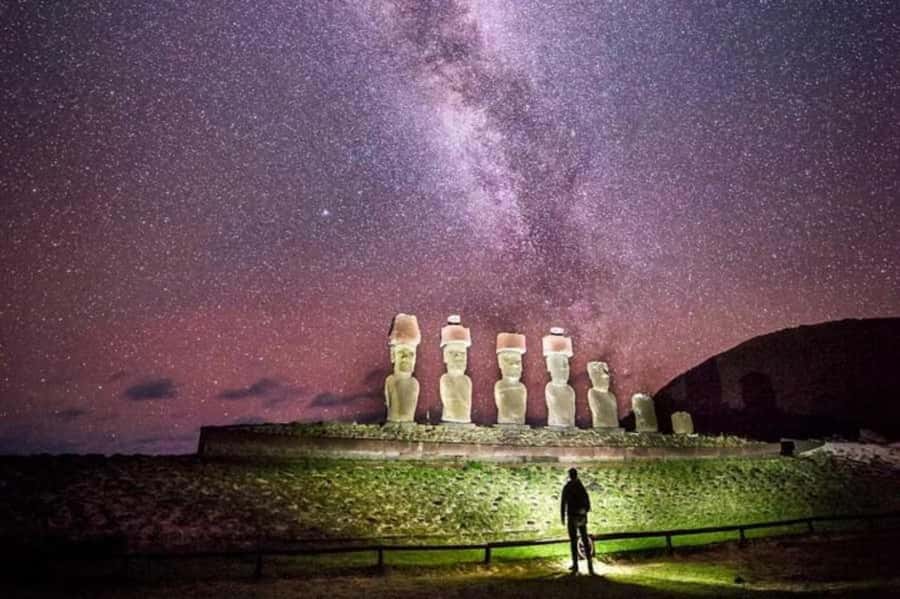
The low light shifts your attention toward silhouettes, stars, and the relationship between the stone figures and the sky above them. One account described private nighttime access to the beach and the chance to take photographs beside the moai. Treat that as a possible part of the evening rather than a guaranteed promise for every departure, but it shows why the site can feel special after dark.
This is also where the astronomy and archaeology meet most clearly. You are not just looking through a telescope in a random field. You are viewing the sky near a major Rapa Nui cultural site and hearing about archeo-astronomy in the place itself.
The ground may be uneven. An older participant found the surface difficult to navigate safely in the dark and suggested that better lighting could help. If you are unsteady on your feet, wear sensible shoes and take care when moving between the viewing points. The activity is not suitable for wheelchair users.
Hot chocolate, local cake, and a personal finish
A small coffee break is included, with hot chocolate and local cake. It is a practical comfort during a late outdoor activity, especially in the cooler winter start time. It also gives the group a pause between telescope viewing and the final part of the evening.
The refreshment is not the reason to pay $140, but it helps the three-hour outing feel complete. You are getting transport, a driver-guide, live commentary, telescope access, nighttime site access, a digital photo, and hotel drop-off in one package.
The cultural finish may be the most memorable part for some people. A guide named Mark or Marc was praised for singing a traditional song, and another account singled out a song he had written. That sort of performance is not a formal concert, but it can give the evening a distinctly human ending.
You should not book solely in the hope of hearing a particular song. Guide assignments and the flow of the night can change. Still, the possibility of music, conversation, and a small group makes this feel less mechanical than a simple drive to a viewing field.
Is $140 per person a fair price?
The price is $140 per person for three hours. That is a premium for a short evening, particularly because the National Park admission ticket is not included and you must reach the meeting point yourself.
The value improves if you care about the cultural explanation. A standard night-sky outing might show you stars through a telescope, but this tour adds Polynesian voyaging, navigation, Rapa Nui archeo-astronomy, nighttime access to Ahu Nau Nau, refreshments, a digital photo, and a ride back to your hotel.
The value drops if you want only a long telescope session. One person found the evening good but too limited for the cost, especially when there was not much to see that night. That is a fair warning. Three hours can pass quickly when the sky is active, but it can feel long if clouds or a quiet night limit the viewing.
I would consider the fee reasonable for someone already interested in Rapa Nui culture and willing to pay for a small, guided experience. I would be more cautious if your budget is tight, your main goal is photographing the stars, or you already have access to a dark location and a telescope.
Weather, moonlight, and what to bring
The tour requires good weather, so flexibility helps. A clear forecast does not guarantee a dramatic sky, but poor weather can stop the experience altogether. Because a different date or a full refund is offered after a weather cancellation, booking early in your stay gives you a better chance to reschedule.
The full-moon restriction is another practical point. The tour does not operate four days before or two days after the full moon. Choose a date outside that window if the stars are your priority.
Bring clothing suited to a late outdoor evening and shoes that feel secure on uneven ground. The information provided does not specify a dress code or equipment list, but you should plan for darkness, outdoor surfaces, and a night away from town lighting.
A tripod is allowed if you want to try your own phone photos. You may also want to keep your expectations realistic: the included digital photo is a nice extra, but the tour does not promise a set number of images or a professional photo session.
Who will enjoy this Rapa Nui evening most?
I would recommend this tour to you if you want more than a quick look at the stars. It suits people who enjoy cultural context, small groups, guided interpretation, and the idea of connecting astronomy with Polynesian history.
It is also a good fit for visitors who have already seen Rapa Nui’s main daytime sites and want a different view of the island. Seeing Ahu Nau Nau at night, hearing about wayfinding, and looking at Southern Hemisphere constellations creates a fresh angle on familiar themes.
Families and older participants should think about the ground conditions. The maximum group size is manageable, but the activity is not wheelchair accessible, and uneven surfaces may be hard in the dark. Anyone who needs fully level access should choose another evening plan.
Photography enthusiasts may enjoy the chance to use a tripod and photograph the moai and sky, but the tour is not sold as a dedicated photography workshop. If your priority is a detailed camera lesson, the $140 price may be harder to justify.
Booking advice for the best chance at a good night
I would book this for a night away from the full moon and early enough in your visit to allow a weather-related change of date. Confirm whether your departure is at 7 p.m. or 9 p.m., then plan your route to Katipare Library without relying on hotel pickup.
The tour offers free cancellation up to 24 hours in advance. Confirmation arrives from the activity provider within 48 hours of purchase, so keep an eye on your booking details.
A clear night matters more here than a packed schedule. If the forecast looks uncertain, do not place this outing on the final night of your stay unless you are comfortable losing the chance to reschedule.
Should you book the Rapa Nui Stargazing Tour?
Book it if you want a thoughtful cultural evening that combines Polynesian navigation, Southern Hemisphere astronomy, and moai after dark. The guide’s storytelling, possible traditional singing, small group size, hot chocolate, and hotel drop-off add more than a bare telescope visit.
Skip it if $140 feels high for a three-hour activity, if you want guaranteed spectacular viewing, or if uneven ground and night access are concerns. The best reason to reserve it is not simply to see stars. It is to understand how the sky helped shape Rapa Nui life, then stand beside the moai and look upward with that knowledge in mind.
FAQ
Where does the Rapa Nui Stargazing Tour meet?
You meet in front of Katipare Library, also called Centro Lector Katipare, in Hanga Roa, Easter Island.
What time does the tour start?
The meeting time changes by season. It is 9 p.m. in summer and 7 p.m. in winter. Check your confirmed booking for the exact time.
Is hotel pickup included?
No. Hotel pickup is not included, but hotel drop-off is provided at the end of the tour.
Is the National Park ticket included?
No. You need to purchase or have your own National Park ticket. Admission is not included in the tour price.
What happens if the weather is poor?
The experience requires good weather. If it is canceled because of poor conditions, you will be offered another date or a full refund.
Can I book this tour near the full moon?
No. The tour is not available from four days before the full moon through two days after the full moon.
Just added around Easter Island
- Easter Island: 2 Full Days Private Tour★ 3.9 · 3 reviews
- Easter Island: Full Day Ancestral Caves and Orongo Village★ 5.0 · 3 reviews
- Easter Island: Customized recreational-tourist diving★ 5.0 · 3 reviews
- Ancestral fishing: Fishing with an experienced Rapa Nui★ 4.4 · 3 reviews
- Birdman Cult and Caves★ 4.0 · 5 reviews
- Easter Island: Moai Full Day Private Tour★ 4.8 · 5 reviews
- Rapa Nui: Polynesian Massage★ 4.8 · 5 reviews
- Rapa Nui: 3 Excursions with Hotel Transfers★ 4.3 · 6 reviews
Atacama Stargazing & Astronomy Tours, compared.
Astronomical Tour with Guide and Pick Up San Pedro de Atacama
Read our review →
“Astronomical Adventure in San Pedro de Atacama”
Read our review →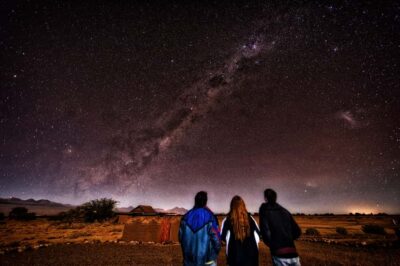
Pisco Elqui: Mountaintop Stargazing and Night Portrait
Read our review →Browse the lists this tour appears in