
Reviewed · EASTER ISLAND TOURS
Rapa Nui: 3 Excursions with Hotel Transfers
Rapa Nui keeps its biggest stories in stone. I like the way this package groups the island’s main sights into two half-day tours and one full-day outing, with hotel transport included. I also like the mix of famous moai sites, volcanic craters, ceremonial villages, and a beach stop, rather than a day spent looking at statues alone.
The main drawback is that the first day is split into shorter outings, and the southern half-day may feel less packed with major sights than the full-day tour. The package also lists validity as six hours from first activation, so you should confirm how that rule applies to the three-excursion schedule before booking.
In This Review
- Key points to know before booking
- Why this three-tour plan works on Rapa Nui
- Orongo and Rano Kau: Rapa Nui’s dramatic southern edge
- Puna Pau, Ahu Akivi, and Tahai: The afternoon moai circuit
- Vaihu and Akahanga: A closer look at fallen moai sites
- Rano Raraku: Where most of the moai began
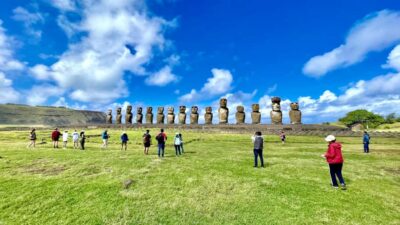
- Ahu Tongariki: Fifteen moai in one powerful line
- Te Pito Kura and the largest planned moai
- Anakena Beach: An hour of sand, palms, and breathing room
- Guide quality and language support
- What to pack and what to expect
- Who should book this Rapa Nui package?
- Should you book it?
- FAQ
- Where does the tour begin and end?
- How many excursions are included?
- Which sites are visited on the southern half-day tour?
- Which sites are visited during the afternoon half-day tour?
- What does the full-day tour include?
- Is food included?
- Is the national park ticket included?
- What languages are available for the guided tour?
Key points to know before booking
- Three outings cover most of Rapa Nui’s major sights, including Orongo, Rano Kau, Rano Raraku, Ahu Tongariki, Ahu Akivi, Tahai, and Anakena Beach.
- The full-day tour is the strongest part, with the quarry, 15 moai at Ahu Tongariki, Te Pito Kura, and an hour at the beach.
- Hotel pickup and drop-off simplify island sightseeing, especially if you do not want to arrange separate transport.
- Guide Uca received special praise for keeping the group engaged and guiding in both English and Spanish.
- The national park ticket, food, and drinks cost extra, so budget for those before you set out.
- Comfortable shoes, water, sun protection, and beachwear matter, since the schedule moves between outdoor archaeological sites and the coast.
Why this three-tour plan works on Rapa Nui
Rapa Nui is small enough to explore by road, but its important sites are spread across the island. That makes organized transport useful. This package takes you to the south, west, southeast, northeast, and north coast without asking you to arrange a different vehicle for each area.
The structure gives you two half-days followed by a full-day circuit. That pace can work well if you want time to rest, eat, or organize your own plans between tours. It also prevents one very long day from becoming a blur of moai, volcanic rock, and place names.
I would think of the package as a broad introduction rather than a slow archaeological study. You get the major viewpoints and ceremonial sites, but the schedule is designed to show you many places in limited time. Your guide becomes especially important here. A good guide can turn a series of stops into a connected story, and Uca was specifically praised for keeping interest high and handling a bilingual group professionally.
The price is $177 per person. That is reasonable if you want transport, a guide, two half-day trips, and one full-day trip bundled together. It is less compelling if you already have a rental car, plan to visit only a few sites, or prefer spending a long time at each location. Remember to add the national park ticket, lunch, and drinks to the real cost.
A few more Easter Island trips worth weighing up
- From Hanga Roa: Rapa Nui Culture Sightseeing Tour
★ 4.6 · 307 reviews - From Hanga Roa: Easter Island Highlights 2-Day Tour
★ 4.3 · 205 reviews - From Hanga Roa: Easter Island Sightseeing Full Day Tour
★ 4.5 · 189 reviews
Orongo and Rano Kau: Rapa Nui’s dramatic southern edge
The first outing takes you to the island’s south peninsula, beginning at Orongo Ceremonial Village. This sacred site sits at the edge of the Rano Kau Crater, giving you two major features in one stop: ceremonial stone structures and a giant volcanic hollow.
Rano Kau is one of the island’s most memorable natural sights. From the rim, you can look into the broad crater and see how the volcanic setting shaped the site. Orongo adds the human story. The village was connected to ceremony and leadership, and its position at the crater’s edge makes the setting feel deliberate rather than accidental.
This is a place where your guide’s explanation matters. Without context, you may mainly notice stone buildings and a large crater. With a clear account of how the site functioned, the location becomes easier to understand as a ceremonial center.
The outing continues to Ahu Vinapu. This ceremonial site gives you another way to think about Rapa Nui stonework. After seeing the open crater at Rano Kau, you shift to carved and arranged stone at an ahu, or ceremonial platform.
The southern tour may feel quieter than the next day. That is not necessarily a flaw. If you prefer a less rushed start and enjoy volcanic scenery, Orongo and Rano Kau make a strong opening. If you want a constant succession of famous moai, this half-day may seem modest.
Wear shoes with a good grip and bring water. The supplied information specifically recommends comfortable shoes, a hat, sunscreen, breathable clothing, outdoor clothing, and a camera. Those suggestions fit the exposed character of the sites.
Puna Pau, Ahu Akivi, and Tahai: The afternoon moai circuit
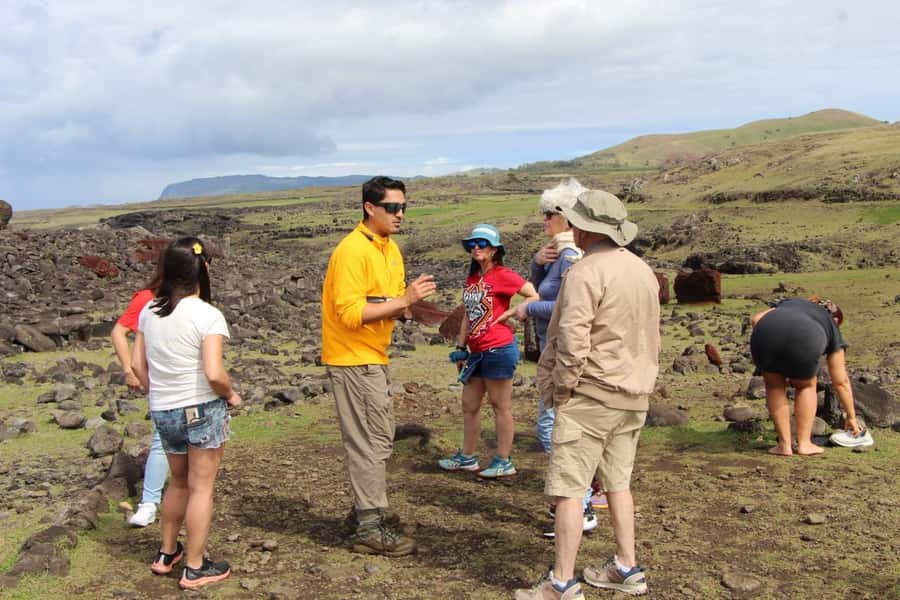
The afternoon outing heads northwest to Puna Pau Quarry. This site supplied the red stone used for the headdresses, or topknots, placed on some moai. It is an important stop because it reminds you that the statues and their finishing pieces did not always come from the same source.
Looking at the quarry helps you read the statues more carefully later. The moai are not simply large stone figures. Different parts came from different places, and the islanders had to move and place them with great effort. Puna Pau gives that practical side of the story a physical setting.
Next comes Ahu Akivi, home to seven moai. These statues are especially useful for comparing with other sites because they are presented as a group on a ceremonial platform. Your guide can help explain why this group matters within the wider pattern of Rapa Nui monuments.
The final stop is Tahai Village. Tahai is close to Hanga Roa, making it a convenient site to visit as the day winds down. It gives you another view of ahu construction and moai arrangement, and it is a good place to let the day’s earlier stops come together.
This half-day is likely to suit you if you want a compact introduction to quarrying, moai placement, and ceremonial platforms. It has more statue-focused appeal than the southern outing. Still, you should not expect every stop to feel equally dramatic. The value lies in seeing how the sites differ, not in finding a single spectacular viewpoint at each one.
Vaihu and Akahanga: A closer look at fallen moai sites
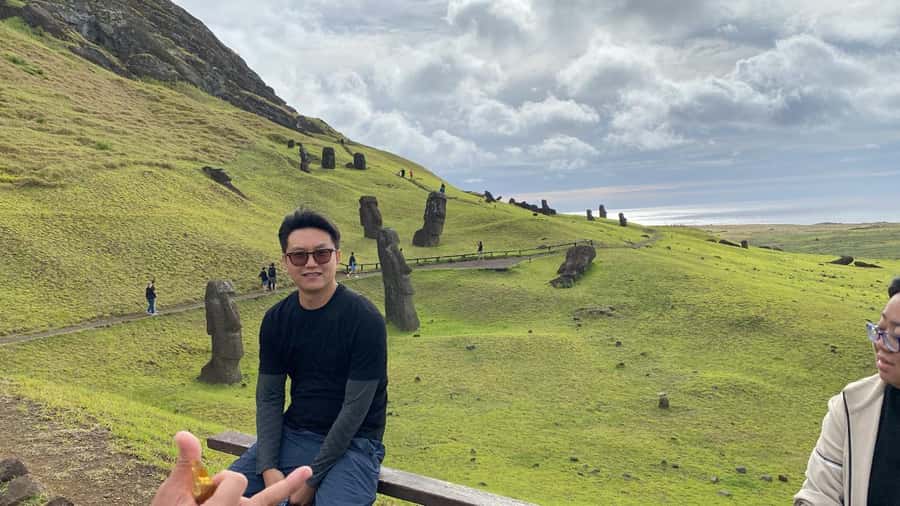
The second day begins with a full-day circuit through the southeast and northeast parts of the island. The first stops are the Vaihu Complex and Akahanga Village.
These sites help you see a different side of Rapa Nui’s monuments. The famous restored platforms can look orderly and complete. At places such as Vaihu and Akahanga, you may find a less polished impression of the archaeological remains. That contrast can help you understand that the island’s story includes both monumental achievement and periods of change.
Akahanga is also connected with the burial place of the first king of Rapa Nui. That detail gives the stop special importance beyond its moai remains. You are not simply checking another platform off a list. You are visiting a place tied to the island’s earliest royal tradition.
The schedule does not specify how long you spend at each early stop, so I would expect the guide to set the pace for the group. Stay close, listen for the site explanations, and save your questions. The day includes several major stops, and a little attention at each one will help you keep the sequence straight.
A completely different sort of day out of Easter Island:
- Full day tour – DREAM
★ 5.0 · 86 reviews - From Hanga Roa: Journey from Orongo to Ana Te Pahu
★ 4.3 · 75 reviews - Rapa Nui Stargazing
★ 4.5 · 62 reviews - Two days of Full Day Tour of Rapa Nui + Sunrise in Tongariki
★ 4.8 · 55 reviews
Rano Raraku: Where most of the moai began
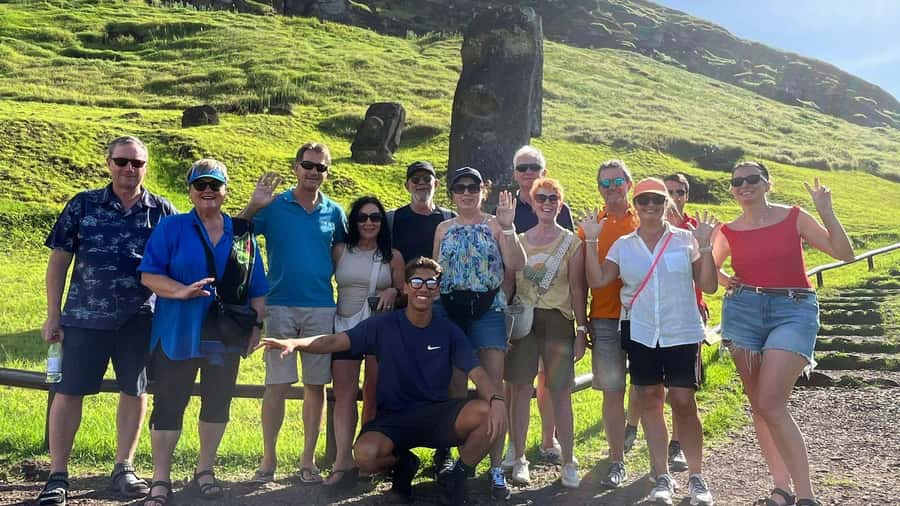
Rano Raraku is the centerpiece of the full-day tour. This quarry supplied most of the stone used for the island’s moai, so it offers the clearest answer to a basic question: where did these enormous figures come from?
At the quarry, the moai story changes. At other sites, you see statues after transport and placement. Here, you see the source of the material and the setting where the figures were shaped. That makes Rano Raraku one of the most valuable stops for understanding the scale of the work.
Allow yourself time to look beyond the largest or most obvious figures. The quarry is not just a backdrop for photographs. It shows the relationship between unfinished stone, carved forms, and the completed moai placed around the island.
Lunch is scheduled at a restaurant directly in front of the quarry. Food is not included, so bring money and confirm the available meal arrangements with the operator. The fixed lunch stop is practical, but it also means you have less freedom to choose where and when you eat.
This is a good point in the day to refill your water and reapply sunscreen. You will need both for the remaining outdoor stops, and the supplied packing advice also includes a hat and breathable clothing.
Ahu Tongariki: Fifteen moai in one powerful line
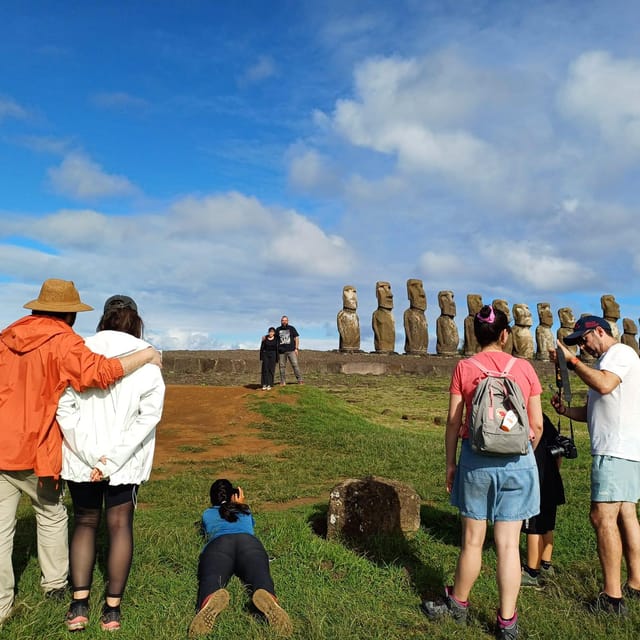
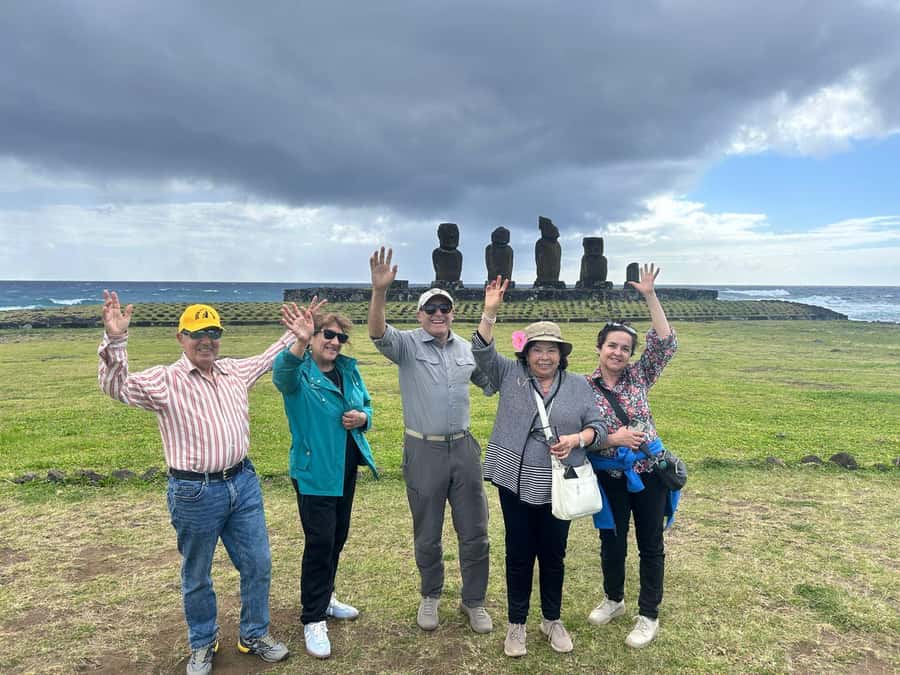
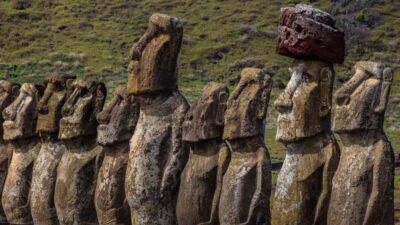
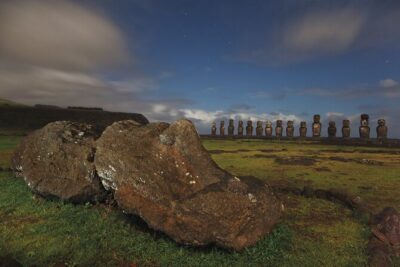
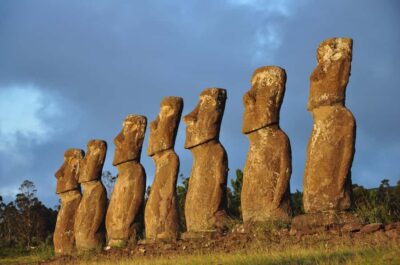
After lunch, the tour stops at Ahu Tongariki. Its 15 moai make it one of the island’s most striking ceremonial sites, and the scale is easy to appreciate even if you have already visited Ahu Akivi and Tahai.
Tongariki works because the statues are seen together. Instead of one or two figures, you get a long group arranged on a single platform. The shared setting makes the size and variety of the moai more apparent.
The tour information identifies one of the Tongariki figures as the heaviest statue ever erected on the island. That detail gives you something specific to look for, but do not let the record-holding fact distract from the wider scene. The power of the site comes from the whole platform, the arrangement of the figures, and the sense of effort required to place them there.
Bring your camera, but also give yourself a few minutes without looking through it. The value of Tongariki is not only the photograph. It is the chance to compare a major restored platform with the quarry you visited earlier.
Te Pito Kura and the largest planned moai
The next stop is Te Pito Kura, where you can see the largest moai ever built, measuring 10 meters tall. Even if the statue is not presented in the same way as the standing figures at Tongariki, its size gives you a useful sense of the ambition behind Rapa Nui’s monumental work.
This stop pairs well with Rano Raraku. At the quarry, you learn where the stone came from. At Te Pito Kura, you confront the scale of what the islanders attempted to carve and move.
The visit may appeal most to you if you enjoy comparisons. Look at the quarry source, the completed platform at Tongariki, and the enormous figure at Te Pito Kura as parts of one story. The tour does some of that connecting for you, but you will get more from it if you keep those earlier stops in mind.
Anakena Beach: An hour of sand, palms, and breathing room
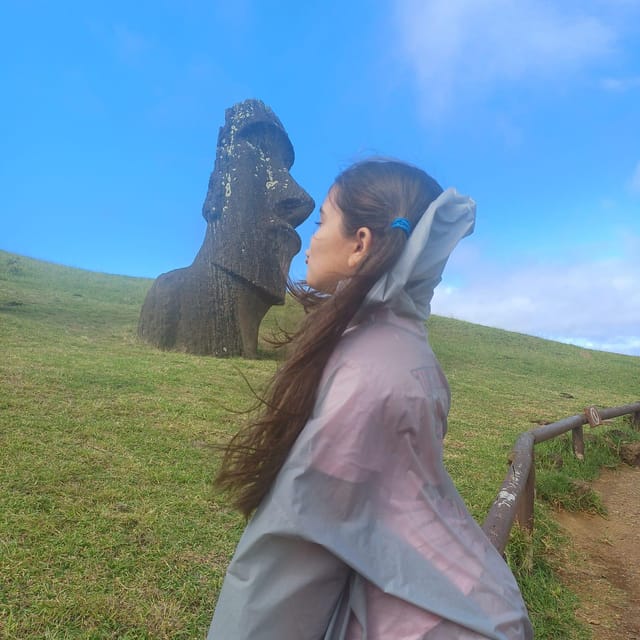
The final major stop is Anakena Beach, with one hour of free time. After a day of archaeological sites, this pause changes the mood completely.
Anakena is known here for its white sand and palm trees. The beach stop is not filler. It gives you time to rest after a full day outdoors and lets you see a softer coastal side of Rapa Nui.
Bring beachwear and a towel if you want to make the most of the hour. The packing list also calls for sunscreen, water, and a camera. You should not assume that free time means food or drinks are included, since those are specifically excluded from the package.
One hour is enough for a break, photos, and some time by the water, but it is not a full beach day. If you are booking mainly for swimming and relaxation, this package is not designed around that. If you want a welcome coastal pause after the moai sites, Anakena fits the day well.
Guide quality and language support
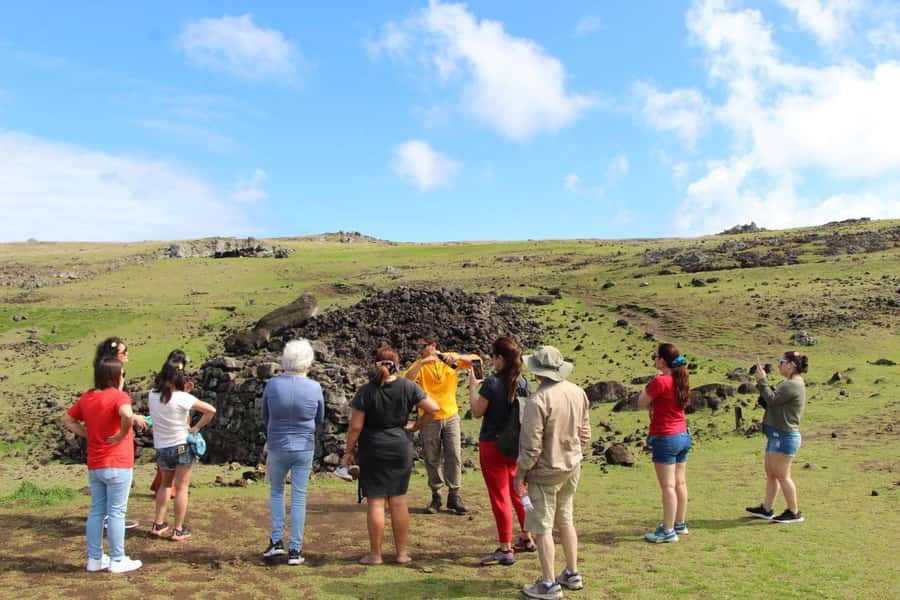
The package includes an English and Spanish-speaking guide. That matters because many of the sites can look similar at first glance: a platform, a group of stones, a crater, or a quarry. Clear explanations help you understand why each place is different.
Guide Uca received especially strong praise for professional handling of a group using two languages. That is useful information if you are concerned that bilingual guiding might slow the day or leave one language with less attention. A skilled guide can keep explanations clear while maintaining the schedule.
The experience does not provide a stated group size, so you should not assume a small, private tour. Hotel pickup means you board the bus outside your hotel in Hanga Roa, and the included transport removes much of the island’s driving work. It also means you will follow the group’s timing rather than setting your own pace.
What to pack and what to expect
Rapa Nui sightseeing here is outdoors from start to finish. I would pack:
- Comfortable walking shoes
- A hat and sunscreen
- Plenty of water
- Breathable clothing and an extra outdoor layer
- A camera
- Beachwear and a towel
- A passport, or an accepted copy
Smoking, alcohol, and drugs are not allowed. The tour is not suitable for wheelchair users, according to the supplied accessibility information.
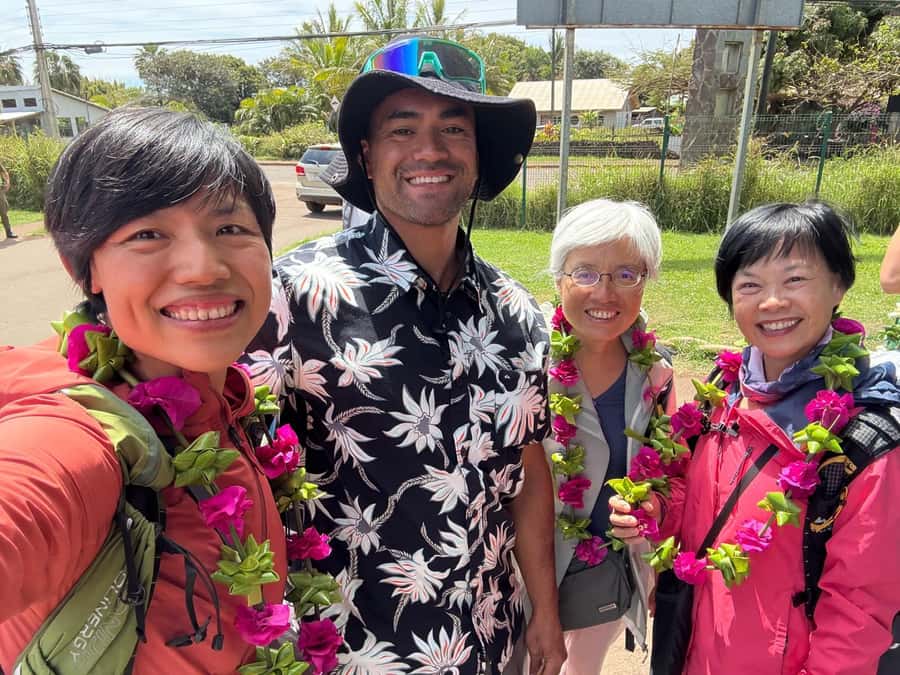
The airport reception with a flower necklace is included, along with hotel pickup and drop-off. That welcome is a pleasant extra, but the main practical benefit is having the transport arranged across several separate excursions.
Cancellation is free up to 24 hours before the activity for a full refund, and the reserve now, pay later option keeps payment flexible. The unusual point is the statement that the activity is valid for six hours from first activation, even though the package describes two half-day tours and one full-day tour. I would ask for clarification before paying, especially if you plan to spread the excursions across different days.
Who should book this Rapa Nui package?
I would choose this tour if you want to see the island’s principal moai sites without arranging separate transport. It is also a good fit if you appreciate having a guide explain the difference between a quarry, an ahu, a ceremonial village, and a coastal site.
The package suits first-time visitors who want broad coverage. It is less suited to you if you want long stretches of independent exploration, a private guide, or a full day devoted to one archaeological area.
At $177 per person, the value depends on how much you use the included transport and guiding. Add the national park admission and meals when comparing it with other options. The strongest value comes from the full-day circuit, especially Rano Raraku, Ahu Tongariki, Te Pito Kura, and Anakena Beach.
Should you book it?
Book this experience if you want an efficient, guided introduction to Rapa Nui and you value hotel transfers more than complete control over the schedule. The combination of the quarry, 15 moai at Tongariki, the 10-meter figure at Te Pito Kura, and Anakena Beach gives the full-day tour real weight.
If you have only one day, ask whether the full-day outing can be booked on its own. If you have several days and want to see the island’s major sites with less planning, this three-excursion package is a sensible choice. Just confirm the six-hour validity wording and remember that the park ticket, food, and drinks are extra.
FAQ
Where does the tour begin and end?
Pickup and drop-off are provided at your hotel in Hanga Roa. The listed pickup and return location is Hanga Roa.
How many excursions are included?
The package includes two half-day tours and one full-day tour.
Which sites are visited on the southern half-day tour?
The southern outing visits Orongo Ceremonial Village at Rano Kau Crater and the Ahu Vinapu ceremonial site.
Which sites are visited during the afternoon half-day tour?
The afternoon outing visits Puna Pau Quarry, Ahu Akivi, and Tahai Village.
What does the full-day tour include?
The full-day route includes the Vaihu Complex, Akahanga Village, Rano Raraku Quarry, Ahu Tongariki, Te Pito Kura, and Anakena Beach.
Is food included?
No. Food and drinks are not included. Lunch is scheduled at a restaurant in front of Rano Raraku Quarry.
Is the national park ticket included?
No. The national park ticket is not included in the price.
What languages are available for the guided tour?
The tour is guided in English and Spanish.
Just added around Easter Island
- Easter Island: 2 Full Days Private Tour★ 3.9 · 3 reviews
- Easter Island: Full Day Ancestral Caves and Orongo Village★ 5.0 · 3 reviews
- Easter Island: Customized recreational-tourist diving★ 5.0 · 3 reviews
- Ancestral fishing: Fishing with an experienced Rapa Nui★ 4.4 · 3 reviews
- Birdman Cult and Caves★ 4.0 · 5 reviews
- Easter Island: Moai Full Day Private Tour★ 4.8 · 5 reviews
- Rapa Nui: Polynesian Massage★ 4.8 · 5 reviews
- Volcanic Refuges: Excursion to Underground Civilization★ 4.7 · 8 reviews
Easter Island Tours, compared.
Two days of Full Day Tour of Rapa Nui + Sunrise in Tongariki
Read our review →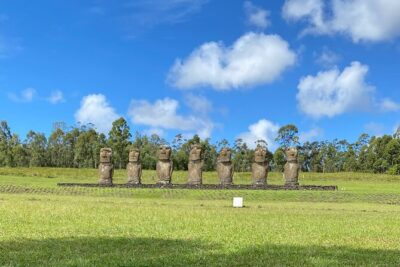
Browse the lists this tour appears in