
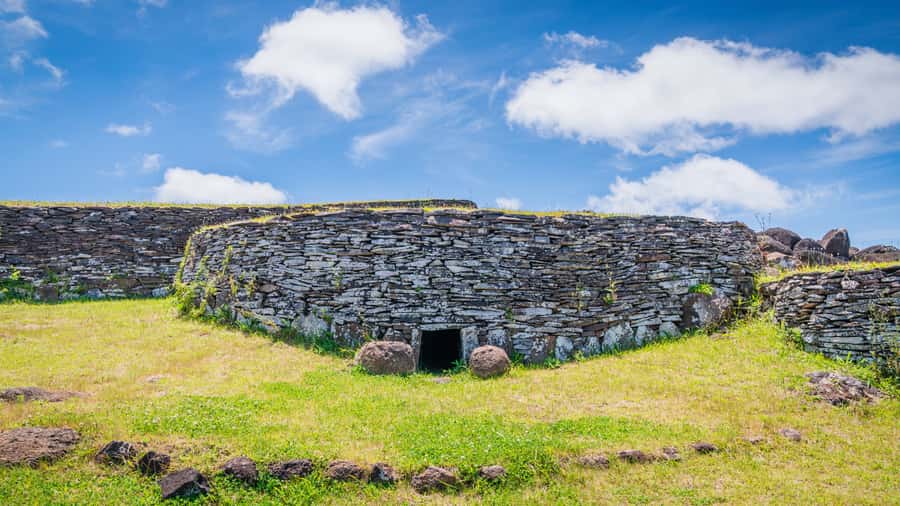
Reviewed · EASTER ISLAND TOURS
Easter Island: Full Day Ancestral Caves and Orongo Village
History is carved into the rock here. This six-hour private tour links Orongo Village and Rano Kau with several important ahu platforms and the island’s ancestral caves, giving you a broad look at Rapa Nui culture in one well-planned day. I especially like the chance to see the Birdman ceremonial site and the seven-explorer platform at Ahu Akivi. I also like that transportation, hotel pickup, and a certified guide are included.
The main consideration is the pace. You visit six major sites, with several short drives between them, so this is more of a wide-ranging introduction than a slow, single-site visit. The caves also require walking and are not suitable for wheelchair users. Still, if you have limited time on Easter Island, this private outing offers an efficient way to connect places that would otherwise be difficult to arrange independently.
In This Review
- Key points to know before booking
- Why this six-hour route works
- Rano Kau begins the day with scale
- Orongo connects cliffs, ceremony, and the Birdman contest
- Ahu Vinapu offers a close look at stonework
- Ahu Akivi brings the seven explorers into view
- Puna Pau explains the red stone crowns
- Ana Te Pahu takes you below the surface
- What the private Jeep tour adds
- The $219 price and what it buys you
- Who should book this experience
- Should you book the caves and Orongo tour?
- FAQ
- Where does the tour begin and end?
- How long does the tour last?
- What places are included?
- Is transportation included?
- Is the tour private?
- Which languages are available?
- Is a guide included?
- Is the Rapa Nui National Ticket included?
- Can I cancel for a refund?
Key points to know before booking
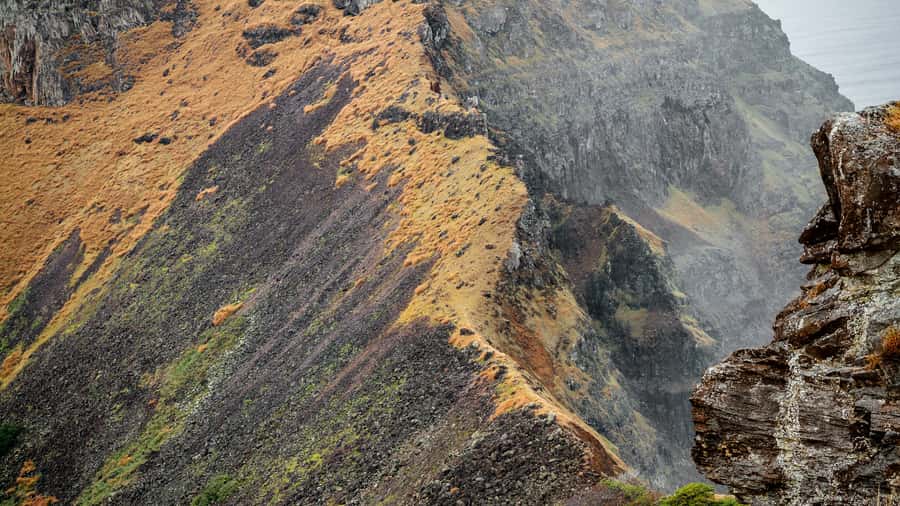
- Orongo puts the Birdman competition at the center of the day: You visit the ceremonial village beside Rano Kau and learn about Tangata Manu, the contest that shaped later Rapa Nui history.
- Ana Te Pahu adds a more intimate side of the island: Instead of only viewing monuments from the road, you enter an ancestral cave where people once lived.
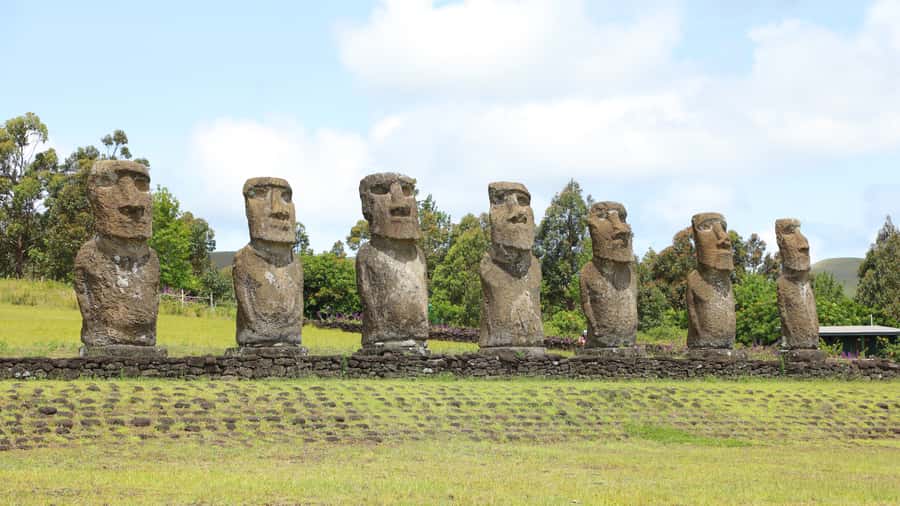
- Ahu Akivi represents the first seven explorers: This platform gives the day an important connection to Rapa Nui origin traditions.
- The private format keeps the day flexible: You travel by Jeep or SUV with your own group and a guide who speaks English, French, or Spanish.
- The volcanic views are a major reward: The stop at Rano Kau and the view from Orongo are among the strongest visual moments.
- Buy the national park ticket separately: It is not included, and you need the Rapa Nui National Ticket before the tour.
Why this six-hour route works
Easter Island can feel small on a map, but its major sites are spread around the island. This tour solves that problem with a private Jeep or SUV and a route that moves from the volcanic south to ceremonial platforms, a quarry for red stone, and a large cave system.
You begin with pickup in Hanga Roa. The first drive takes about 15 minutes, then the day unfolds through Rano Kau, Orongo, Ahu Vinapu, Ahu Akivi, Puna Pau, and Ana Te Pahu before returning to town.
That is a lot to fit into six hours. I see the appeal: you get cultural sites, archaeology, volcanic scenery, and caves without spending your whole visit arranging taxis or trying to understand local roads. The tradeoff is that some stops are brief. If one place grabs your attention, you may wish you had more time there.
Because the tour is private, you are not tied to a large group’s rhythm. That matters at places such as Orongo and Ana Te Pahu, where a good guide can explain what you are seeing rather than simply moving you from one photo stop to the next. Melinka, one of the named guides associated with this experience, earned praise for giving clear and professional explanations.
A few more Easter Island trips worth weighing up
- From Hanga Roa: Easter Island Sightseeing Full Day Tour
★ 4.5 · 189 reviews - Full day tour – DREAM
★ 5.0 · 86 reviews - Two days of Full Day Tour of Rapa Nui + Sunrise in Tongariki
★ 4.8 · 55 reviews
Rano Kau begins the day with scale
After the short drive from Hanga Roa, you spend about 20 minutes at Rano Kau with a guided visit. This volcanic crater is one of the day’s most dramatic settings, and it gives you a useful first sense of Easter Island’s natural power.
The crater view helps explain why Orongo was placed where it was. From this high area, you can look across the enormous volcanic formation and out toward the sea. The combination of rock, water, and open sky makes this an excellent place to get your bearings before the cultural sites begin.
Twenty minutes is enough for an introduction and photographs, but it is not a long stop. If you enjoy geology or scenic viewpoints, this may feel short. The private format gives you a better chance of asking questions during the visit, though the stated schedule still keeps the day moving.
Orongo connects cliffs, ceremony, and the Birdman contest
A five-minute drive brings you to Orongo for about an hour. This is the central historical stop, and it deserves the generous amount of time given to it.
Orongo was a ceremonial village associated with Tangata Manu, the Birdman competition. The site is not simply a collection of stone buildings. It represents a later phase of Rapa Nui society, when political and religious power centered on the contest and the annual selection of the Birdman.
Your guide can help you read the remains as more than low stone structures. The village, the crater, the sea, and the nearby islands all belong to the same setting. You also have the chance to see petroglyphs and engravings connected with ancestral beliefs.
This is where the tour’s focus on culture pays off. Many visitors come to Easter Island expecting only moai, but Orongo shows a different chapter of the island’s past. Allow yourself time to listen, look closely, and take in the setting rather than treating it as a quick photo stop.
The terrain and open exposure may make this a demanding stop for some people. The activity is not suitable for wheelchair users, and anyone with limited mobility should ask about the walking conditions before booking.
Ahu Vinapu offers a close look at stonework
The next drive takes about 10 minutes, followed by a 30-minute guided visit at Ahu Vinapu. This is a photo stop as well as a place to examine the construction of an ahu platform.
The value here is detail. At a distance, an ahu can look like a broad pile of stone. Up close, the arrangement and scale make the work easier to appreciate. Your guide can point out features that are easy to miss when you are looking only for standing moai.
You should also expect a change of mood from Orongo. Orongo is tied to ceremony and the Birdman competition, while Vinapu invites you to pay attention to masonry and the treatment of stone. A half hour is practical for a guided explanation and photographs, though it may feel brief if you want to study every section.
Since transportation is included, you do not need to arrange a separate ride between these sites. That convenience is especially useful on a private day when each stop is part of a longer circuit.
A completely different sort of day out of Easter Island:
- From Hanga Roa: Rapa Nui Culture Sightseeing Tour
★ 4.6 · 307 reviews - From Hanga Roa: Easter Island Highlights 2-Day Tour
★ 4.3 · 205 reviews - From Hanga Roa: Journey from Orongo to Ana Te Pahu
★ 4.3 · 75 reviews - Rapa Nui Stargazing
★ 4.5 · 62 reviews
Ahu Akivi brings the seven explorers into view
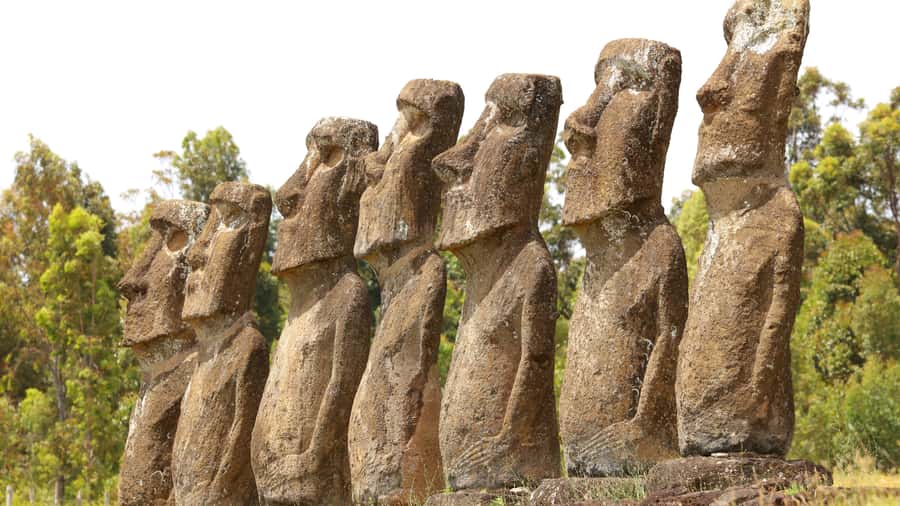
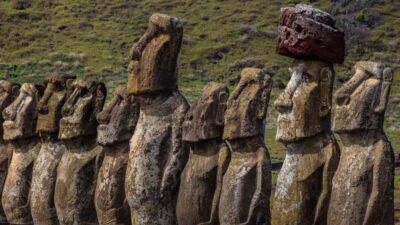
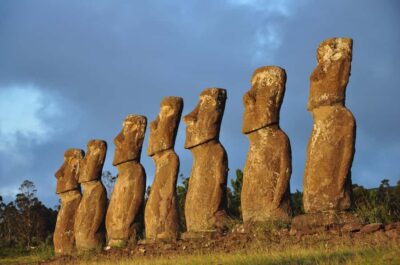
After about 20 minutes on the road, you reach Ahu Akivi for a 30-minute visit. This platform is described as representing the first seven explorers, giving it a special place in Rapa Nui tradition.
The site adds a story of origins to the day. After Orongo’s focus on the Birdman competition and Vinapu’s focus on construction, Ahu Akivi shifts your attention to the arrival and identity of the island’s people.
This is also one of the stops where a guide’s explanation matters most. The platform’s meaning is not obvious from a quick glance. A certified guide can provide the cultural context that turns a line of stone figures into part of a much larger story.
The schedule gives you enough time to see the platform, hear the main explanation, and take photographs. It is not designed for a long archaeological study. If Ahu Akivi is especially important to you, tell the guide early in the day so you can use your private format well.
Puna Pau explains the red stone crowns
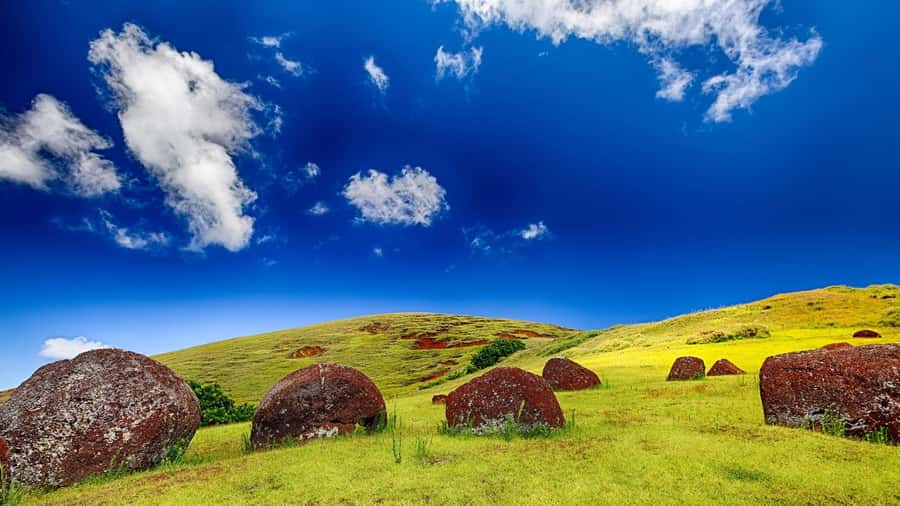
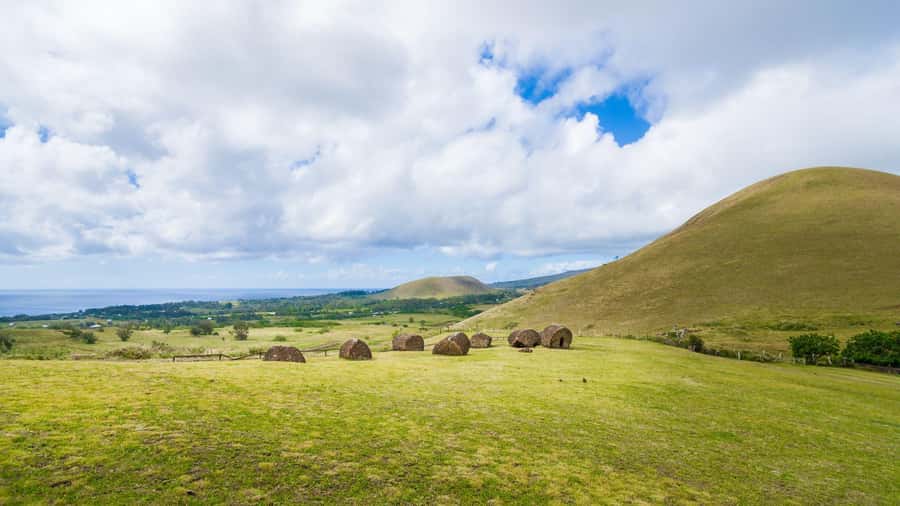
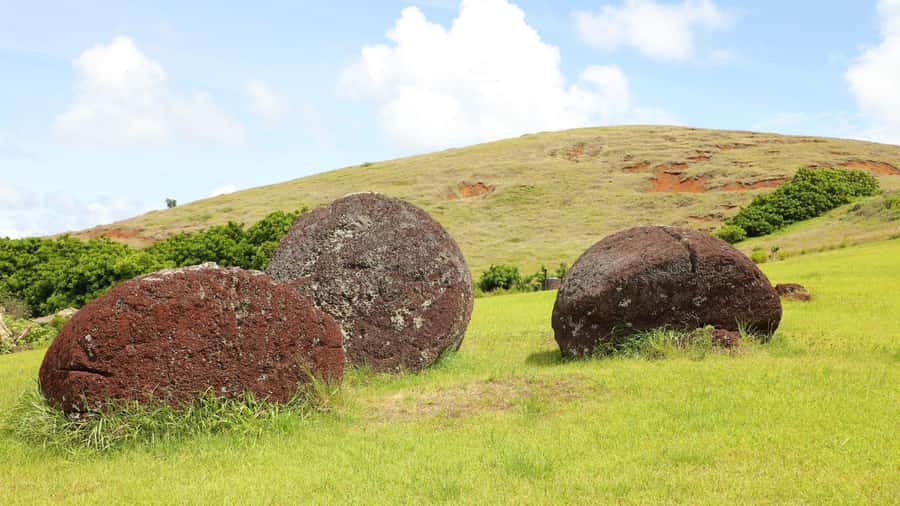
A five-minute drive takes you to Puna Pau, where the tour allows about 40 minutes. This stop focuses on the red stone associated with the top elements placed on some moai.
Puna Pau helps complete the practical picture of moai construction. At other sites, you see the finished monuments. Here, you see the source area connected with the red stone pieces, giving you a clearer idea of the labor and planning involved in moving separate parts across the island.
The 40-minute visit is longer than the time given to Vinapu and Ahu Akivi, which makes sense. There is more to explain, and the site has its own visual character. You can take photographs while the guide explains how Puna Pau fits into the island’s ceremonial tradition.
This stop works well in the middle of the tour. By now, you have seen several kinds of sacred places, and Puna Pau adds a production site rather than another platform. That variety keeps the day from becoming a string of similar monuments.
Ana Te Pahu takes you below the surface
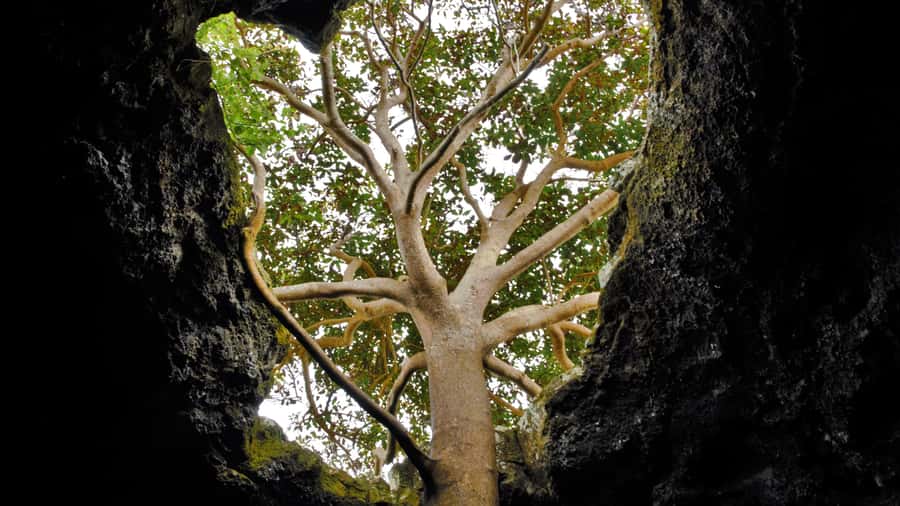
The final major stop is Ana Te Pahu, reached after about 10 minutes. You spend roughly one hour with a guide, making it one of the longest visits of the day.
This is the part I would expect to feel most different from a standard Easter Island sightseeing route. You enter ancestral caves where native inhabitants once lived and see rock art and engravings connected with the island’s earlier residents. The experience moves away from open ceremonial spaces and into a more enclosed setting shaped by volcanic rock.
You should wear practical clothing and shoes suitable for walking, although the provided information does not specify equipment or exact cave conditions. The tour is not suitable for wheelchair users, so anyone concerned about uneven or confined access should check directly with the operator before reserving.
Ana Te Pahu also gives the guide room to explain daily life, not just monuments. That makes the site valuable because it shows where people lived, used shelter, and created meaning outside the large ceremonial platforms.
The cave visit is not a casual add-on. It is a full guided hour, and you should expect the day to finish with a more physical activity than the earlier photo stops. For many people, that contrast will be one of the strongest parts of the experience.
What the private Jeep tour adds
Transportation is by Jeep or SUV, with drives ranging from five to 20 minutes. Hotel pickup and return in Hanga Roa are included, so you can focus on the sites rather than arranging each transfer.
The vehicle matters because the route covers several parts of the island. You are not simply visiting one nearby attraction. You move between a crater, a ceremonial village, multiple ahu, a stone source area, and a cave.
A private group also gives you a more personal setting. You can ask for clarification, discuss a detail that interests you, or make the most of the guide’s language skills. The tour is offered in English, French, and Spanish.
The guide is certified by Mauhenua and Sernatur. That provides a useful level of confidence when visiting culturally important places. Melinka was specifically praised for offering plenty of new information and for leading the tour in a professional way.
The $219 price and what it buys you
At $219 per person, this is not the cheapest way to see Easter Island. The price makes more sense if you value a private group, hotel transportation, a certified guide, and a full six-hour route covering seven stops.
You are paying for more than a vehicle transfer. The day includes interpretation at Orongo, Vinapu, Ahu Akivi, Puna Pau, and Ana Te Pahu, along with time at Rano Kau. For a first visit, that breadth can save you from spending separate days organizing transport.
The Rapa Nui National Ticket is not included, so add that cost to your planning. You must buy the ticket before the tour. Since the ticket requirement is separate, check its current price and access rules when you make your arrangements.
The value is strongest for couples, families, or small private groups who want one structured day with several major sites. It is less compelling if you prefer to spend an entire morning at one location or if you already have transport and a guide arranged.
Who should book this experience
I would recommend this tour if you want a strong first look at Easter Island and like having the history explained as you go. It suits people who want more than moai photographs, especially those interested in ceremony, ancestral life, rock art, and the island’s volcanic setting.
It also works well if your time in Hanga Roa is limited. Six hours covers a great deal without requiring you to plan a complicated route.
You should think twice if you use a wheelchair, have difficulty walking through cave areas, or want a slow and highly specialized archaeological visit. The experience is also listed as unsuitable for people over 95 years old. Alcohol and drugs are not allowed.
Should you book the caves and Orongo tour?
Book it if you want one private day that ties together the island’s major themes: volcanic origins, ceremonial life, moai platforms, red stone, ancestral caves, and the Birdman competition. The views at Rano Kau and Orongo are a major draw, while Ana Te Pahu gives the day a more personal connection to everyday life.
Skip it if your priority is lingering at one site or keeping costs as low as possible. For most first-time visitors with six hours to spare, the combination of private transportation, certified guiding, and a wide route makes the $219 price reasonable, provided you remember to buy the national park ticket separately.
FAQ
Where does the tour begin and end?
The tour begins with pickup in Hanga Roa and returns to Hanga Roa at the end of the six-hour experience.
How long does the tour last?
The tour lasts six hours, including transportation between the sites.
What places are included?
The route includes Rano Kau, Orongo, Ahu Vinapu, Ahu Akivi, Puna Pau, and Ana Te Pahu.
Is transportation included?
Yes. Transportation by Jeep or SUV, including pickup and return in Hanga Roa, is included.
Is the tour private?
Yes. This is a private group tour.
Which languages are available?
The live guide is available in English, French, and Spanish.
Is a guide included?
Yes. The tour includes a guide certified by Mauhenua and Sernatur.
Is the Rapa Nui National Ticket included?
No. You must buy the Rapa Nui National Ticket separately before the tour.
Can I cancel for a refund?
Yes. You can cancel up to 24 hours in advance for a full refund. You can also reserve now and pay later.
Just added around Easter Island
- Easter Island: 2 Full Days Private Tour★ 3.9 · 3 reviews
- Easter Island: Customized recreational-tourist diving★ 5.0 · 3 reviews
- Ancestral fishing: Fishing with an experienced Rapa Nui★ 4.4 · 3 reviews
- Birdman Cult and Caves★ 4.0 · 5 reviews
- Easter Island: Moai Full Day Private Tour★ 4.8 · 5 reviews
- Rapa Nui: Polynesian Massage★ 4.8 · 5 reviews
- Rapa Nui: 3 Excursions with Hotel Transfers★ 4.3 · 6 reviews
- Volcanic Refuges: Excursion to Underground Civilization★ 4.7 · 8 reviews
Easter Island Tours, compared.
Two days of Full Day Tour of Rapa Nui + Sunrise in Tongariki
Read our review →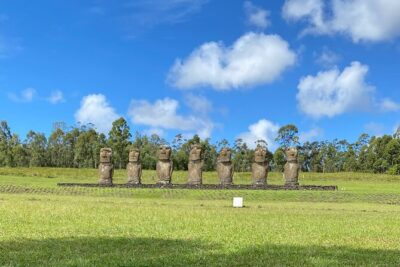
Browse the lists this tour appears in