
Reviewed · EASTER ISLAND TOURS
Half Day Tour in Rapa Nui
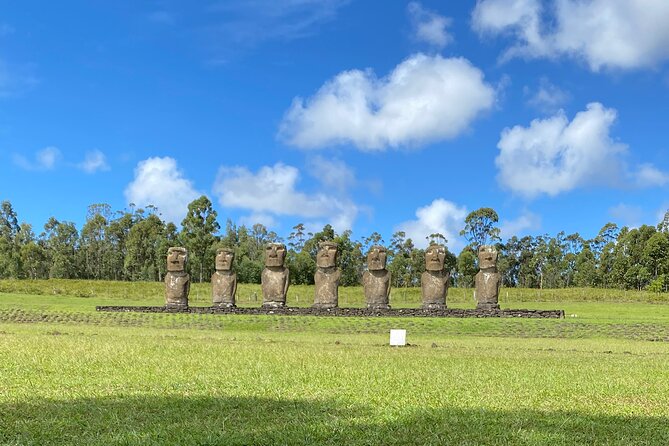
Rapa Nui rewards curious eyes. I like that this private tour goes beyond the usual moai viewpoints, especially at Ahu Akivi, where seven moai face inland toward the sea, and at Puna Pau, the quarry that supplied the red stone cylinders worn by many statues. I also like the small group limit of six, which gives you a better chance to ask questions and set a comfortable pace. The main caution is timing: the experience is advertised as two to four hours, but the listed visits can take much longer if each stop receives its full attention.
This is a history-first outing rather than a quick photo drive. Your guide connects oral tradition, archaeology, volcanoes, and the origin stories of the Rapa Nui people. Guides Nico and Nicolas receive repeated praise for patience, warmth, punctuality, and their ability to explain the island with real personal feeling, though the unusually high price of $1,500 per person means you should compare it carefully with other private tours before booking.
In This Review
- Key points at a glance
- Why this half-day tour is different
- Ahu Akivi and its seven unusual moai
- Puna Pau, the quarry behind the red pukao
- Rano Kau and the crater’s changing story
- Orongo and the dangerous Birdman contest
- What the guide adds to the day
- Price, timing, and what you actually receive
- Who should book this Rapa Nui tour?
- Should you book it?
- FAQ
- How long does the Half Day Tour in Rapa Nui last?
- How many people can join the tour?
- Is pickup from my accommodation available?
- What is included in the price?
- Are entrance fees included at every site?
- Should I bring water and lunch?
Key points at a glance
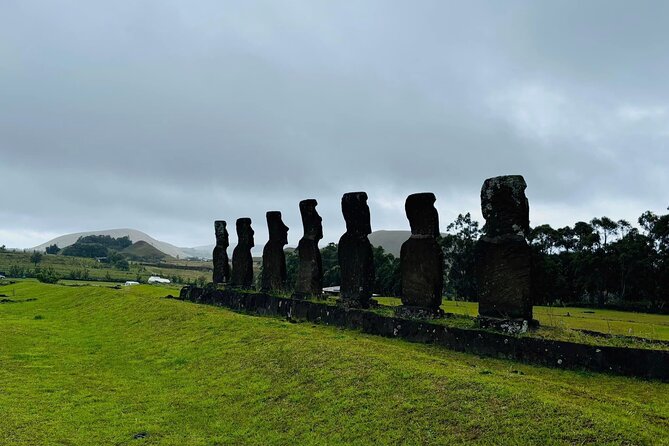
- Seven moai at Ahu Akivi: See the unusual statues that face toward the ocean, with stories tied to Rapa Nui oral tradition.
- Puna Pau’s red-stone quarry: Learn where the pukao, or red headpieces, were made and enjoy broad 180-degree views.
- Rano Kau and Orongo together: Visit a giant volcanic crater and the ceremonial village linked to the Birdman competition.
- Private transport for up to six: You ride in an air-conditioned vehicle, with pickup offered from your accommodation.
- A guide-led cultural focus: Nico and Nicolas are praised for explaining language, customs, traditions, and island history with patience.
- Snacks included, water not included: Soda and snacks are provided, but you should bring your own bottled water.
Why this half-day tour is different
Many Rapa Nui excursions focus on the island’s most famous statues. This one takes a slightly different route through the northern and central parts of the island, with a stated goal of explaining where the culture began and how the people arrived.
That focus matters because the sites are not simply isolated monuments. Ahu Akivi gives you a place to think about moai placement and oral tradition. Puna Pau explains one part of the statue-making process. Rano Kau and Orongo move the story toward ceremony, leadership, and the Birdman competition.
I like the way these stops fit together. You are not just collecting photographs. You are following a chain of ideas: origins, ancestors, stonework, volcanic geography, and power.
The experience is private, or at least very small, with no more than six people. That is useful at places where you may want to pause, ask for a pronunciation, or hear a story twice. It also gives the guide more room to adapt to your group than a large coach tour would.
The setting is comfortable by excursion standards. Pickup is offered, transportation is private, and the vehicle is air-conditioned. Snacks and soda are included. The tradeoff is that lunch is not included, and bottled water is specifically left to you. The operator recommends bringing your own water, so do not rely on the snack service to keep you hydrated.
A few more Easter Island trips worth weighing up
- From Hanga Roa: Rapa Nui Culture Sightseeing Tour
★ 4.6 · 307 reviews - From Hanga Roa: Easter Island Highlights 2-Day Tour
★ 4.3 · 205 reviews - From Hanga Roa: Easter Island Sightseeing Full Day Tour
★ 4.5 · 189 reviews
Ahu Akivi and its seven unusual moai
The tour begins with pickup at your accommodation, followed by roughly 30 minutes of driving to Ahu Akivi. The site visit is listed at about one hour, which should give you enough time to look closely and listen rather than simply stop for a quick picture.
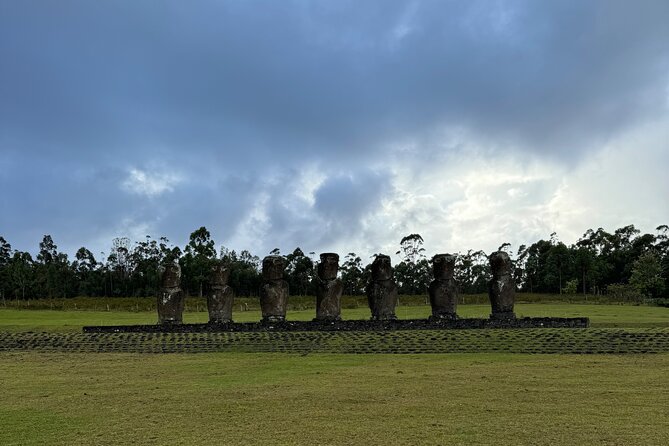
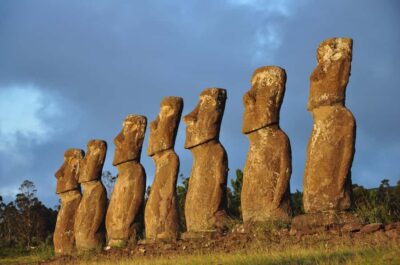
Ahu Akivi is unusual because its seven moai face toward the sea. That detail immediately sets it apart from many other statue sites on Rapa Nui, where the figures are generally understood in relation to communities and ceremonial platforms rather than as statues facing outward toward the water.
Your guide uses the site to explain stories from oral tradition and the mysteries connected with this remote place. This is where a local guide can add real value. A plaque can tell you what a site is called, but it cannot easily give you the layers of story, belief, and interpretation that make the place meaningful.
Nico and Nicolas are both praised for their patient explanations. Several comments describe Nico as a guide who takes the time needed to tell the story, rather than racing through the stop. That is especially important here, since the value of Ahu Akivi depends less on the amount of ground covered than on understanding why the site matters.
You should expect some walking and time outdoors. The supplied details say most people can participate, but they do not provide a precise accessibility assessment. If you have mobility concerns, ask the operator about the walking surface and the amount of uphill movement before paying.
Puna Pau, the quarry behind the red pukao
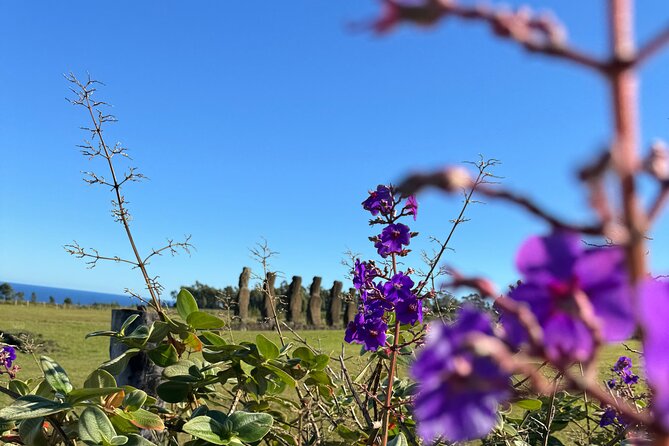
The drive from Ahu Akivi continues to Puna Pau. The visit is described as about 30 minutes, although the site summary also refers to an hour at the pukao quarry. I would treat the schedule as flexible rather than exact.
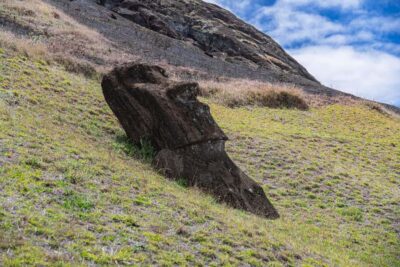
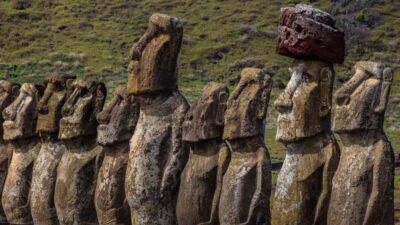
Puna Pau is the source of the red volcanic stone used for the pukao, the cylindrical pieces placed on the heads of some moai. Seeing the quarry helps correct a common misunderstanding: the statue and its red top were not necessarily made from the same material or in the same place.
The stop also brings a strong visual reward. From Puna Pau, you can take in a 180-degree view across the island. The broad outlook gives useful context after the more focused visit at Ahu Akivi. You see the island not as a collection of separate attractions, but as a place where quarries, ceremonial sites, and settlements are spread across one small Pacific territory.
This stop is shorter than Ahu Akivi, so your guide’s explanation will shape the experience. Ask how the pukao were made, moved, and placed if that subject interests you. The tour description promises stories about the quarry and the red cylinders, but it does not specify the exact transport theories or archaeological details that will be covered.
Rano Kau and the crater’s changing story
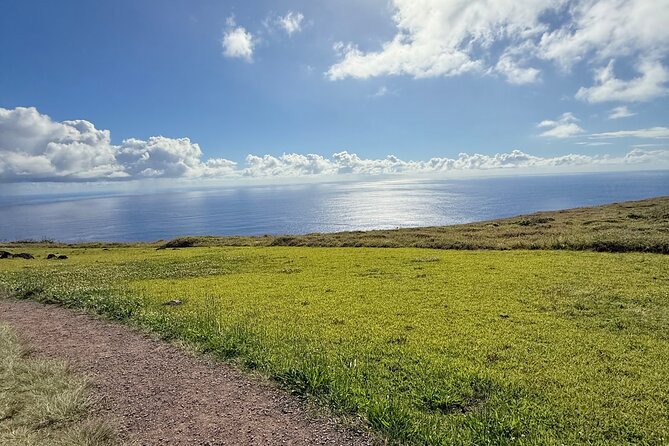
The route then turns toward Rano Kau, described as one of the most impressive places on the island. The volcano has Rapa Nui’s largest crater, and its interior is presented as a natural greenhouse.
That description points to the site’s special character. Rano Kau is not only a dramatic volcanic formation. Its crater also forms a distinct natural environment, which gives the place a different feel from the open coastal platforms and stone quarries visited earlier.
The tour connects Rano Kau with the story of Haumaka, an important figure in Rapa Nui oral tradition. This is one of the strongest features of the excursion: the guide does not separate geology from culture. The volcano becomes part of the island’s origin story rather than just a scenic stop.
The visit is listed at about 30 minutes, but the next section includes a climb and a longer visit at Orongo. You should plan for weather changes and outdoor exposure. Rapa Nui conditions can shift, and several accounts describe rain during tours. The guide’s ability to adjust the pace and offer alternatives is praised, but you should still bring practical clothing and water.
Admission to Rano Kau is not included in the tour price. That is a point to clarify before departure, especially because admission is included at Ahu Akivi and Puna Pau but not at Rano Kau or Orongo. The supplied information does not give the separate fee, so ask the operator for the current amount.
A completely different sort of day out of Easter Island:
- Full day tour – DREAM
★ 5.0 · 86 reviews - From Hanga Roa: Journey from Orongo to Ana Te Pahu
★ 4.3 · 75 reviews - Rapa Nui Stargazing
★ 4.5 · 62 reviews - Two days of Full Day Tour of Rapa Nui + Sunrise in Tongariki
★ 4.8 · 55 reviews
Orongo and the dangerous Birdman contest
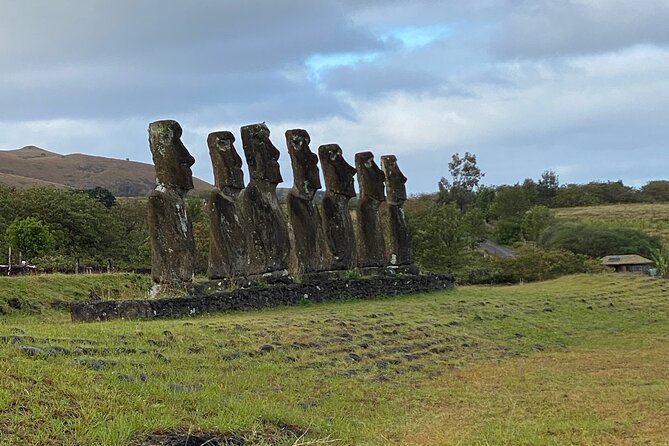
The final major stop is Orongo, the ceremonial village on Rano Kau. The schedule allows about an hour for the climb and another hour for the village, though the itinerary also lists a 30-minute duration for this section. Again, the published times do not line up neatly.
Orongo is tied to the Birdman competition, one of the most dramatic ceremonial traditions associated with Rapa Nui. The tour explains how strong contenders risked their lives in an effort to become the supreme leader. That story gives the village a clear human dimension. You are not just looking at stone houses and a crater edge. You are considering competition, authority, danger, and belief.
The setting should be one of the visual highlights of the morning or afternoon. Rano Kau provides the large volcanic setting, while Orongo adds the ceremonial detail. The two stops work best together, so I would not want to rush either one.
Admission to Orongo is not included. Since both Rano Kau and Orongo are listed as separate paid entries, make sure you understand what your national park access arrangements require before setting out.
The climb is the most important physical consideration in the itinerary. The details say most people can participate, but no distance or grade is given. If you are traveling with older family members, contact the agency in advance. The company has been praised for looking after older adults and for adjusting to changing weather, but a personal conversation is still the sensible step.
What the guide adds to the day
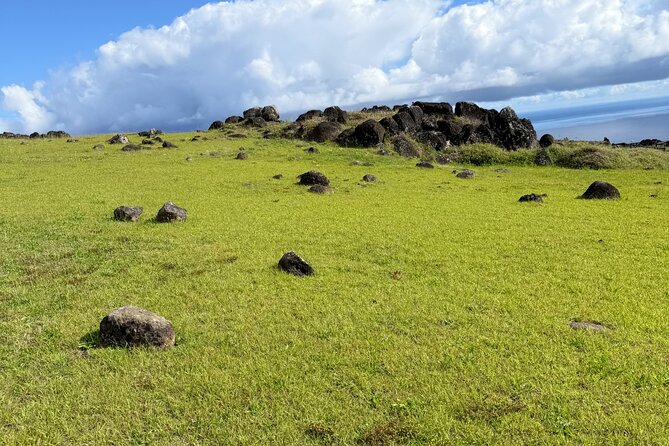
The guide may be the deciding factor here. Nico and Nicolas are repeatedly praised for explaining Rapa Nui history, customs, language, and traditions in a friendly way. The strongest pattern is not simply that they know facts. It is that they take time, answer questions, and try to make the visit personal.
That approach suits this route. Ahu Akivi, Puna Pau, Rano Kau, and Orongo all carry stories that can be reduced to a few lines if the guide is in a hurry. A patient guide can connect the sites and explain why they matter to Rapa Nui culture.
Several comments also describe the agency as helpful with other plans on the island. That may be useful if you need advice about restaurants or other activities, although those services are not formally listed as part of this half-day outing.
One unusual detail appears in the feedback: one family noted onboard Wi-Fi and Starlink. Treat that as an individual vehicle experience, not a guaranteed feature. The official inclusions specify private transportation and air conditioning, but they do not promise Wi-Fi.
The tone seems warm and informal. That can be a plus if you want an easy conversation rather than a formal lecture. If you prefer a strictly academic tour, ask about the guide and style when booking.
Price, timing, and what you actually receive

At $1,500 per person, this is an expensive excursion. The value depends heavily on how many people are in your booking. A small private group of six spreads the cost differently from a booking for one or two people, so ask whether the price changes with group size and whether the amount is shown in your preferred currency.
For that price, you receive private transportation, an air-conditioned vehicle, pickup, snacks, soda, and a guide-led route through four important sites. The small group cap is a real benefit if you want personal attention and a flexible pace.
Still, admission is not included at Rano Kau or Orongo, lunch is not included, and water is not included. Those extra costs are not likely to transform the total price, but they should be part of your calculation.
The timing needs special care. The headline duration is two to four hours, yet the detailed schedule includes a 30-minute transfer, one hour at Ahu Akivi, time at Puna Pau, Rano Kau, and Orongo, plus another transfer back to your accommodation. If you want to give each site its proper time, the outing may run beyond the shortest advertised estimate.
Ask for the expected start and return time before booking connecting activities. The meeting window is listed as 9:30 to 10:00 AM, from August 1, 2024, through June 18, 2026, but the information does not clearly state whether every booking begins at the same time within that window.
The experience is offered every day of the week during the stated operating period. Confirmation is provided at booking, and free cancellation is available up to 24 hours before the start time. Less than 24 hours before departure, cancellations and changes are not accepted for a refund.
Who should book this Rapa Nui tour?
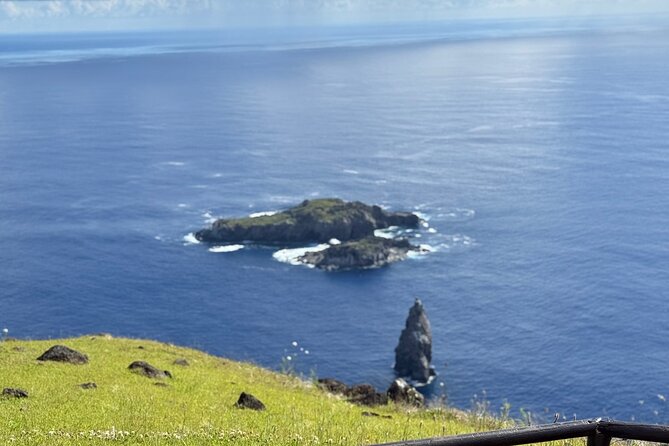
I would choose this tour if you want a compact cultural introduction with a strong guide and a private vehicle. It suits families, couples, and small groups who prefer questions and conversation over a large bus format.
It is also a good fit if you want more than the standard moai photo stops. The focus on origins, oral tradition, the pukao quarry, and the Birdman ceremony gives the day a clear purpose.
I would hesitate if you are watching your budget, need a precisely timed two-hour outing, or want lunch and water handled for you. I would also ask more questions if anyone in your group has difficulty with uphill walking.
Should you book it?
Book this half-day Rapa Nui tour if personal guiding and cultural context matter more to you than getting the lowest price. The route is well chosen, the group is capped at six, and the attention given by Nico or Nicolas can turn familiar sites into a connected story about the island.
Before paying, confirm the total duration, the separate admission costs for Rano Kau and Orongo, the exact pickup time, and the price for your group size. Bring water, allow extra time, and do not schedule a tight afternoon commitment.
If those details work for you, this is a thoughtful way to begin understanding Rapa Nui beyond its famous statues.
FAQ
How long does the Half Day Tour in Rapa Nui last?
The experience is advertised as approximately two to four hours. The detailed stop times suggest that the full visit may take longer if you spend the planned time at every site, so confirm the expected return time before booking other activities.
How many people can join the tour?
The maximum group size is six people.
Is pickup from my accommodation available?
Yes. Pickup is offered, and the tour begins with transportation from your accommodation to Ahu Akivi.
What is included in the price?
Private transportation, an air-conditioned vehicle, snacks, and soda are included.
Are entrance fees included at every site?
No. Admission is included at Ahu Akivi and Puna Pau. Admission is not included at Rano Kau or Orongo.
Should I bring water and lunch?
Yes. Bottled water is not included, and you are advised to bring your own. Lunch is also not included, though you can be left at a place to eat at the end of the excursion.
Just added around Easter Island
- Easter Island: 2 Full Days Private Tour★ 3.9 · 3 reviews
- Easter Island: Full Day Ancestral Caves and Orongo Village★ 5.0 · 3 reviews
- Easter Island: Customized recreational-tourist diving★ 5.0 · 3 reviews
- Ancestral fishing: Fishing with an experienced Rapa Nui★ 4.4 · 3 reviews
- Birdman Cult and Caves★ 4.0 · 5 reviews
- Easter Island: Moai Full Day Private Tour★ 4.8 · 5 reviews
- Rapa Nui: Polynesian Massage★ 4.8 · 5 reviews
- Rapa Nui: 3 Excursions with Hotel Transfers★ 4.3 · 6 reviews
Easter Island Tours, compared.

Two days of Full Day Tour of Rapa Nui + Sunrise in Tongariki
Read our review →
Browse the lists this tour appears in