
Reviewed · EASTER ISLAND TOURS
Ahu Vinapu, Rano Kao and Orongo City Half-Day Tour
Three stops, one sharp look at Rapa Nui. This three-hour outing links Ahu Vinapu, the crater of Rano Kau, and Orongo, the village tied to the island’s famous birdman ceremony. I like the small groups of no more than 10 people and the chance to see three very different sides of Easter Island in one morning or afternoon.
I also like the guide-led storytelling, especially after Uka was praised as a friendly and interesting guide. The main drawback is the extra $100 Rapa Nui National Park entrance fee, which is not included in the $91 tour price. That admission cost is higher than the tour itself, so you should include it when judging the value.
In This Review
- Key points to know before booking
- Why this three-hour route works
- Ahu Vinapu and the island’s great stone platforms
- Rano Kau’s crater lake and offshore islets
- Orongo village and the birdman ceremony
- What the guide adds to the experience
- Price, park admission, and overall value
- Pickup, timing, and practical limits
- Who will get the most from this tour?
- Should you book Ahu Vinapu, Rano Kau, and Orongo?
- FAQ
- How long does the tour last?
- What sites are included?
- Is the Rapa Nui National Park entrance fee included?
- Is hotel pickup included?
- Are cruise passengers able to join the tour?
- What languages are available?
- What should I bring, and what is not allowed?
Key points to know before booking
- Ahu Vinapu reveals unusual stonework: One of the largest ceremonial platforms on Rapa Nui has carefully fitted slabs that invite comparisons with Inca construction.
- Rano Kau offers a huge volcanic view: The crater contains one of the island’s three natural freshwater bodies.
- Orongo explains the birdman tradition: The village’s stone houses and sacred petroglyph site connect directly to ceremonies held between 1600 and 1866.
- Small groups keep the tour manageable: The maximum group size is 10 people, with English and Spanish guiding.
- Hotel pickup is included: Transfers cover hotels in Hanga Roa, but not cruise passengers coming ashore.
- The price needs careful calculation: The $91 tour fee does not include the $100 national park entrance fee.
Why this three-hour route works
Rapa Nui can feel like a big assignment if you try to organize every major site on your own. This route gives you a focused introduction to the island’s ceremonial stonework, volcanic setting, and birdman culture without taking up a full day.
The order also makes sense. You begin at Vinapu, where the main interest is human construction and the mystery around the great stone platform. At Rano Kau, nature takes over with a broad view of the crater and offshore islets. Orongo then brings the visit back to people, ritual, and political power.
I think this is a good first outing if you have limited time in Hanga Roa. Three hours is long enough to reach the major points without making you commit an entire day to one part of the island. The trade-off is that the schedule is compact. You will get an introduction to each place, not an unhurried, all-day examination.
The tour is led in English or Spanish, and the group is limited to 10 participants. That small size matters at sites where you want to hear the guide clearly and ask a question without competing with a busload of people.
A few more Easter Island trips worth weighing up
- Easter Island: Half-Day Archaeology Tour
★ 4.2 · 19 reviews - Santiago Half-Day Walking Tour with Hotel Pick up & Brunch
★ 4.7 · 148 reviews - Half-Day Small-Group Panoramic Santiago Tour
★ 4.0 · 89 reviews
Ahu Vinapu and the island’s great stone platforms
The first stop is the Ahu Vinapu ceremonial complex. An ahu is a ceremonial platform, and Vinapu includes one of the largest on Rapa Nui.
The most striking feature is the platform’s construction. Large slabs were carefully placed and wedged together, creating stonework that has often been compared with Inca building in Cusco. You should treat that comparison as a point for discussion rather than a simple answer to an ancient mystery. The value of the stop is seeing the masonry yourself and listening as the guide explains what makes it unusual.
Vinapu is a strong opening because it immediately shifts your attention away from the familiar image of isolated moai statues. Here, the platform and its construction techniques are the main subject. The site asks you to look closely at how the stones fit, how the ceremonial complex was arranged, and what such a large structure may have meant to the people who built it.
This is also where a good guide can make a major difference. The supplied information emphasizes legends and the mysterious past of Easter Island, so you should expect interpretation rather than a silent transfer from one site to the next. Uka received specific praise for being pleasant and interesting to listen to, which is useful to know if storytelling is an important part of your experience.
Do not expect Vinapu to be a long standalone visit. The tour has three stops in three hours, so your time at each place will be limited. Still, the site earns its place because it offers a different visual experience from the better-known statue locations.
Rano Kau’s crater lake and offshore islets
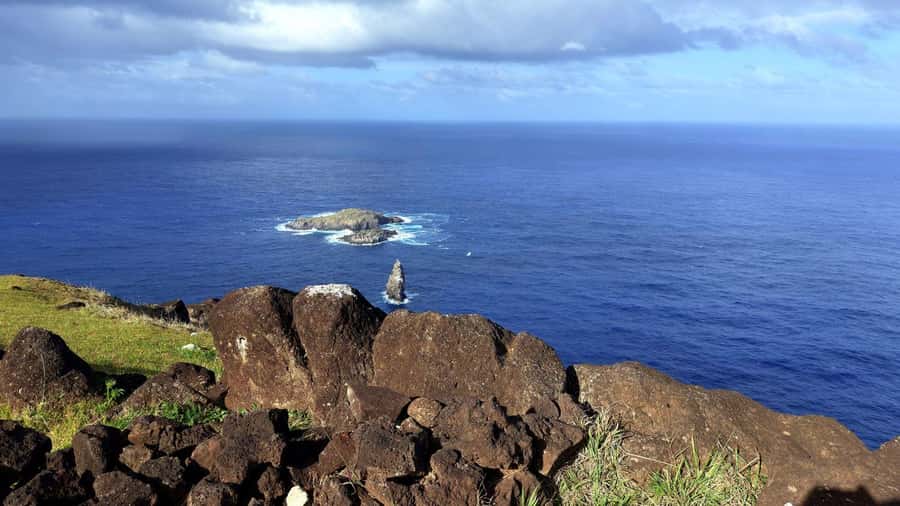
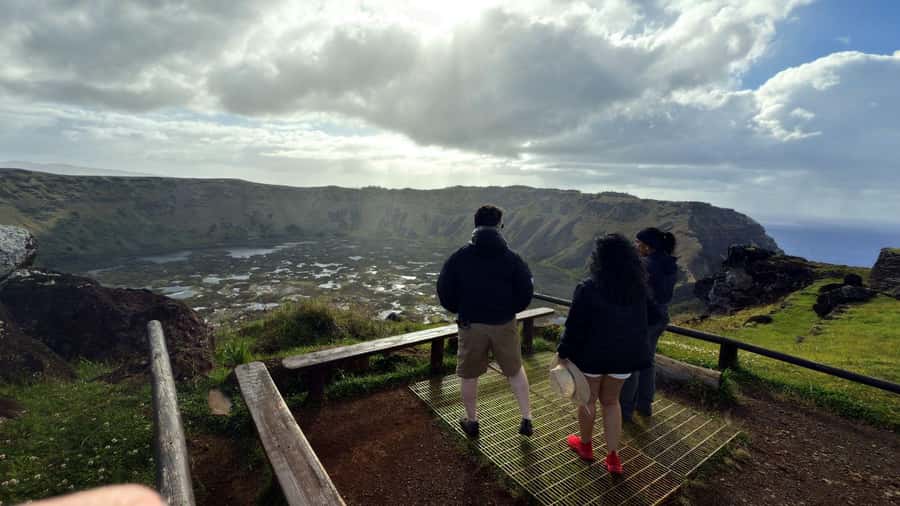
From Vinapu, the route continues to Rano Kau volcano. The slopes provide views toward Motu Nui, Motu Iti, and Motu Kao Kao, three small offshore islets that form an important part of the view from this side of the island.
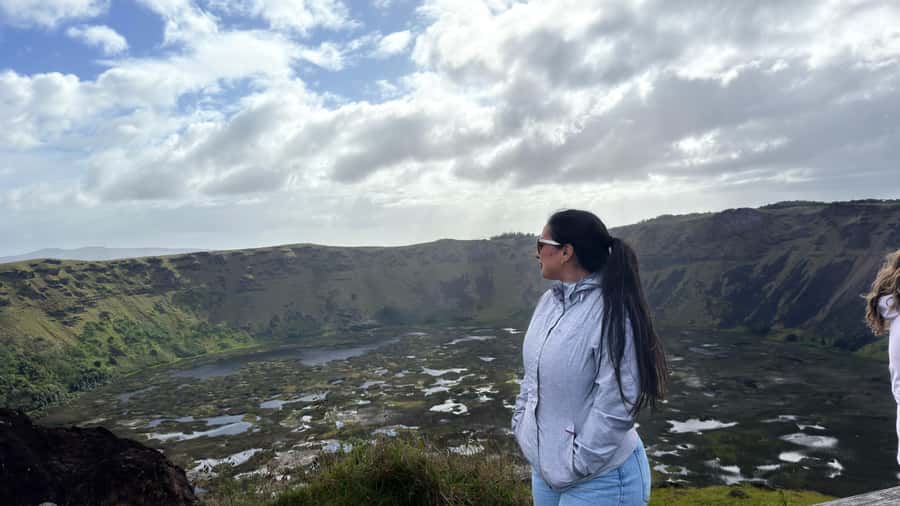
Rano Kau is not just a viewpoint. Its crater contains a lake, one of Rapa Nui’s three natural bodies of fresh water. That detail gives the volcano practical importance as well as visual drama. You are looking into a broad volcanic basin with water at its center, not simply at a dark, empty hole in the ground.
I like this part of the outing because it provides a pause from archaeology. Vinapu asks you to inspect stone construction. Rano Kau gives you open space, height, and a clear sense of the island’s volcanic origin. The view toward the three islets also prepares you for the ceremony explained at Orongo.
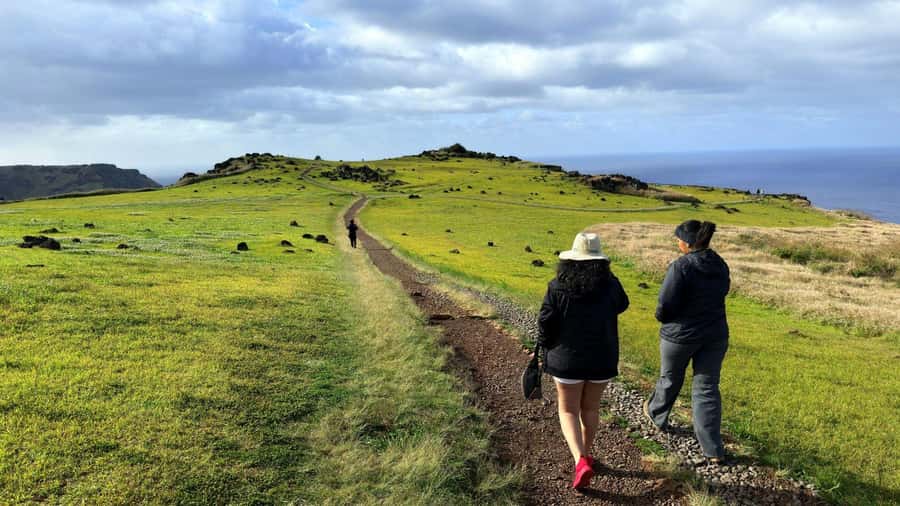
The tour description says you will visit the slopes of Rano Kau for the views, so this is not presented as a strenuous volcano hike. Comfortable shoes are still required, and they are sensible for any uneven ground around the sites. The information does not specify walking distances, so you should not assume a long trail or a demanding climb.
Weather can affect how much you see from any open viewpoint, but the tour’s value here does not depend only on perfect visibility. The crater lake itself is the central feature, and the guide’s explanation can help connect the natural setting with the cultural events that took place nearby.
Orongo village and the birdman ceremony
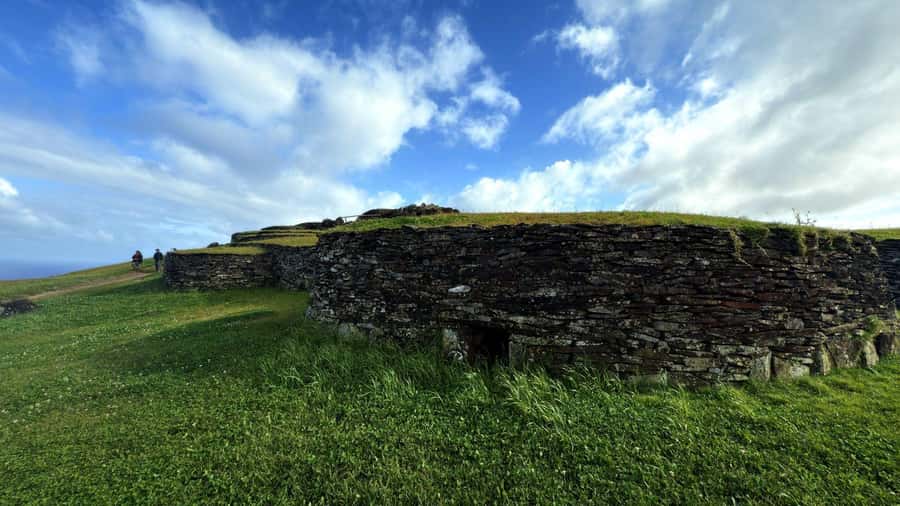
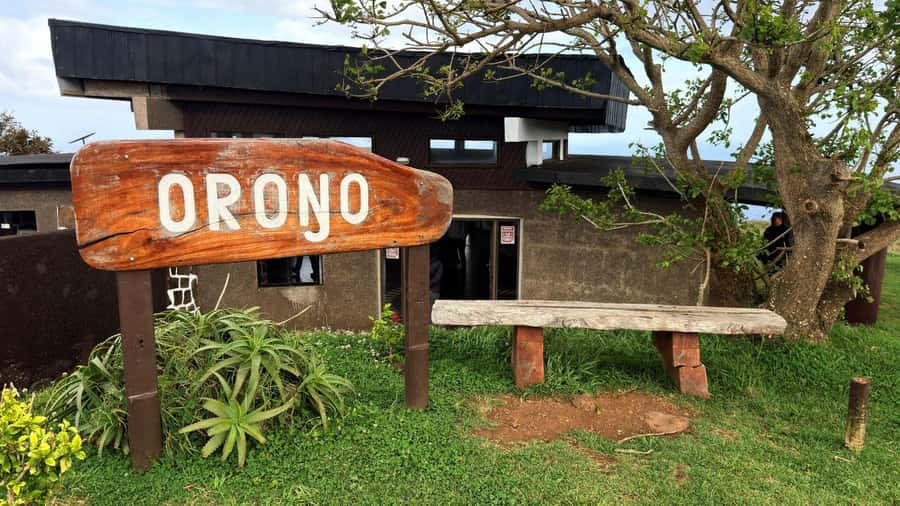
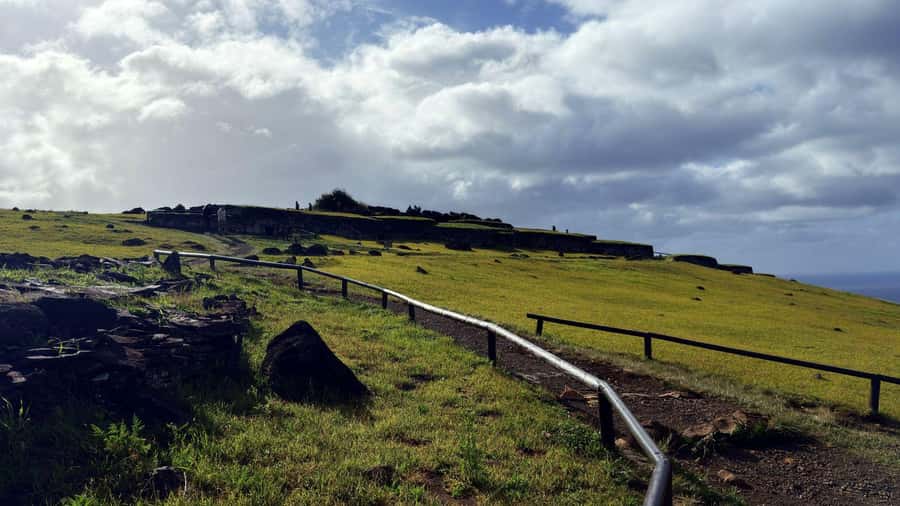
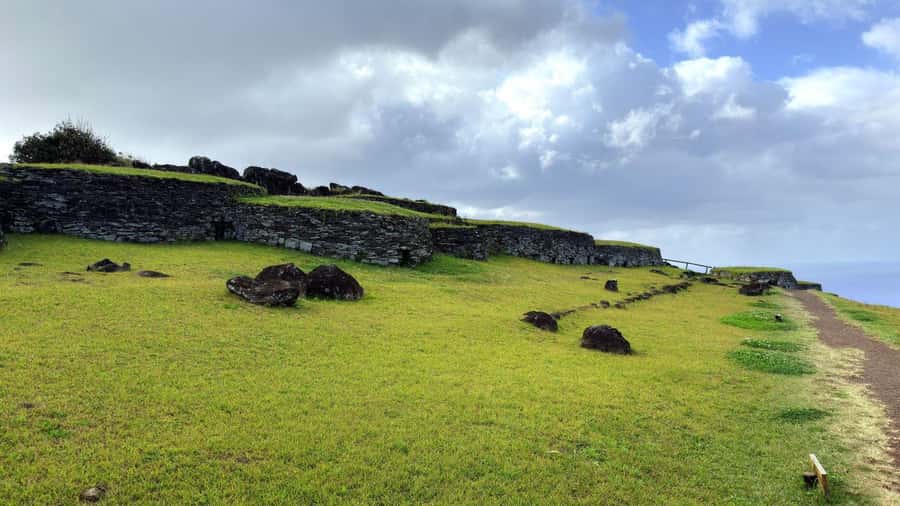
The final major stop is Orongo, a ceremonial village on the edge of the Rano Kau area. Between 1600 and 1866, the birdman was worshiped here. This tradition gives Orongo a very different mood from Vinapu, where the emphasis is on stone platforms and construction.
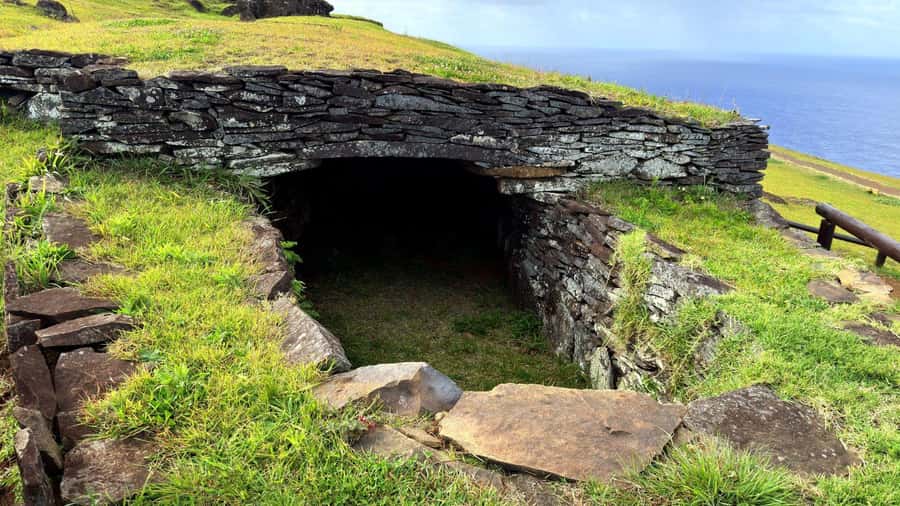
Orongo includes about 50 elliptical houses built with shale walls. Each has a small square entrance facing the ocean. The houses were arranged in two uneven rows, and the lower row ends at Mata Ngarahu, the sacred area where the birdman was worshiped.
That arrangement is worth noticing. These are not random piles of stone. The shape of the homes, their openings, their position above the sea, and their relationship to the sacred area all help you picture Orongo as a ceremonial place rather than an ordinary settlement.
The birdman tradition also connects the village to the islets seen from Rano Kau. The supplied information does not give the full contest procedure, so the guide will be the best source for the legends and details presented during your visit. What you can count on is a site centered on worship, ceremony, and one of Rapa Nui’s most distinctive cultural traditions.
Mata Ngarahu contains one of the island’s most heavily decorated petroglyphs. That makes Orongo especially rewarding for anyone interested in symbols and rock art. You should pay attention to the guide’s explanation here, since the meaning of the carvings is not always obvious from a quick glance.
Orongo is also the point where the tour’s three themes come together. The volcanic setting of Rano Kau, the offshore islets, and the birdman ceremony are all part of one place. You are not simply ticking off another archaeological stop. You are seeing why the location mattered.
A completely different sort of day out of Easter Island:
- From Hanga Roa: Rapa Nui Culture Sightseeing Tour
★ 4.6 · 307 reviews - From Hanga Roa: Easter Island Highlights 2-Day Tour
★ 4.3 · 205 reviews - From Hanga Roa: Easter Island Sightseeing Full Day Tour
★ 4.5 · 189 reviews - Full day tour – DREAM
★ 5.0 · 86 reviews
What the guide adds to the experience
This tour depends heavily on its guide. The sites are important, but a platform, crater, or stone house can be difficult to interpret without context. The description promises legends about Easter Island, and that storytelling should help turn separate stops into a connected visit.
Uka is the only guide named in the available information, and the praise is specific: friendly and interesting to listen to. That is a useful signal for anyone who values a warm, conversational guide rather than a purely factual commentary.
English and Spanish are available. If you have questions about Vinapu’s stonework, the birdman tradition, or the petroglyphs at Orongo, a small group of up to 10 people gives you a better chance to ask them than a large coach tour would.
The guide also controls the pace. Because the entire experience lasts three hours, explanations need to be clear and focused. This is not the format for a long academic lecture at every stop. It is better suited to short explanations, memorable legends, and a useful overview of Rapa Nui’s ceremonial sites.
Price, park admission, and overall value
The tour costs $91 per person. Hotel pickup and drop-off in Hanga Roa are included, as is the guided visit in English or Spanish. Transportation matters on Easter Island, since these sites are outside the town center and the route combines several locations that would otherwise require separate planning.
The important catch is the national park fee. The $100 Rapa Nui National Park entrance fee is not included, bringing the basic combined cost to $191 per person before any other personal spending.
That changes the value calculation. If you already have the required park admission, the $91 price is easier to justify for a small-group, three-stop tour with hotel transfers and a live guide. If you still need to buy the $100 entry, the total is substantial for only three hours.
I would not judge this tour by its base price alone. The real question is how much you value convenience and interpretation. You are paying for transport, a compact route, and a guide who can explain the connection between the sites. If you prefer to arrange your own transportation and read about the sites independently, the additional tour fee may feel less attractive.
The small group helps the price make more sense. A limit of 10 people is far more personal than a large sightseeing coach, and it suits places where the details matter. Still, the short duration means this is an introduction, not a complete Rapa Nui experience.
Pickup, timing, and practical limits
Pickup and drop-off are included from hotels in Hanga Roa. Starting times vary, so you need to check availability before booking. The stated duration is three hours, which makes this easy to fit around another activity if the timing works.
Cruise passengers should pay close attention to the restrictions. Hotel pickup and drop-off do not include transfers from shore, and the tour is not considered suitable for cruise passengers coming ashore. It is intended for people staying in hotels.
You should bring comfortable shoes. Baby strollers, large bags, luggage, non-folding wheelchairs, alcohol, and drugs are not allowed. The tour is not suitable for wheelchair users, so anyone with mobility concerns should assess the site conditions and restrictions before paying.
The free cancellation policy allows a full refund when you cancel at least 24 hours in advance. You can also reserve now and pay later, which helps if your Rapa Nui schedule is still taking shape.
Who will get the most from this tour?
I would recommend this outing to you if you want a compact introduction to major sites around Hanga Roa and prefer having the route explained by a guide. It is particularly useful on a first visit, when Vinapu, Rano Kau, and Orongo may otherwise feel like disconnected places on a map.
It also suits anyone interested in both geology and culture. Rano Kau supplies the volcanic setting, while Vinapu and Orongo provide ceremonial and historical context. The combination is more satisfying than visiting three sites that all focus on the same subject.
The tour may be less suitable if you want long, quiet periods at each location or if you are trying to keep the total cost low. The park fee is a serious extra expense, and the three-hour format leaves little room for lingering.
Families should note the ban on baby strollers. People bringing substantial luggage should also make other arrangements, since large bags are not allowed. Cruise passengers and wheelchair users should choose a different option based on the stated restrictions.
Should you book Ahu Vinapu, Rano Kau, and Orongo?
Book this tour if you want a short, well-organized introduction to three major Rapa Nui sites and value a small group with English or Spanish guiding. Vinapu’s unusual masonry, Rano Kau’s crater lake, and Orongo’s birdman setting give you a strong mix of stonework, nature, and ceremony.
Before booking, calculate the full cost with the $100 national park entrance fee. If that total works for your budget, the hotel transfers and guide-led route offer useful convenience, especially on a first visit. If you already have plenty of time and transport, you may prefer a longer, more flexible day that lets you stay at each site longer.
FAQ
How long does the tour last?
The tour lasts three hours. Starting times vary, so you need to check availability for the date you want.
What sites are included?
The tour visits the Ahu Vinapu ceremonial complex, the slopes and crater area of Rano Kau, and Orongo Ceremonial Village.
Is the Rapa Nui National Park entrance fee included?
No. The $100 Rapa Nui National Park entrance fee is not included in the $91 tour price.
Is hotel pickup included?
Yes. Pickup and drop-off are included from hotels in Hanga Roa on Easter Island.
Are cruise passengers able to join the tour?
No. The tour is intended for people staying in hotels and does not include pickup or drop-off from shore.
What languages are available?
The live guide service is available in English and Spanish.
What should I bring, and what is not allowed?
You should bring comfortable shoes. Baby strollers, luggage or large bags, non-folding wheelchairs, alcohol, and drugs are not allowed.
Just added around Easter Island
- Easter Island: 2 Full Days Private Tour★ 3.9 · 3 reviews
- Easter Island: Full Day Ancestral Caves and Orongo Village★ 5.0 · 3 reviews
- Easter Island: Customized recreational-tourist diving★ 5.0 · 3 reviews
- Ancestral fishing: Fishing with an experienced Rapa Nui★ 4.4 · 3 reviews
- Birdman Cult and Caves★ 4.0 · 5 reviews
- Easter Island: Moai Full Day Private Tour★ 4.8 · 5 reviews
- Rapa Nui: Polynesian Massage★ 4.8 · 5 reviews
- Rapa Nui: 3 Excursions with Hotel Transfers★ 4.3 · 6 reviews
Easter Island Tours, compared.
Two days of Full Day Tour of Rapa Nui + Sunrise in Tongariki
Read our review →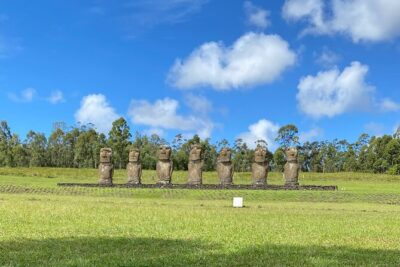
Browse the lists this tour appears in