
Reviewed · EASTER ISLAND TOURS
Easter Island: Tropical Diving
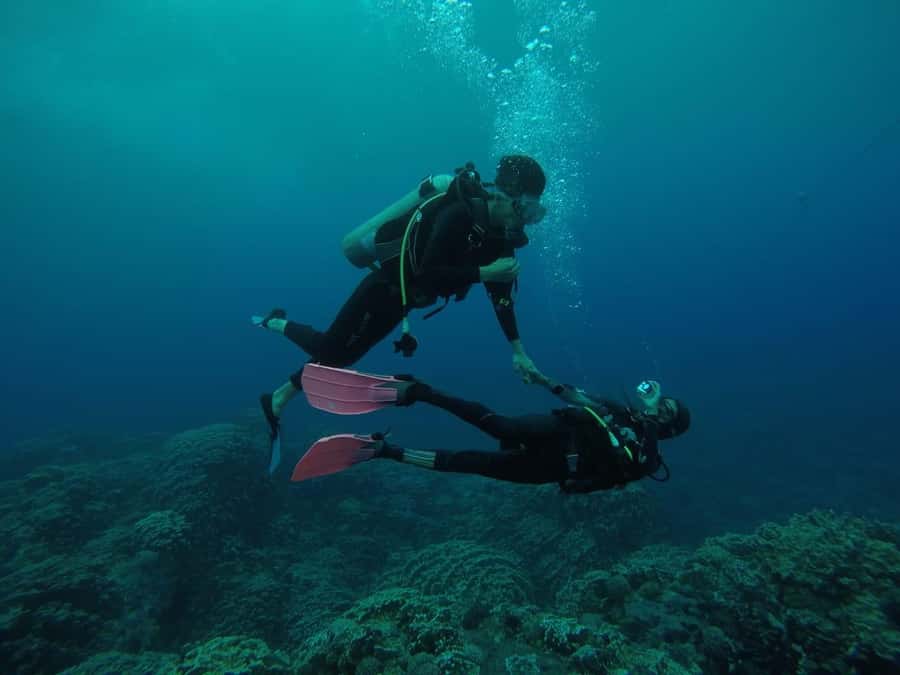
Rapa Nui has secrets below the water. This 150-minute scuba experience takes you from Hanga Piko cove to clear Pacific water filled with tropical fish, coral, turtles, and the chance to see a submerged moai. I like the strong safety focus and the small groups, limited to 10 people, which give the instructor room to offer personal help.
I also like that the price of $139 includes the full equipment set plus photos and video. The main drawback is timing: the boat or vehicle transfer and local maritime conditions can shift the schedule, and one booking began about an hour late. You should also plan carefully around flights, since you cannot scuba within 12 hours of flying.
In This Review
- Key points to know before booking
- Starting at Hanga Piko with a careful briefing
- The transfer depends on the Pacific
- One hour among fish, coral, and turtles
- The submerged moai needs a clear understanding
- Full gear and useful photo records
- What the small group changes
- Who should book this Rapa Nui session
- Is $139 a fair price?
- My recommendation for this underwater outing
- FAQ
- Where does the activity begin?
- How long does the experience last?
- How much does it cost?
- What equipment is included?
- Are photos and videos included?
- Do I need to know how to swim?
- Can I see the submerged moai without certification?
- How large is the group?
- How close can this activity be to a flight?
Key points to know before booking
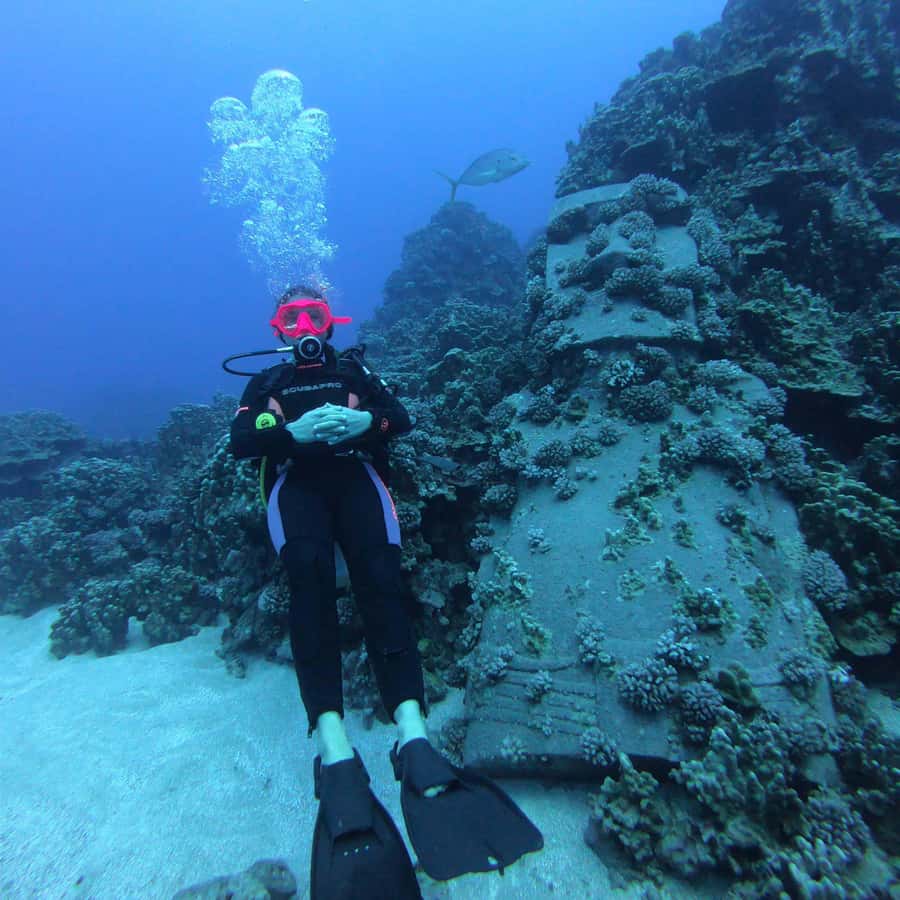
- The underwater moai requires certification: You may see a submerged moai, but reaching it requires certified scuba skills. An introductory session does not automatically include access to the deepest site.
- Hanga Piko is the starting point: You begin with a 30-minute safety briefing before traveling by boat or vehicle to the water site.
- Clear water is the star: Visibility is described as exceptional, making fish, coral, turtles, and underwater structures easier to see.
- Equipment and media are included: You receive a suit, mask, fins, vest, and air tank, along with photos and video of the activity.
- The group stays small: A maximum of 10 people makes this a better fit for beginners who want close instruction.
- Flights need a 12-hour buffer: Do not schedule this close to your departure or arrival flight.
Starting at Hanga Piko with a careful briefing
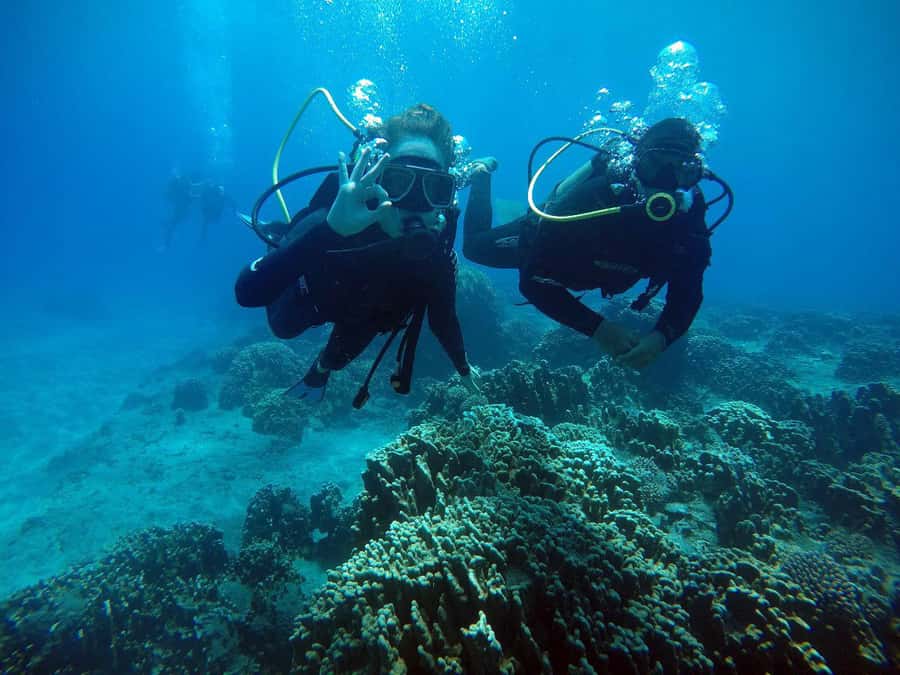
Your session begins at Hanga Piko, a cove used as the meeting point and departure area. The exact meeting details are provided 48 hours before the activity, so you should keep an eye on your messages and avoid assuming that the final location will be confirmed far in advance.
The first scheduled part lasts 30 minutes and covers safety. That may sound routine, but it is especially useful if this is your first time using scuba equipment. You need time to understand breathing through the regulator, clearing your mask, managing the vest, and responding to the instructor underwater.
The operator accepts beginners and says you do not need to know how to swim. That does not mean the session is casual or risk-free. You still need to be comfortable following instructions and wearing the equipment in the water. The instructor accompanies you throughout the activity and provides personalized attention.
I would use the briefing to ask direct questions. Tell the instructor if you have never used scuba gear before, if you are nervous about breathing underwater, or if you hope to see the moai. Those details affect what you should expect from the session.
The safety record is one of the strongest reasons to consider this experience. Communication has been praised, and the company is described as careful with diver safety. Carla and Joaquín were also singled out for helping with equipment and assisting from the boat. Staff names can change, but those details suggest a hands-on approach rather than a quick group handoff.
A few more Easter Island trips worth weighing up
- Easter Island: Customized recreational-tourist diving
★ 5.0 · 3 reviews
The transfer depends on the Pacific
After the briefing, you spend about 30 minutes traveling to the activity site. The transfer may be by boat or vehicle from Hanga Piko, depending on maritime conditions.
This is important because your day may not run like a clockwork package excursion. The operator chooses the site according to the water, and that is sensible in a remote Pacific setting. The tradeoff is less certainty about the exact location and start time.
One booking had an 11 a.m. appointment but left for the site about an hour later. That delay took up much of the person’s day. If you have a packed schedule of moai sites, museums, and coastal stops, leave open space around this activity.
The transfer itself is part of the practical experience. You are moving from the harbor area to the place where conditions are suitable, rather than being promised one fixed underwater site in every case. The operator says the maritime conditions determine the final point, so the scenery and marine life may vary.
I recommend treating the full 150 minutes as a minimum planning block, not as a precise promise that you will be back at a particular minute. The stated structure is 30 minutes of briefing, 30 minutes of transport, one hour in the water, and another 30 minutes of transport. Delays can add time.
One hour among fish, coral, and turtles
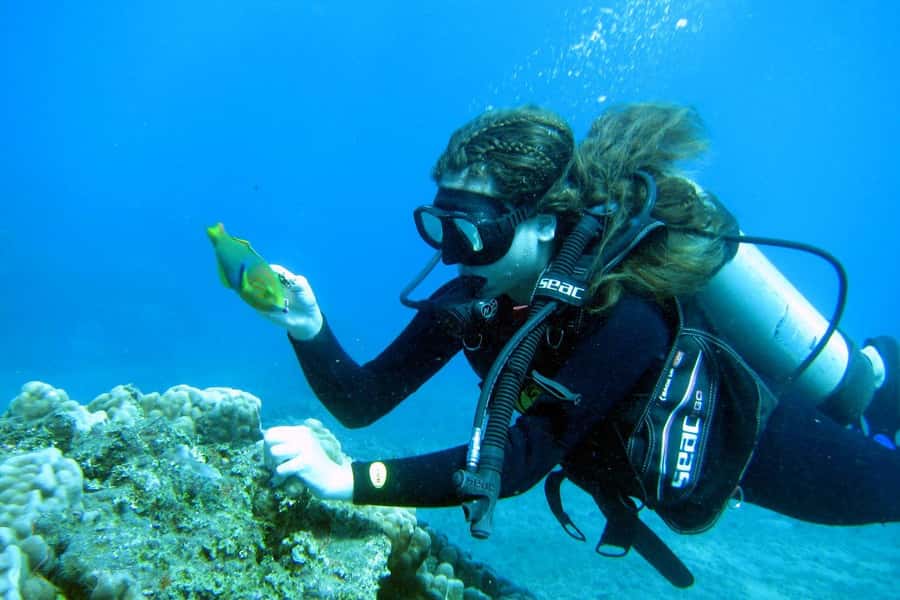
The main underwater session lasts one hour. For a first scuba experience, that is enough time to learn the basic rhythm without turning the outing into an exhausting half-day commitment.
Rapa Nui is known here for clear water and strong visibility. That matters more than fancy equipment or grand claims. Good visibility gives you a better chance of seeing fish, coral, turtles, and underwater structures without spending the whole session searching through murky water.
The marine life is a major draw. Expect the possibility of colorful tropical fish, coral, and turtles. The exact animals are never guaranteed, and conditions can change, but the setting offers more than a bare training exercise. You are learning scuba while looking at a Pacific ecosystem.
The session also provides a different view of Rapa Nui. On land, the island’s famous stone figures and open coastal scenery dominate the experience. Below the surface, the focus shifts to rock formations, marine life, reefs, and the possibility of submerged archaeological features.
A certified diver may find the one-hour format fairly short, especially if accustomed to longer technical or recreational outings. One certified participant expected something different from an introductory session, but the operator adjusted and accommodated that person. If you already hold certification, tell the staff before the activity so they understand your experience level.
Beginners may see the shorter format as a benefit. You get a controlled introduction, close supervision, and time to enjoy the setting without committing to an advanced excursion.
The submerged moai needs a clear understanding
The sunken moai is one of the most talked-about features of this experience, but you should understand the limits before booking. Seeing or reaching the submerged statue requires scuba certification. You cannot simply swim down to it during an introductory session.
That distinction matters. A first-time participant may still enjoy fish, coral, and other underwater sights, but should not book solely on the assumption that the moai will be accessible. The operator may also adjust the location according to sea conditions.
The phrase submerged moai can create confusion because it sounds like an archaeological discovery. The information provided describes submerged moai statues and ancient underwater archaeological sites, but it does not establish the exact origin or authenticity of every underwater figure. Ask the operator for current details if the cultural aspect is your main reason for booking.
For a certified diver, the possibility adds a memorable historical angle to the outing. For a beginner, the marine environment remains the main reward. Either way, the moai should be treated as a conditional feature, not a guaranteed part of every participant’s route.
A completely different sort of day out of Easter Island:
- From Hanga Roa: Rapa Nui Culture Sightseeing Tour
★ 4.6 · 307 reviews - From Hanga Roa: Easter Island Highlights 2-Day Tour
★ 4.3 · 205 reviews - From Hanga Roa: Easter Island Sightseeing Full Day Tour
★ 4.5 · 189 reviews - Full day tour – DREAM
★ 5.0 · 86 reviews
Full gear and useful photo records
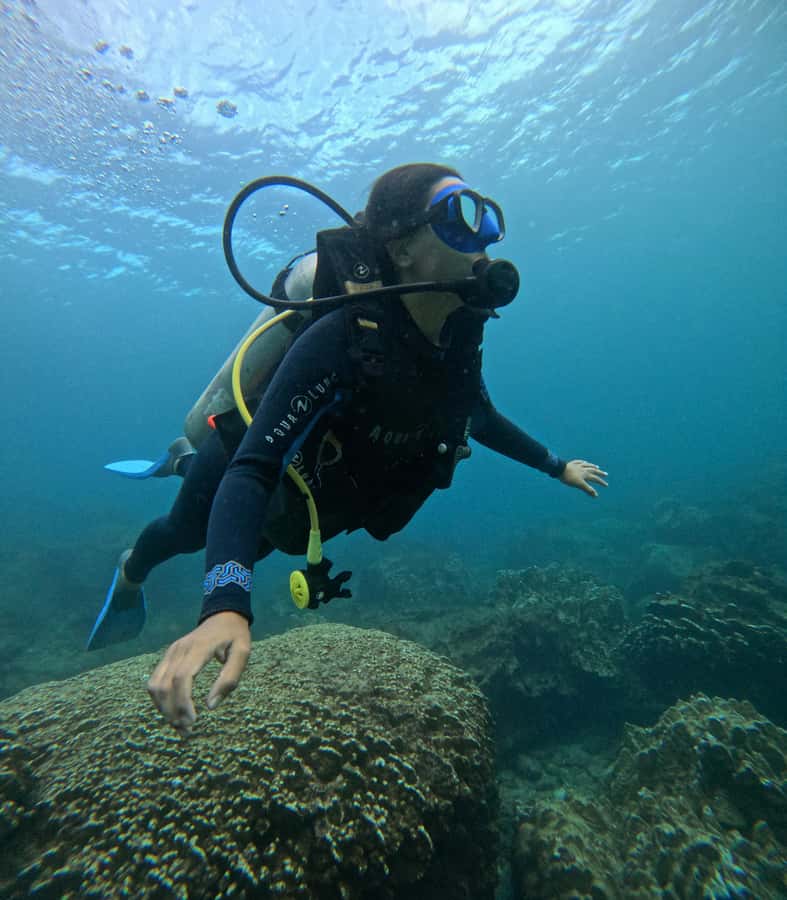
The $139 cost includes a suit, mask, fins, buoyancy vest, and air tank. That makes the price easier to assess because you do not need to arrange the core equipment separately.
A suit is also useful in the Pacific, even when the water feels warmer than expected. One participant found the November water surprisingly comfortable while wearing a scuba suit. Conditions vary, but the included suit removes one decision from your packing list.
Photos and video are included as well. Bring a USB drive, memory card, or cable that allows you to transfer the files to an Android phone or iPhone. Without one of those options, you may have trouble taking the media home.
This is a meaningful part of the value. Underwater photography is not easy when you are concentrating on breathing, buoyancy, and instructions. Having the staff record parts of the session lets you focus on the experience and gives you something tangible afterward.
The media should not be the only reason to book. The quality and number of images can vary with visibility, movement, and the person operating the camera. Still, at this price point, included photos and video are a helpful extra rather than an added charge.
What the small group changes
The group limit is 10 people. That is not a private outing, but it is small enough to make personal instruction more realistic than in a large class.
The instructor accompanies participants through the activity and provides individualized assistance. That is particularly valuable during the first equipment checks and the early moments in the water, when a small problem can quickly become stressful.
A small group also helps if couples or friends have different levels of experience. One participant was certified while traveling with a partner who was not, and the operator accommodated the certified person rather than forcing everyone into exactly the same mold.
Still, you should not expect a private guide dedicated only to you. The instructor has several people to supervise, and the exact amount of personal attention depends on the group and conditions. The 10-person cap is a useful middle ground.
English and Spanish instruction is available. If you need one of those languages for safety explanations, confirm your preference when booking or during the pre-arrival communication.
Who should book this Rapa Nui session
This experience suits you best if you want a first taste of scuba in a place with unusual scenery and marine life. It is also a reasonable choice for a certified diver who is happy with a one-hour session and can communicate that experience level in advance.
It is not suitable for children under 12. It is also not suitable for people with heart problems, altitude sickness, or high blood pressure. Alcohol and drugs are not allowed.
The statement that swimming is not required makes the activity more accessible, but it should not replace honest self-assessment. You need to follow instructions, remain calm, and tell the instructor about relevant health concerns.
The flight rule is especially important on an island trip. You cannot scuba if you fly within 12 hours, so place this activity well away from your next flight. Do not leave it for the final morning before departure.
If you are mainly interested in tropical marine life but become ill or decide scuba is not right for you, ask about alternatives. One couple became sick and the operator changed their activity to snorkeling. That is not a guaranteed option for every booking, but it shows that the staff may offer a practical adjustment when circumstances change.
Is $139 a fair price?
At $139 per person, this is not a cheap add-on, but the price includes equipment, instruction, a one-hour underwater session, transport to and from the site, and photos and video.
The value is strongest for beginners. Buying or arranging gear, finding an instructor, and organizing a suitable site independently would take more time and would not necessarily provide the same level of supervision.
Certified divers may judge the price differently. If you usually expect a longer session or multiple outings, one hour underwater may feel limited. The chance of seeing a submerged moai and the island’s clear Pacific water may still make it worthwhile, but you should confirm what your certification allows and what the operator plans to offer.
There is no included land transportation to the meeting point. The final meeting location is communicated 48 hours before the activity, so you need to arrange your own way there. Factor that into the total cost and schedule.
Free cancellation is available up to 24 hours before the start for a full refund, and you can reserve now and pay later. Those terms help if your Rapa Nui plans are still shifting, though they do not remove the need to plan around flights.
My recommendation for this underwater outing
I would book this if you want a well-supported first scuba session, care about clear water and marine life, and can keep your schedule flexible. The safety attention, small group, full gear, and included media give the $139 price solid value.
I would hesitate if your main goal is guaranteed access to the sunken moai, if you need a precise return time, or if you are a certified diver looking for a long and technical outing. Ask about the exact site, certification requirements, and expected timing before paying.
For most suitable beginners, this offers a memorable way to see a less familiar side of Rapa Nui. Just leave room in your day, bring a way to transfer the photos, and keep at least 12 hours between the session and any flight.
FAQ
Where does the activity begin?
The activity begins at Hanga Piko cove. The exact meeting point is confirmed 48 hours before the activity.
How long does the experience last?
The scheduled duration is 150 minutes, or two and a half hours. This includes the briefing, transfers, and one hour of scuba time.
How much does it cost?
The price is $139 per person.
What equipment is included?
The package includes a suit, mask, fins, buoyancy vest, and air tank.
Are photos and videos included?
Yes. Photos and video of the activity are included. Bring a USB drive, memory card, or cable for transferring the files to an Android or iPhone device.
Do I need to know how to swim?
The operator states that swimming is not required for this activity. You still need to follow the instructor’s safety guidance and disclose relevant health concerns.
Can I see the submerged moai without certification?
No. Reaching the submerged moai requires scuba certification. Introductory participants may not be able to descend far enough to reach it.
How large is the group?
The group is limited to 10 participants.
How close can this activity be to a flight?
You cannot scuba within 12 hours of flying. Plan the activity with at least a 12-hour gap before your flight.
Just added around Easter Island
- Easter Island: 2 Full Days Private Tour★ 3.9 · 3 reviews
- Easter Island: Full Day Ancestral Caves and Orongo Village★ 5.0 · 3 reviews
- Easter Island: Customized recreational-tourist diving★ 5.0 · 3 reviews
- Ancestral fishing: Fishing with an experienced Rapa Nui★ 4.4 · 3 reviews
- Birdman Cult and Caves★ 4.0 · 5 reviews
- Easter Island: Moai Full Day Private Tour★ 4.8 · 5 reviews
- Rapa Nui: Polynesian Massage★ 4.8 · 5 reviews
- Rapa Nui: 3 Excursions with Hotel Transfers★ 4.3 · 6 reviews
Easter Island Tours, compared.
Two days of Full Day Tour of Rapa Nui + Sunrise in Tongariki
Read our review →
Browse the lists this tour appears in