
Reviewed · HISTORICAL TOURS
Punta Arenas: Fort Bulnes Historical Tour
Chile’s southern story begins at the water’s edge. This half-day trip from Punta Arenas takes you to Fort Bulnes, a reconstructed 1843 settlement guarding the Strait of Magellan, with time for the fort, an interpretive center, and broad coastal views. I like the way the tour links the fort to Chile’s bigger story, and I like the small-group format, limited to 10 people.
The main drawback is time. With 270 minutes including driving, you may need to choose between seeing more fort buildings and taking the boundary lookout walk. The tour can also run bilingually, so English-speaking visitors should confirm how commentary will be handled.
In This Review
- Key points to know before booking
- Why Fort Bulnes matters on a Punta Arenas visit
- The 45-minute ride south from Punta Arenas
- The geographical middle of Chile
- Estrecho Park and the first look at the strait
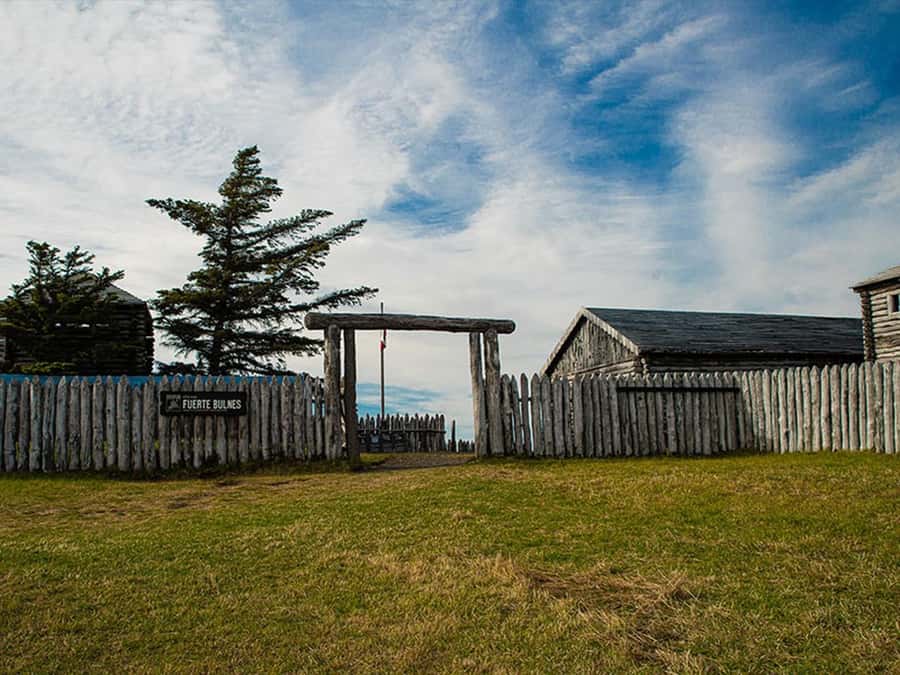
- Entering the reconstructed Fort Bulnes
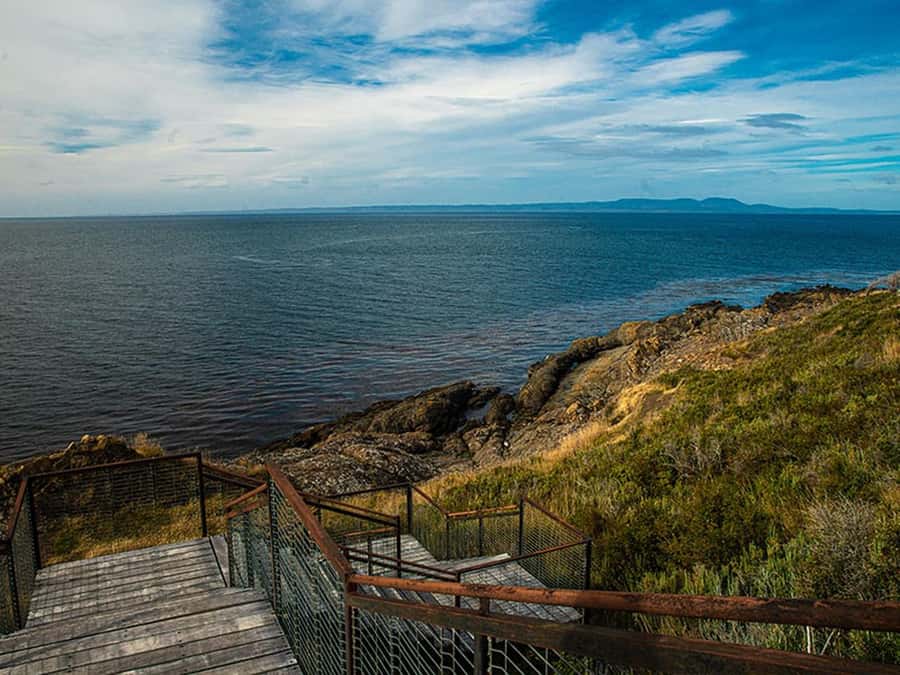
- The Strait viewpoint is the visual highlight
- How the tour handles time and group size
- Is $46 a fair price?
- Who will enjoy Fort Bulnes most?
- Practical advice for a better visit
- FAQ
- How long does the Fort Bulnes tour last?
- Where does the tour begin?
- How far is Fort Bulnes from Punta Arenas?
- Is admission to Fort Bulnes included?
- What languages are available?
- What should I bring?
- Can I cancel the tour for a refund?
- Should you book this Fort Bulnes tour?
Key points to know before booking
- A 45-minute drive leads to a strategic slice of Chilean history: Fort Bulnes was founded in 1843 to secure the Strait of Magellan under President Manuel Bulnes, with inspiration from Bernardo O’Higgins.
- The Strait viewpoint is a major reward: The fort’s position gives you wide views across one of the world’s most important sea passages.
- The reconstructed settlement is more than a single fort: You can see the O’Higgins lighthouse, church, post office, jail, stables, and other buildings tied to daily life.
- The geographical middle of Chile makes an unusual photo stop: The landmark is presented as the midpoint between Chile’s northern boundary and the South Pole.
- Guide quality matters here: Cristofer has been praised for an entertaining style, while Romina received strong praise for explaining the fort and region.
- The $46 price covers transport and guiding, not admission: Add the entrance ticket cost, which is not included in the tour price.
Why Fort Bulnes matters on a Punta Arenas visit
Punta Arenas can feel like a gateway to Patagonia, but Fort Bulnes shows why this location mattered long before modern tourism. The Strait of Magellan was a vital route between the Atlantic and Pacific Oceans, and Chile wanted a firm presence here.
The fort was established in 1843 under Manuel Bulnes, with the ideas of Bernardo O’Higgins helping shape the effort. That gives your visit a useful political and geographic frame. This was not simply an isolated outpost in a remote corner of Chile. It was part of a national attempt to secure control of a major sea route and claim the economic possibilities linked to it.
I find that context important because the reconstructed walls and timber buildings alone can seem modest. Once you understand why the settlement was placed here, the location makes more sense. The wind, distance, and open view across the strait all become part of the story.
The tour gives you a short, practical way to reach the site from Punta Arenas without arranging your own transport. A driver-guide provides commentary on the journey, then leads you through the key stops. That makes this a good choice if you want history and scenery in one outing rather than a full-day excursion into the wider region.
More historic sites:
- Santiago: Guided Walking Tour of the Historical Old Town
★ 4.8 · 459 reviews - Walking Tour Valparaiso, History & Art – Private Optional
★ 4.5 · 59 reviews - Essence of Santiago : History, Flavors and Panoramic Views
★ 5.0 · 45 reviews
The 45-minute ride south from Punta Arenas
Your pickup begins in Punta Arenas, followed by roughly 45 minutes in a van. Return transport is included, and the small group size should make the ride less crowded than a large coach trip.
The drive is not just dead time. Your guide can explain the area’s past and the importance of the Strait of Magellan as you leave the city. The quality of this part depends heavily on the guide, and that is worth remembering when choosing this experience. Cristofer has been praised for being lively and entertaining, while Romina was specifically praised for her explanation of the fort and the surrounding region.
There is one practical wrinkle. A cruise passenger reported difficulty identifying the operator at the port and a late start caused by additional pickups. The stated pickup arrangement is from your accommodation in Punta Arenas, so if you are arriving by ship, confirm the exact meeting place directly with Go Patagonia. Do not assume the port staff will know the operator.
The tour is offered in English and Spanish. That is useful for mixed groups, but bilingual commentary can reduce the amount of time spent in one language. If detailed English explanation matters to you, ask about the language arrangement before paying.
The geographical middle of Chile
One of the first scheduled stops is Hito de la Mitad de Chile, a landmark described as the geographical middle of Chile. It represents the midpoint between the country’s northern limit and the South Pole.
This is a quick photo stop, but it adds a memorable geographic angle to the outing. Chile is an unusually long country, and the marker helps you think about that vast north-south reach in a concrete way. You are not just visiting a historical building. You are also standing at a point connected to the full length of Chilean territory.
The stop is described as mandatory, so plan to get out, take your photographs, and enjoy the oddness of the location. It is not a major sightseeing site with a long visit attached to it. Think of it as a brief marker that breaks up the drive and gives you a photo most Punta Arenas city tours cannot provide.
Bring your passport or ID card, as requested for the activity. Warm clothing is also important. The area around the strait can be cold and exposed, even when conditions in Punta Arenas seem comfortable.
Estrecho Park and the first look at the strait
The next stop is Estrecho Park, followed by the visitor center. Together, these stops provide the setting before you enter the reconstructed fort.
The park helps you appreciate the fort’s position. The key attraction is not only the buildings but also the commanding outlook toward the Strait of Magellan. The waterway’s broad scale gives the visit its sense of place. From here, the fort no longer feels like a collection of reconstructed rooms. It feels like a settlement positioned to watch and control a major passage.
At the visitor center, exhibits cover both the human and natural history of the strait. This is an important part of the tour because it gives you background before the outdoor sightseeing. You can learn about the people connected with the area and the natural setting that shaped life here.
I would pay attention to how much time your guide allows at the center. The overall tour lasts only four and a half hours, including the return trip, so the stop may be concise. Still, it provides useful context that you will not get from looking at the fort buildings alone.
A few more Punta Arenas trips worth weighing up
- Punta Arenas: Walk with Penguins on Magdalena & Marta Island
★ 4.6 · 611 reviews - Punta Arenas: Full-Day Whales, Penguins, and Glaciers Tour
★ 4.9 · 325 reviews - Punta Arenas: Full Day Tierra del Fuego & King Penguins
★ 4.3 · 179 reviews - Navigation Magdalena Island and Marta
★ 4.0 · 164 reviews
Entering the reconstructed Fort Bulnes
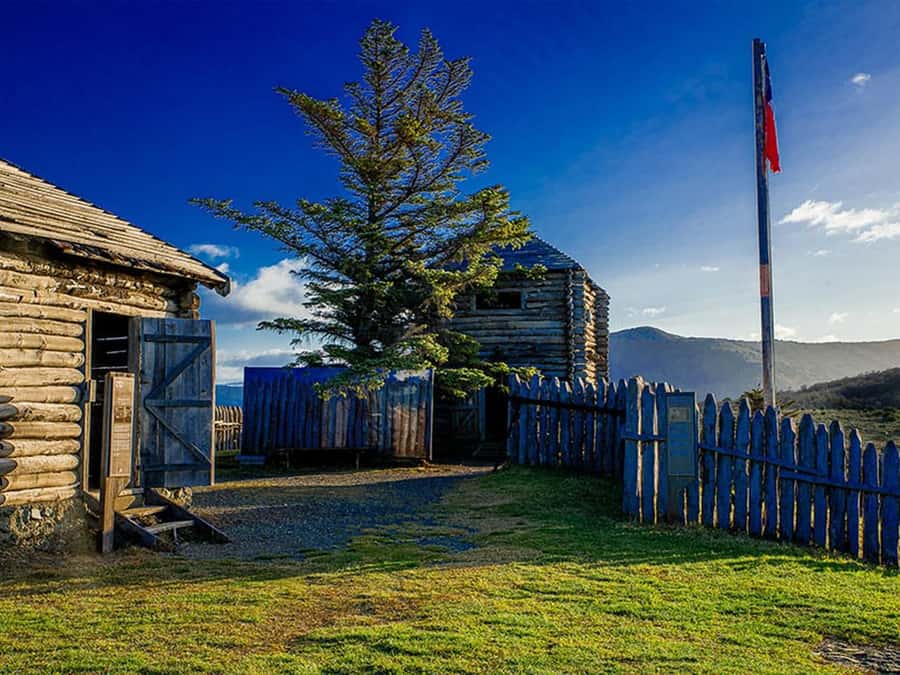
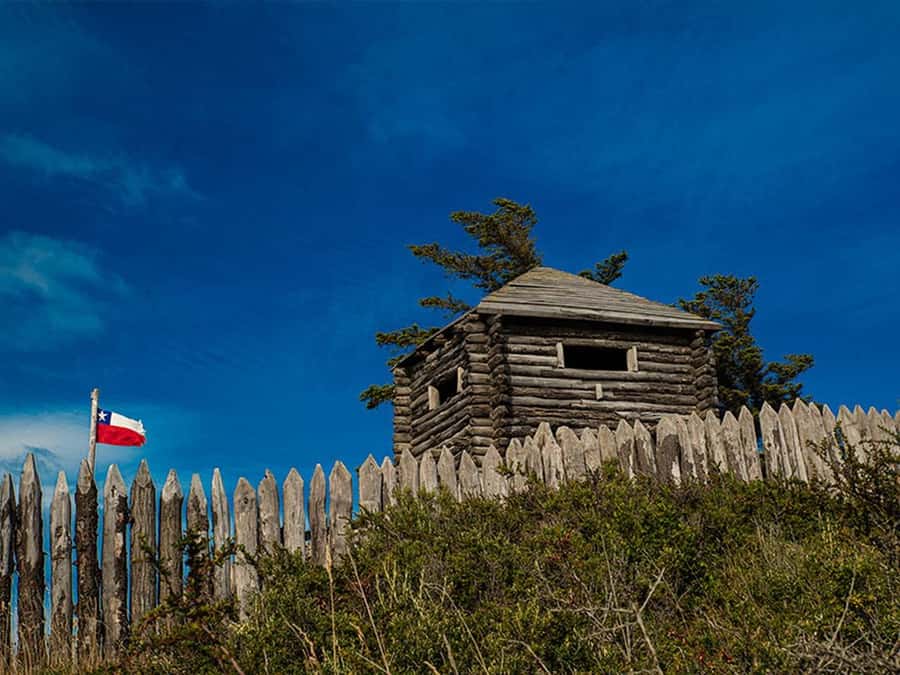
Fort Bulnes is the central stop, and its reconstruction gives you a physical sense of the 1843 settlement. You can visit several buildings connected with military and community life, including the lighthouse, church, post office, jail, and stables.
The value of the site lies in seeing how many functions had to fit inside a remote outpost. The church points to the spiritual life of the residents. The post office connects the settlement to the outside world. The jail reflects the need for order, while the stables remind you that movement and supplies depended on animals and difficult overland travel.
The O’Higgins lighthouse is another useful detail. A lighthouse is not just a scenic object here. It helps you understand how navigation and visibility mattered in a strait where ships depended on reliable signals and knowledge of the coastline.
The fort is a historical reconstruction, so you should not expect untouched original buildings throughout. Its purpose is to help you picture the settlement and understand its role. I find that reconstructed sites work best when you treat them as visual aids for the story rather than pretending every timber wall is original.
You may have time to walk through several buildings, but do not assume you can linger everywhere. One visitor found the tour had to choose between exploring the fort buildings and taking the boundary lookout walk. That is a helpful warning. If the guide presents both options, ask which one best fits your interests and how much time each requires.
If you care most about architecture and daily life, choose the lighthouse, church, post office, jail, and stables. If the view matters more, protect time for the lookout. You may not receive enough time for every corner.
The Strait viewpoint is the visual highlight
The Strait viewpoint is likely to be the most memorable part for many people. The fort’s position offers wide views across the Strait of Magellan, and the setting gives the historical story its strongest visual proof.
From the viewpoint, you can see why Chile wanted a permanent foothold here. The waterway is not an abstract line on a map. It is right in front of you, extending through a remote and powerful part of the country.
The outlook is also where weather can shape your experience. The tour specifically advises warm clothing, and that advice should be taken seriously. Cold conditions may make a long outdoor stop uncomfortable, so wear layers rather than relying on one heavy garment. You will also want to keep your camera ready, but protect it from the elements as needed.
The view received particular praise from Romina’s tour, with the fort’s position described as one of the best outlooks over the strait. That fits the design of the visit: the interpretive center explains the place, the buildings show how people lived there, and the viewpoint lets you see the reason the location mattered.
How the tour handles time and group size

At 270 minutes, this is a half-day outing rather than a rushed two-hour transfer. The drive takes a significant part of the schedule, leaving the remainder for the geographical marker, park, visitor center, fort, and return journey.
That timing is reasonable for a straightforward introduction to Fort Bulnes. It is less suitable if you want a slow archaeological visit with long periods for photography. You should expect a guided overview, not an unstructured day at the site.
The maximum group size is 10 people. I like that limit for this kind of excursion. A smaller group can make it easier to hear the guide, ask questions, and move between the buildings without the stop becoming a parade.
Still, the small group does not guarantee a private tour. Since English and Spanish are both offered, the pace and language mix can affect how much detail you receive. The experience is strongest when the guide keeps the commentary clear and gives the group a firm plan for the fort.
The tour has an overall rating of 4.7 from 32 ratings, and the most positive comments focus on the guides and the historical explanation. That praise is worth noting, but the lower scores point to real issues with pickup clarity, late starts, bilingual delivery, and limited time. I would book with realistic expectations: transport is a major part of the product, and the guiding adds the value.
Is $46 a fair price?
The price is $46 per person. That includes transportation from your accommodation, the driver-guide, and the ride back to Punta Arenas. Entrance tickets are not included, so you need to budget separately for admission.
Because the ticket price is not stated here, I cannot calculate the final cost precisely. The value depends on how much you would otherwise pay for transport and how useful you find the guide’s commentary. For a small group of up to 10 people, the price is reasonable if you want a simple half-day outing without organizing a vehicle yourself.
The value is weaker if you want only a transfer. A lower-rated experience was described as mostly transportation with basic information added. That is a fair caution. The tour’s appeal depends on the driver-guide providing meaningful context, not just pointing out the fort after the van arrives.
Bring cash, as requested in the practical information. Since admission is separate, cash may be useful, though no specific ticket payment method is provided. Confirm the entrance cost and payment arrangements before departure so the extra fee does not catch you by surprise.
Who will enjoy Fort Bulnes most?
I would recommend this experience to you if you want a manageable history outing from Punta Arenas, especially if you enjoy places where politics, geography, and daily life meet.
It suits:
- People with a half-day available in Punta Arenas
- First-time visitors who want an introduction to the Strait of Magellan
- Anyone interested in Chilean settlement and military history
- Visitors who prefer small groups to large buses
- Photographers who value wide coastal views and unusual geographic markers
- Cruise passengers who can confirm a clear pickup plan in advance
I would be more cautious if you want a long, quiet visit with time to inspect every building. The schedule may force a choice between the fort interiors and the boundary viewpoint. I would also think twice if you strongly prefer a tour conducted entirely in English, unless the provider confirms that arrangement.
The experience is not designed as a deep wilderness excursion or a broad Patagonia tour. Its focus is narrow and worthwhile: one fort, one important waterway, and the story of why Chile placed a settlement there.
Practical advice for a better visit
Wear warm clothing in layers. The tour takes you to open outdoor sites beside the strait, and conditions can change quickly enough to affect your comfort.
Carry your passport or ID card, as requested. Bring cash, and remember that the entrance ticket is extra. Keep your camera accessible for the geographical midpoint and the Strait viewpoint.
If you are staying at a Punta Arenas hotel, confirm the pickup time and location. If you are coming from a port, do not rely on finding the operator through general port staff. Confirm the meeting instructions with Go Patagonia before the tour day.
Ask at the start how much time is planned for the fort buildings and how much for the boundary lookout. This simple question can help you avoid the main disappointment reported about the schedule.
Finally, listen for the guide’s name and language plan. Cristofer’s entertaining approach and Romina’s historical storytelling show how much the experience can improve with a strong guide. The site has genuine interest, but the explanation is what turns a reconstructed outpost into a meaningful visit.
FAQ
How long does the Fort Bulnes tour last?
The tour lasts 270 minutes, or four and a half hours, including transportation between Punta Arenas and Fort Bulnes.
Where does the tour begin?
Pickup is provided from your accommodation in Punta Arenas. If you are arriving at the port, confirm the exact pickup location with Go Patagonia in advance.
How far is Fort Bulnes from Punta Arenas?
Fort Bulnes is located 55 kilometers south of Punta Arenas. The listed drive time is about 45 minutes by van.
Is admission to Fort Bulnes included?
No. Entrance tickets are not included in the $46 tour price, so you will need to pay for admission separately.
What languages are available?
The tour offers live guiding in English and Spanish. Ask in advance how bilingual commentary will be handled if you want detailed information in one language.
What should I bring?
Bring your passport or ID card, warm clothing, and cash.
Can I cancel the tour for a refund?
You can cancel up to 24 hours in advance for a full refund.
Should you book this Fort Bulnes tour?
Book it if you want an easy, small-group route from Punta Arenas to a historic site with strong Strait of Magellan views. The combination of the reconstructed fort, visitor center, lighthouse, church, and geographical midpoint gives you more variety than a simple photo stop.
I would book only after confirming pickup details, especially if you are coming from a cruise ship. I would also accept that the visit may be bilingual and that you may not have time for every fort building and lookout walk.
For $46 plus admission, this is a sensible choice for a first look at Fort Bulnes. You get the transport, a guide, and a clear introduction to one of Chile’s most important southern outposts. Just treat it as a focused half-day overview, not a leisurely full exploration.
Just added around Punta Arenas
- Punta Arenas: Magallanes National Reserve and City Tour★ 5.0 · 3 reviews
- Punta Arenas: Austral Dolphin & Wildlife Watching Boat Tour★ 5.0 · 4 reviews
- Punta Arenas: Torres del Paine & Grey Glacier Full-Day Boat★ 4.8 · 6 reviews
- Punta Arenas: Fuerte Bulnes Shore Tour for Cruisers★ 4.6 · 6 reviews
- Horseback Riding near Strait of Magellan★ 4.5 · 8 reviews
- Magdalena Island: Walk with the penguins★ 4.6 · 17 reviews
- Punta Arenas: City Tour★ 4.6 · 18 reviews
- From Punta Arenas: Full Day Torres del Paine★ 3.8 · 23 reviews
Historical Tours, compared.

Walking Tour Valparaiso, History & Art – Private Optional
Read our review →
Essence of Santiago : History, Flavors and Panoramic Views
Read our review →
Private tour, historic center, high altitude viewpoint, cable car
Read our review →
Private tour: where the history of the Moai was born
Read our review →
Discover Santiago, where modernity merges with history
Read our review →
Browse the lists this tour appears in