
Reviewed · SAN PEDRO DE ATACAMA TOURS
San Pedro de Atacama: Astro Tour with big telescopes
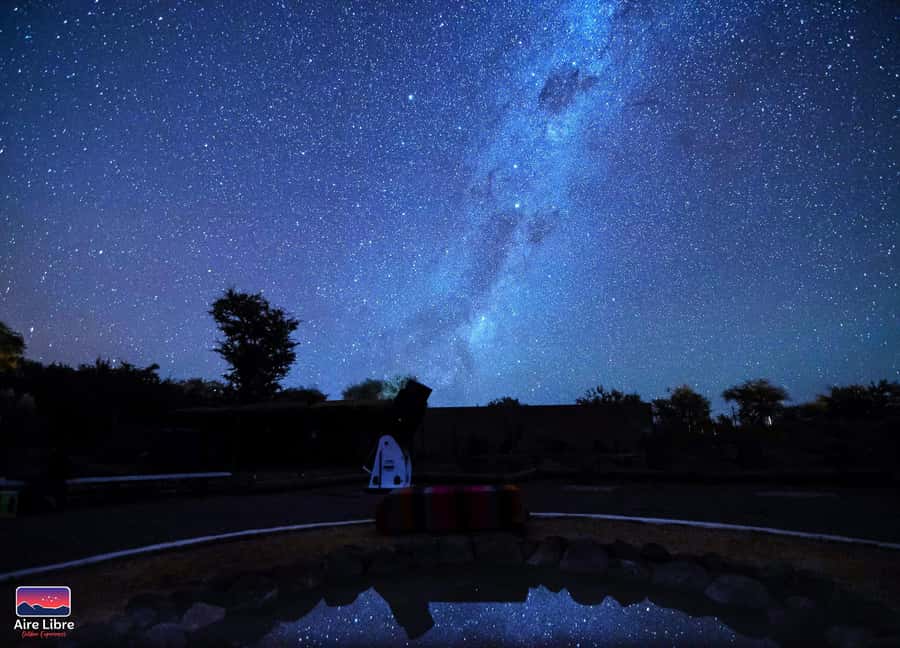
Look up, then look again. This two-hour San Pedro de Atacama stargazing tour combines Andean sky lore, Greek and Roman constellations, powerful telescopes, and a carefully arranged desert setting. I especially like the Chakana-shaped observation area and its central water mirror, which gives the night a clear link to Andean tradition. The chance to see celestial objects through professional telescopes is another strong reason to book.
I also like the relaxed finish: a hot tea, hot chocolate, or glass of red wine while a light-sensitive camera captures you beneath the stars. Guide Lasse earns particular praise for explaining astronomy without making it feel difficult. The main caution is simple: desert nights can be cold, and cloudy or stormy weather may affect the activity.
In This Review
- Key points to know before you book
- Why San Pedro is such a strong place for stargazing
- The 15-minute ride from town
- Entering the Chakana observation area
- Two ways of reading the stars
- What the professional telescopes add
- The star photograph and the final drink
- How the $82 price holds up
- Cold nights and weather limits
- Who will enjoy this Atacama evening most
- Should you book the big-telescope astro tour?
- FAQ
- How long does the stargazing tour last?
- Is hotel pickup included?
- How much does the tour cost?
- Which languages are available?
- Are professional telescopes included?
- Does the tour explain Andean constellations?
- Is food or drink included?
- What should I bring?
Key points to know before you book
- The Andean Chakana setting: A four-pointed Andean Cross design shapes the outdoor observation area, with a water mirror at its center for reflecting the stars.
- Powerful telescopes: You do more than identify constellations. The tour includes views of selected celestial objects through high-end professional telescopes.
- Two sky traditions: Your guide explains both Andean constellations and the familiar Greek and Roman patterns.
- A star portrait to take home: A special light-sensitive camera and lens photograph you with the night sky behind you.
- A short, easy outing: Hotel pickup, a 15-minute van ride each way, and about two hours at the observation site keep the evening manageable.
- Cold-weather planning matters: Bring warm clothing and comfortable shoes. The desert can feel very cold after dark.
Why San Pedro is such a strong place for stargazing
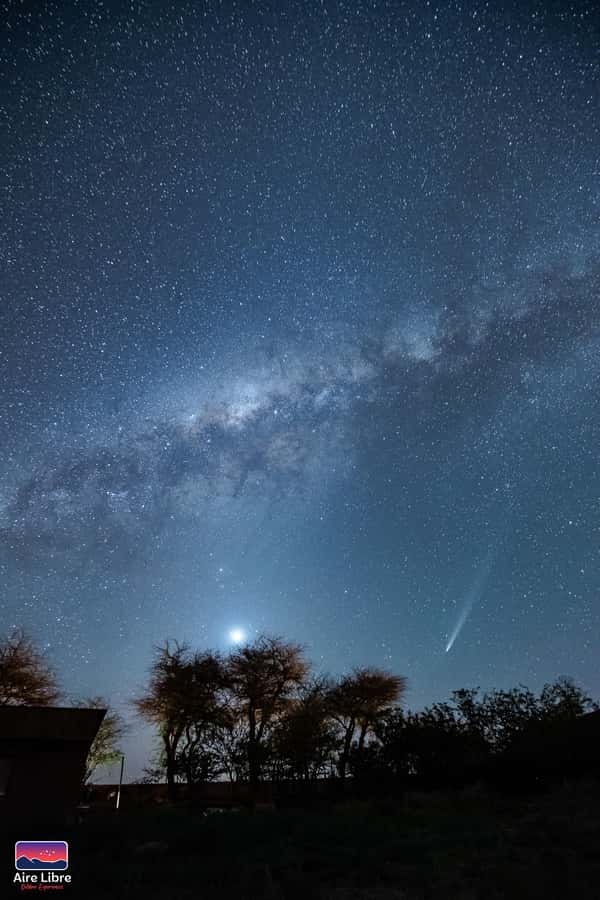
San Pedro de Atacama is a useful base for a night under the stars because the tour takes you away from the town and its lights. That matters more than it may sound. Stargazing is not only about owning a good telescope. It also depends on having a dark setting where the sky can do most of the work.
The Atacama Desert is also a fitting place for a tour built around the Andean view of the heavens. The sky here is not presented only as a scientific display. The experience connects stars and constellations with the way Indigenous cultures of the Central Andes observed and interpreted the night.
That cultural layer gives the evening more shape. You are not simply waiting for an object to appear in a telescope. You are hearing two ways of reading the sky: the Andean tradition and the classic Greek and Roman system familiar from many European star charts.
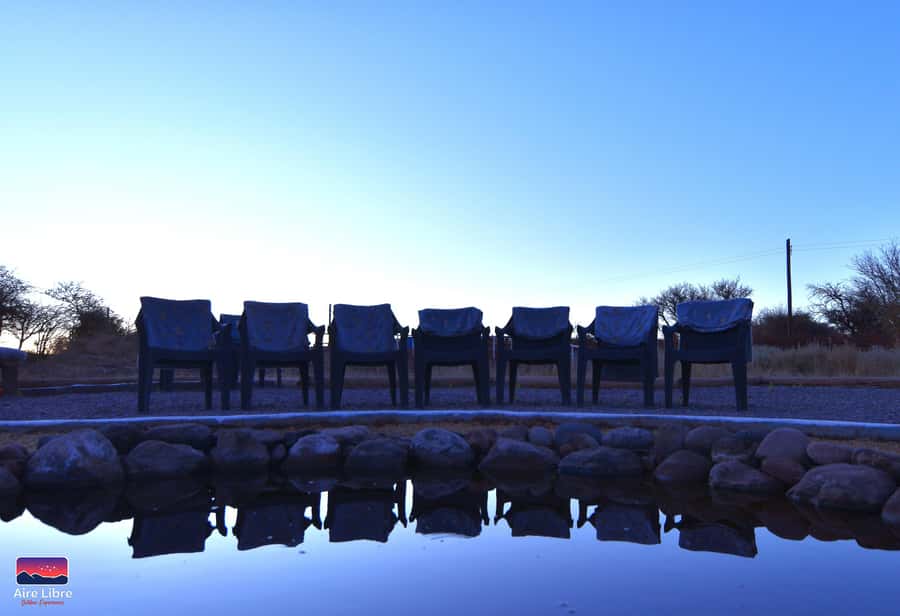
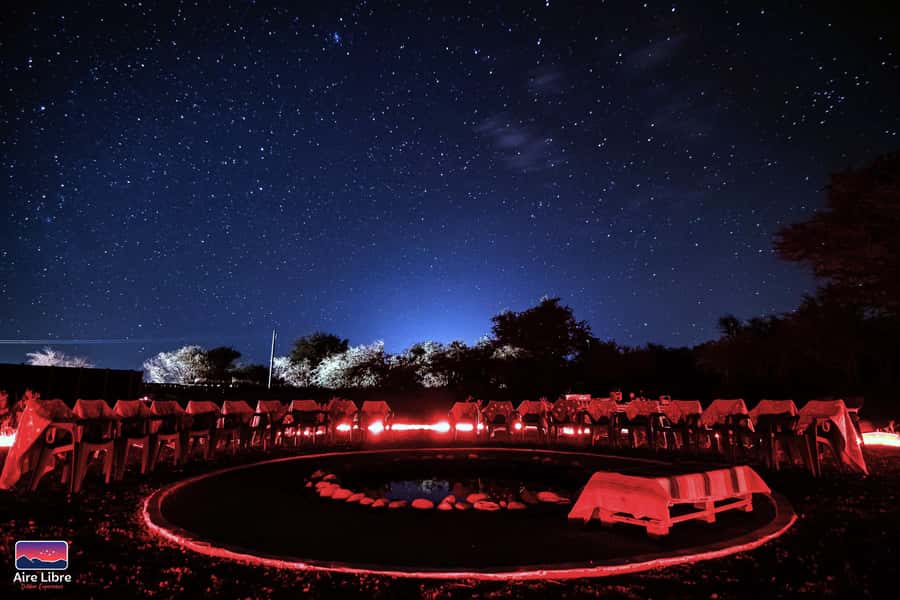
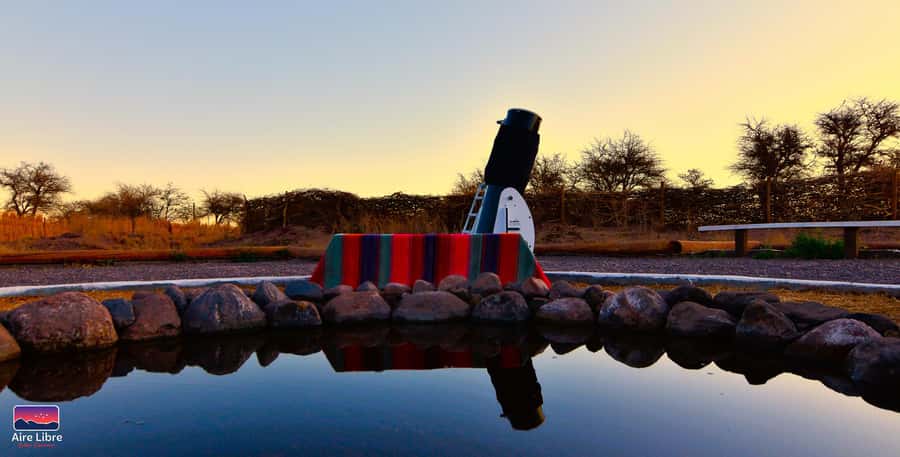
The setting reinforces that idea. The observation area is arranged in the form of a Chakana, often called the Andean Cross, with a mirror of water in the middle. Looking down at the stars reflected in the water offers a quiet visual moment before or between explanations. It is a small feature, but it gives the site a sense of purpose rather than making it feel like a row of equipment in an empty field.
A few more San Pedro de Atacama trips worth weighing up
- San Pedro de Atacama: El Tatio Geysers Tour
★ 4.7 · 943 reviews - San Pedro de Atacama: Etno-Stargazing Tour with Transfer
★ 4.8 · 629 reviews - Piedras Rojas, Altiplanics Lagoons & Salar Full-Day Tour
★ 4.7 · 592 reviews
The 15-minute ride from town
Pickup is included from your hotel, Airbnb, or other housing in San Pedro de Atacama. The listed pickup and drop-off point is Tocopilla 517 in San Pedro, and the driver uses a passenger list with your name.
The drive to the observation site takes about 15 minutes by van. That is short enough to avoid turning the tour into a late-night expedition, but long enough to leave the town behind. After the viewing, the return ride takes another 15 minutes.
This arrangement is useful after a full day of desert sightseeing. You do not need to arrange a taxi in the dark or find your own way to an unfamiliar site. The return to your accommodation is part of the plan.
Pickup timing can vary, so check the available start time when booking. The activity lasts about two hours at the site, in addition to the van rides. If you are planning dinner or another evening activity, give yourself some breathing room rather than scheduling it tightly.
Entering the Chakana observation area
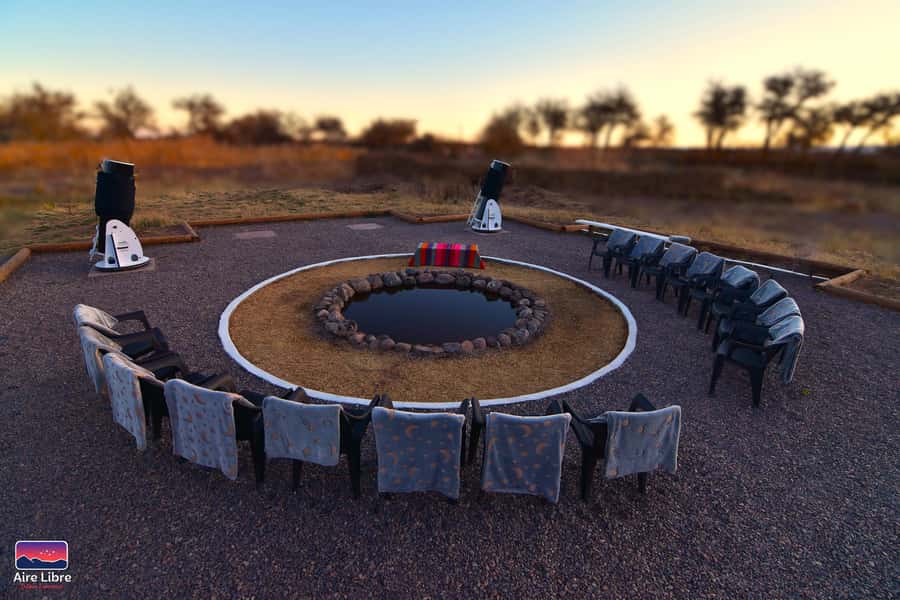
The visitor center and outdoor observation space are the heart of the experience. Instead of beginning with a technical lecture, the tour places you in an area inspired by Andean Cosmovision. The Chakana form gives the site a distinct shape, and the water mirror creates a second view of the sky at your feet.
I like this approach because it makes the experience feel connected to its location. The Atacama is not treated as a blank platform for astronomy. The design points back to Central Andean traditions, where watching the sky was tied to culture, time, and the natural world.
The water mirror is also a good reason to slow down. Telescopes naturally encourage you to move from one object to the next, but the reflection invites a more patient kind of stargazing. You can look upward, then look down, and see the same night in two ways.
The area is arranged outdoors, so you should dress for the conditions instead of assuming that a desert means warmth. Nights can be cold. Comfortable shoes and warm clothing are specifically recommended, and that advice deserves attention. A jacket, warm layers, and clothing that lets you stand outside comfortably will make a large difference.
A toilet is available at the site, another practical detail that helps during a two-hour evening activity.
Two ways of reading the stars
Your certified guide explains both Andean and classic Greek and Roman interpretations of the stars and constellations. That comparison is one of the strongest parts of the tour because it gives you more than a list of names.
The European system tends to organize the sky through familiar figures from Greek and Roman mythology. The Andean interpretation offers a different way to understand what is above you. Hearing both during the same session lets you compare the stories and patterns instead of treating one system as the only correct way to see the heavens.
The guide’s role matters here. Lasse is praised for answering questions clearly and for helping beginners connect with astronomy without feeling overloaded. That is important if you are interested but not already comfortable with star charts and technical terms.
You can also request the tour in English, Spanish, French, or German. The language options are broad for a small evening activity, though availability can depend on the selected time and guide. Private and small-group formats are available, which can make it easier to ask questions and set a slower pace.
The private format received especially warm praise for its relaxed rhythm. If you prefer to pause, ask follow-up questions, or spend more time at the telescope, a private tour may be worth considering. A small group can offer good value, while a private booking gives you more control over the evening.
A completely different sort of day out of San Pedro de Atacama:
- San Pedro de Atacama: Stargazing Experience
★ 4.7 · 489 reviews - San Pedro Atacama: Baltinache Lagoons
★ 4.6 · 359 reviews - San Pedro de Atacama: Valle de la Luna Guided Tour
★ 4.4 · 312 reviews - San Pedro de Atacama: 3-Day Activity Combo with 4 Tours
★ 4.6 · 247 reviews
What the professional telescopes add
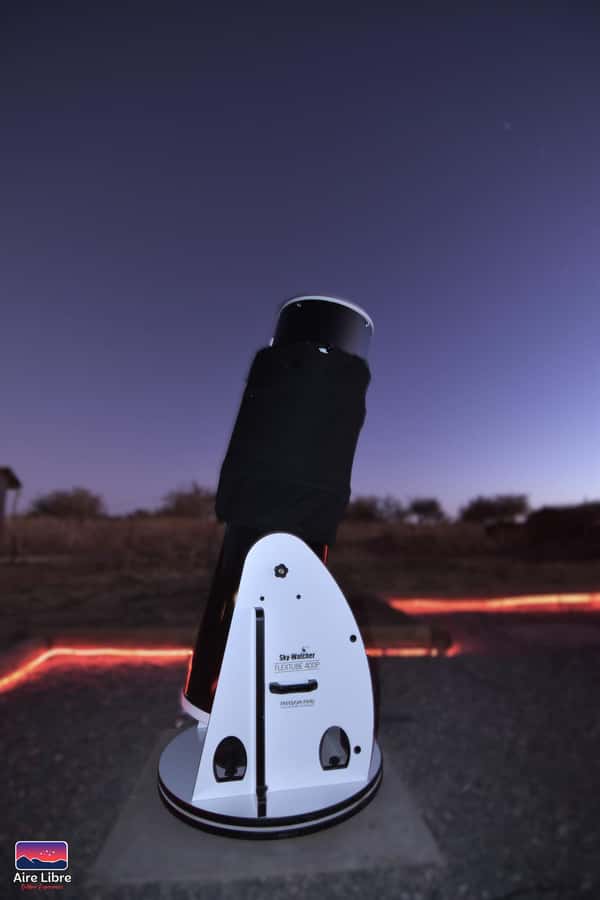
The naked-eye portion comes first as you look at stars and constellations without equipment. This is a useful step. It helps you understand the broad pattern of the sky before the telescope narrows your attention to individual objects.
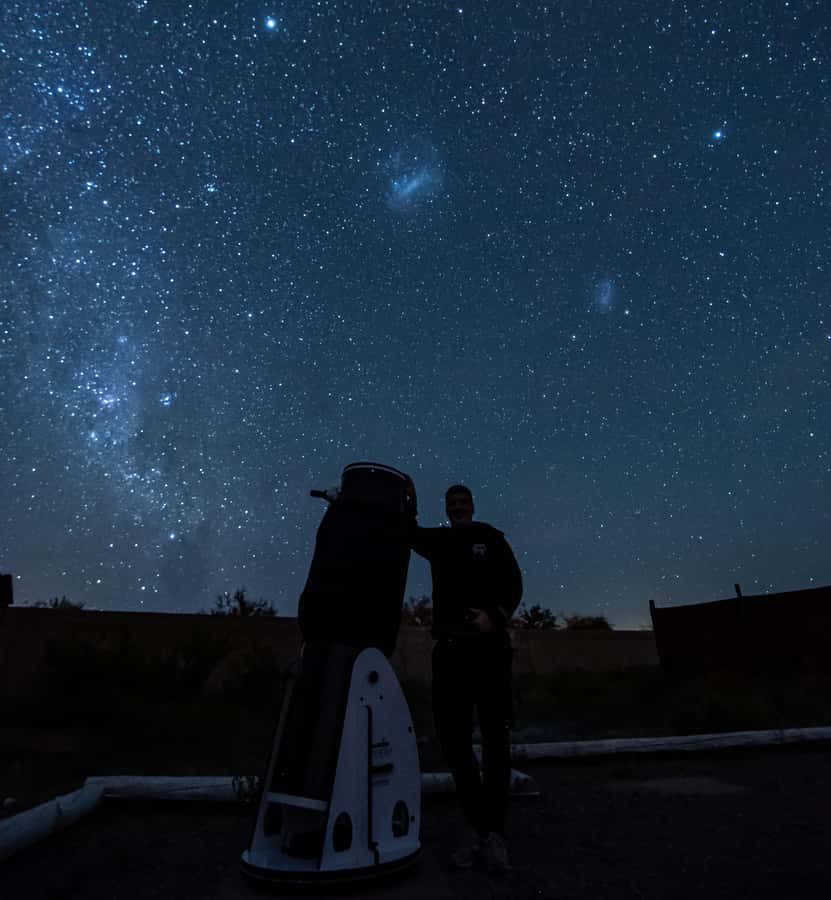
The high-end professional telescopes then provide the closer views. The exact objects seen can depend on weather and the night sky, so you should not expect a fixed list every time. Still, the telescopes are a major reason the tour costs more than simply walking outside your hotel and looking up.
For someone new to astronomy, the difference is easy to understand. The naked-eye view gives you scale and orientation. The telescope gives you detail. Moving between the two helps you see how the broad patterns relate to the objects selected for closer viewing.
I also like that the equipment is paired with explanation. Powerful tools are less useful if nobody tells you what you are looking at or why it matters. The guide’s job is to make those views approachable, and the experience is best suited to people who want some instruction along with the visual thrill.
Keep your expectations sensible. This is a two-hour guided observation session, not a full-night astronomy workshop. You will see selected celestial objects through professional telescopes, but the precise viewing sequence depends on conditions and what is visible that evening.
The star photograph and the final drink
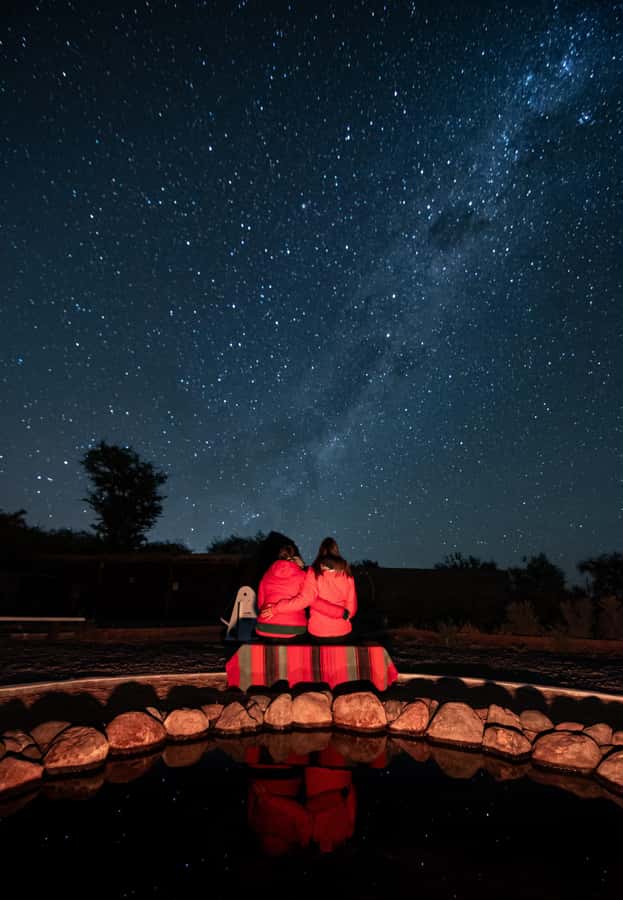
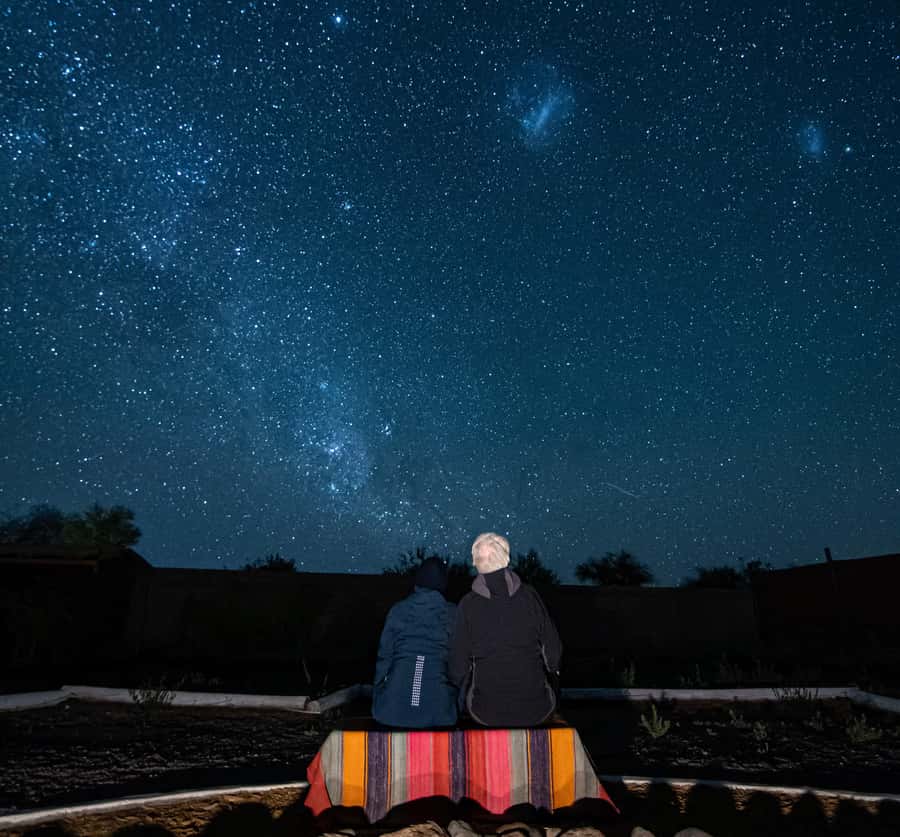
Near the end, a special light-sensitive camera and lens are used to take photographs of you with the stars. This is a nice change from ordinary vacation photos. Instead of taking a quick picture that turns the sky black, the equipment is designed for the low-light setting.
The result is intended to show both you and the night sky, giving you a personal record of the outing. Since the activity includes night photography, you do not have to bring specialized equipment to create a memorable image.
The timing also works well. After listening to explanations and looking through several instruments, you can settle in with a hot tea, hot chocolate, or glass of red wine. The warm drink is especially welcome in the cold desert air, while the wine gives the ending a more leisurely feel.
Alcohol and drugs are not allowed during the activity, so the included wine should be understood as a controlled part of the refreshment service rather than an invitation to drink heavily. If you do not want wine, tea and hot chocolate are available.
The snack and drink are modest additions, not a meal. Plan to eat dinner separately. Their value is in making the final part of the session comfortable and calm.
How the $82 price holds up
At $82 per person, this is not the cheapest way to spend an evening in San Pedro. The value depends on how much you want from your stargazing.
You are paying for hotel pickup and return, a certified guide, the Andean interpretation, naked-eye instruction, access to high-end professional telescopes, a night photograph, refreshments, and a purpose-built observation setting. Taken together, those elements make the price easier to justify for anyone who wants a planned and guided astronomy experience rather than a casual look at the sky.
The price is also more defensible if you choose a private or small-group format. You may have more time to ask questions and move at your own pace, though the exact group arrangement should be confirmed before booking.
I would not book this solely for the drink or photograph. Those are pleasant extras. The main value lies in the combination of a dark desert site, two cultural approaches to the sky, and professional telescope viewing.
Six available ratings give the activity a perfect five out of five, with especially strong praise for the guides, the clear explanations, the telescope views, the pickup service, and the relaxed private format. That is a small sample, so I would not treat it as a guarantee, but the pattern of praise is consistent.
Cold nights and weather limits
The biggest practical issue is the temperature. Desert days can make you forget how sharply the air changes after sunset. Bring warm clothing, and do not rely on a light sweater alone. Comfortable shoes are also important because the observation takes place outdoors.
Weather is another real limit. The activity depends on the sky, and cloudiness or storms can affect it. No telescope can solve a fully covered sky. If your schedule allows, place this tour earlier in your stay so you have some flexibility if weather disrupts the planned evening.
The company offers free cancellation up to 24 hours in advance and allows you to reserve without paying immediately. Those policies help when your plans are still moving, but weather decisions may depend on the operator’s update and the conditions close to the start time.
Do not expect the sky to look exactly the same as in a promotional photograph. Night photography can capture more stars than your eyes see at first, and the telescope view depends on the object, equipment, and conditions. The real attraction is the complete experience, not a guaranteed single perfect image.
Who will enjoy this Atacama evening most
I would recommend this tour to you if you want a guided introduction to astronomy with a clear cultural connection. It suits first-time stargazers, couples looking for a quiet evening, families with older children, and anyone who wants more structure than simply stepping outside at night.
It is also a good match if you enjoy asking questions. Lasse’s ability to explain astronomy without overwhelming beginners is a useful strength, and the small-group or private option may make the evening even more comfortable.
You may want to reconsider if you dislike standing outdoors in cold weather, have no interest in guided interpretation, or want a long, highly technical astronomy session. Two hours is enough for a focused introduction, but not enough for an all-night program.
The tour works particularly well after a busy day of desert excursions. The van ride is short, the schedule is compact, and the setting encourages you to slow down. You get a change of pace without giving up the convenience of returning directly to your accommodation.
Should you book the big-telescope astro tour?
I would book this experience if your idea of a good evening includes both meaning and machinery. The Andean Chakana setting and water reflection give the tour a sense of place, while the professional telescopes provide the close-up views that casual stargazing cannot offer.
The best reasons to go are the two sky traditions, the clear guide-led explanations, the quality of the telescopes, and the included star photograph. The main reasons to hesitate are the $82 cost, the cold, and the fact that weather can change the quality of the session.
Choose a private or small-group option if you want to ask plenty of questions or move at your own pace. Choose this tour with realistic expectations, warm clothing, and a flexible evening schedule, and it offers a thoughtful way to experience the Atacama after dark.
FAQ
How long does the stargazing tour last?
The guided stargazing session lasts about two hours. The van ride takes about 15 minutes each way, so allow additional time for transportation.
Is hotel pickup included?
Yes. Pickup and drop-off are included from your hotel, Airbnb, or other housing in San Pedro de Atacama. Tocopilla 517 is listed as a pickup and drop-off location.
How much does the tour cost?
The listed price is $82 per person.
Which languages are available?
The tour can be provided in English, Spanish, French, or German.
Are professional telescopes included?
Yes. The experience includes viewing selected celestial objects through high-end professional telescopes, along with naked-eye observation of stars and constellations.
Does the tour explain Andean constellations?
Yes. The guide explains Andean Cosmovision and Andean constellations, as well as the classic Greek and Roman interpretation of the stars.
Is food or drink included?
A snack, hot tea, hot chocolate, and red wine are included. The information describes these as refreshments rather than a full meal.
What should I bring?
Bring warm clothing and comfortable shoes. Desert nights can be cold, and the activity takes place outdoors. The tour may also be affected by cloudiness or storms.
Just added around San Pedro de Atacama
- San Pedro de Atacama: Valle de la luna★ 3.0 · 3 reviews
- Cejar & Tebenquiche Lagoons Tour with Ojos del Salar Atacama★ 3.4 · 3 reviews
- Atacama Desert: Floatation in Laguna Cejar and Sunset★ 3.1 · 3 reviews
- Astronomical Tour: San Pedro de Atacama – Chile★ 4.5 · 3 reviews
- San Pedro de Atacama: Astronomical Tour★ 3.9 · 3 reviews
- Valle de la Luna: A Moon-Like Escape in Atacama★ 5.0 · 3 reviews
- Piedras Rojas, Altiplanics Lagoons & Salar Full Day Tour★ 4.4 · 3 reviews
- Full Desert. The most complete program you will find★ 3.2 · 3 reviews
San Pedro de Atacama Tours, compared.
Piedras Rojas, Altiplanics Lagoons & Salar Full-Day Tour
Read our review →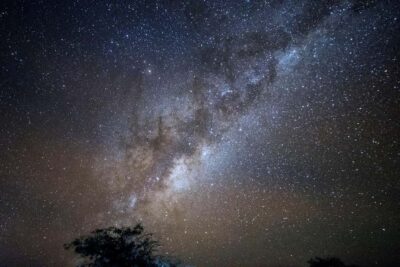
Triple tour: Red stones, highland lagoons and Chaxa Lagoon
Read our review →Browse the lists this tour appears in