
Reviewed · SAN PEDRO DE ATACAMA TOURS
San Pedro de Atacama: 3 D. Tour Uyuni and Back to San Pedro
Salt flats are only part of the story. This three-day Bolivia tour from San Pedro de Atacama crosses the high-altitude deserts near the Chilean border, visits intensely colored lagoons, follows flamingos and vicuñas across the Altiplano, and reaches the huge Uyuni Salt Flats before returning to Chile.
I like the way the trip combines major sights with quieter stops such as the Dalí Rocks, Siloli Desert, and Lake Catal. I also like the small-car format, especially with a guide such as Freddy, whose talks on geology, wildlife, Bolivian history, and local life add real meaning to the scenery. The main drawback is the pace: long hours in a four-wheel-drive vehicle, rough roads, early starts, and high altitude make this an adventure, not a soft holiday.
The $750 price is high beside basic Uyuni group tours, but it includes border transfers, a private 4WD car with driver, park fees, two nights of accommodation, meals, an English-speaking guide, and a return to San Pedro. For a short round trip, that convenience matters. You cover a lot of ground without arranging separate transport or losing another day to the border.
In This Review
- Key Points Before You Book
- Why This Route Works in Only Three Days
- Day One: From San Pedro to the Colored Lagoons
- Dalí Rocks and the Siloli Desert
- Green Lagoon and Red Lagoon
- Day Two: Incahuasi Island and the Uyuni Salt Flats
- Incahuasi Island
- Making the Most of the Salt Flat
- Day Three: Train Cemetery, Lake Catal, and the Return to Chile
- What the $750 Price Really Buys
- Altitude, Weather, and Comfort
- The Guides and Drivers Make a Real Difference
- Who Should Book This Uyuni Tour?
- Should You Book It?
- FAQ
- How long is the San Pedro de Atacama to Uyuni tour?
- What time does the tour start?
- Is transport included from San Pedro to Bolivia?
- Is the return to San Pedro included?
- How high does the tour go?
- What accommodation is included?
- Are meals included?
- Is this tour suitable for children or people with altitude sickness?
Key Points Before You Book
- Start at 06:00 from San Pedro: The first morning begins early with a shared van to Hito Cajones, the Bolivia border.
- See more than the salt flats: Green Lagoon, Red Lagoon, Dalí Rocks, Siloli Desert, flamingos, vicuñas, viscachas, and volcanic scenery fill the first day.
- Sleep warm, but simply: Kachi Wasi and Hotel Toñito provide hot water and heating, though this is not luxury accommodation.
- Incahuasi Island adds another kind of drama: Giant cacti, coral fossils, lizards, insects, and thin-air walking break up the salt-flat crossing.
- The sunset is a major payoff: The tour crosses the Salar de Uyuni toward the shore in the afternoon for unusual reflections and sunset photographs.
- You return to Chile on day three: The route includes the train cemetery and Lake Catal before reaching San Pedro at about 15:30.
Why This Route Works in Only Three Days
Most short Uyuni trips force a choice. You can see the salt flats and return quickly, or spend more time in southern Bolivia and accept a longer journey. This route tries to do both.
You leave San Pedro, cross into Bolivia, visit the high desert and colored lagoons, spend the second day at Uyuni, and return to Chile on the third afternoon. That makes the trip useful if you have limited time in the Atacama region or need to return to San Pedro rather than finish in Uyuni.
The tradeoff is considerable driving. The route moves through broad, empty country where attractions are separated by long stretches of dirt road. I would not book this expecting a relaxed schedule with plenty of time at each stop. You are paying for access to a large area in a compact time frame.
The group is described as small, with no more than four people in a car and a total group limit of 12. In practice, the arrangement can involve several vehicles, with a guide moving between them. That keeps the 4WD ride more personal than a large coach, but you should confirm the exact vehicle and group setup when booking.
A few more San Pedro de Atacama trips worth weighing up
- San Pedro de Atacama: El Tatio Geysers Tour
★ 4.7 · 943 reviews - San Pedro de Atacama: Etno-Stargazing Tour with Transfer
★ 4.8 · 629 reviews - Piedras Rojas, Altiplanics Lagoons & Salar Full-Day Tour
★ 4.7 · 592 reviews
Day One: From San Pedro to the Colored Lagoons
The first transfer begins at 06:00. A shared van takes you from San Pedro to Hito Cajones, about an hour away, where you complete the border formalities before changing to a Bolivian four-wheel-drive vehicle.
The climb toward the border is part of the experience. The route reaches roughly 4,500 meters, so the change from San Pedro is not trivial. You may feel the altitude in your breathing and energy, especially during short walks. Bring water, snacks, warm clothing, and any medication you normally use for altitude discomfort. The tour also keeps oxygen available, according to the operating team.
Once inside Bolivia, the scenery becomes spare and striking. Huge volcanoes, wind-cut rock, and open Andean desert replace the more developed feel of San Pedro. The region is often described as having remained much the same for millions of years, and the lack of buildings or road traffic helps that claim feel believable.
Dalí Rocks and the Siloli Desert
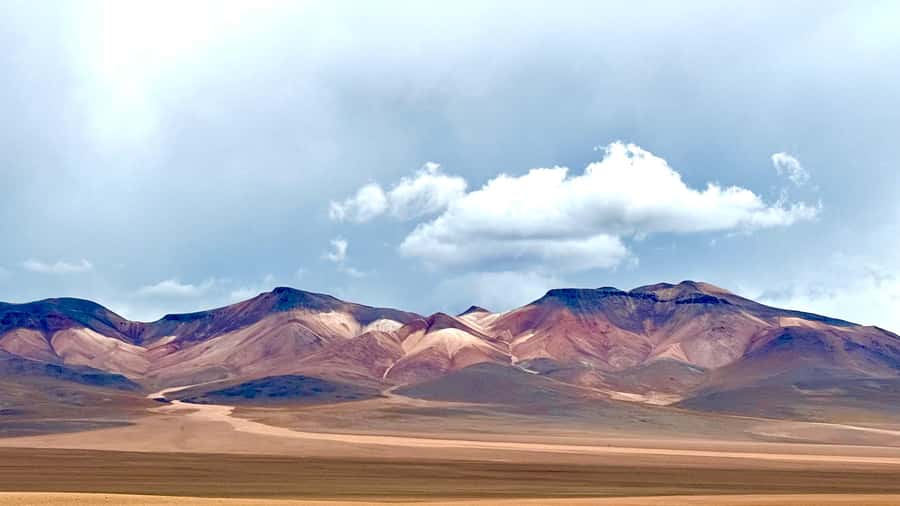
The Dalí Rocks are wind-sculpted formations scattered across the desert. Their nickname comes from their resemblance to surrealist art, but you do not need to be an art enthusiast to enjoy them. The rocks appear suddenly in a wide, empty setting, with the surrounding colors and volcanoes doing much of the visual work.
The Siloli Desert continues the same theme, but on a larger scale. This is a place for photographs, not a long list of formal attractions. Your guide can help explain the geology and point out how wind, altitude, and dryness shaped the formations.
Road conditions are part of the day. The vehicle handles rough dirt tracks, but the ride can be tiring. A skilled driver makes a real difference here. Guides and drivers such as Freddy, Isaac, Christian, Javier, Roly, and Cristian have received especially strong praise for safe driving, route knowledge, wildlife spotting, and careful stops for photographs.
Green Lagoon and Red Lagoon
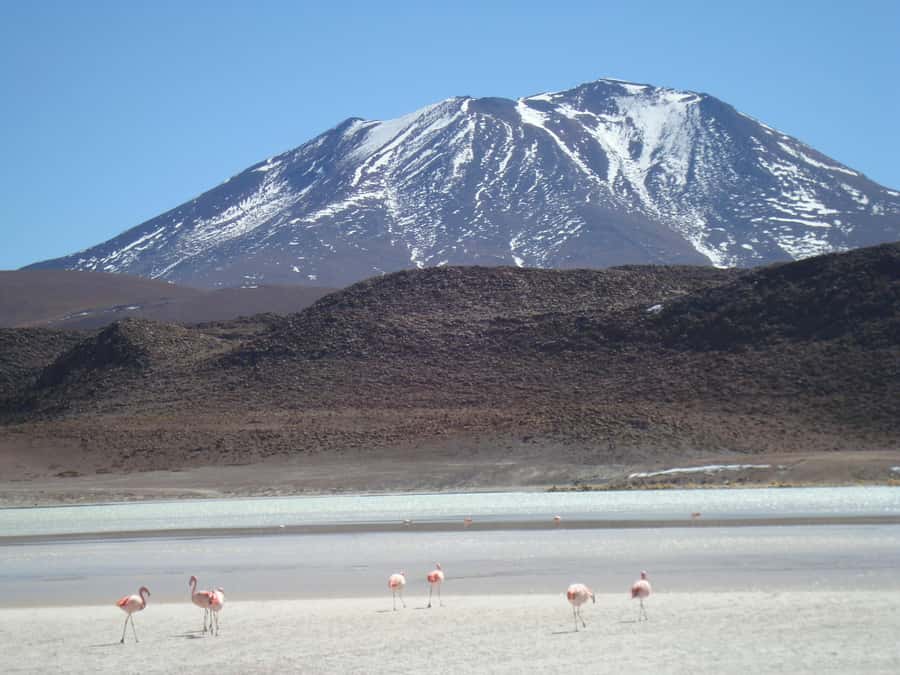
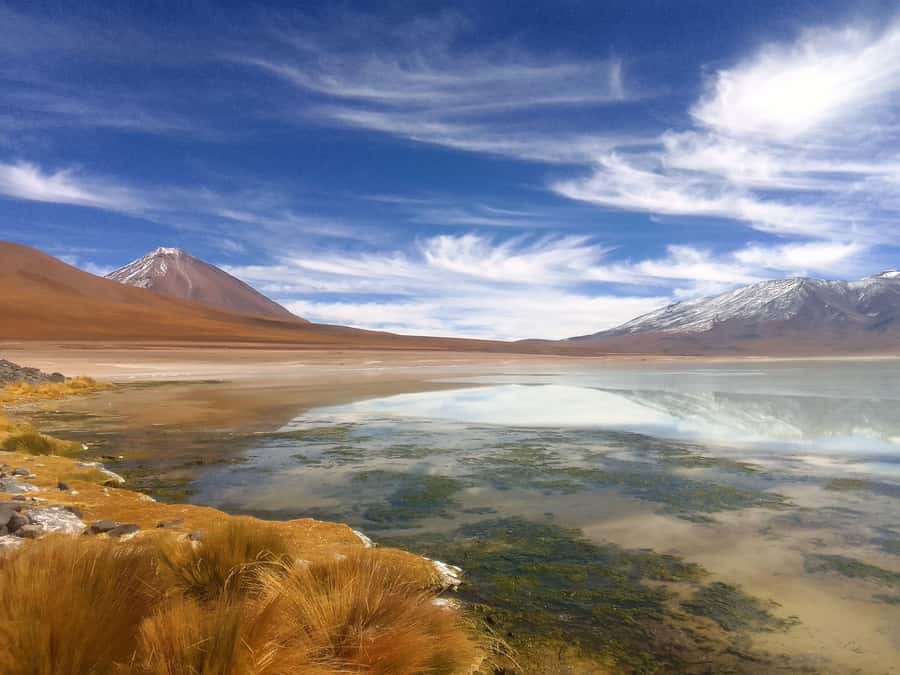
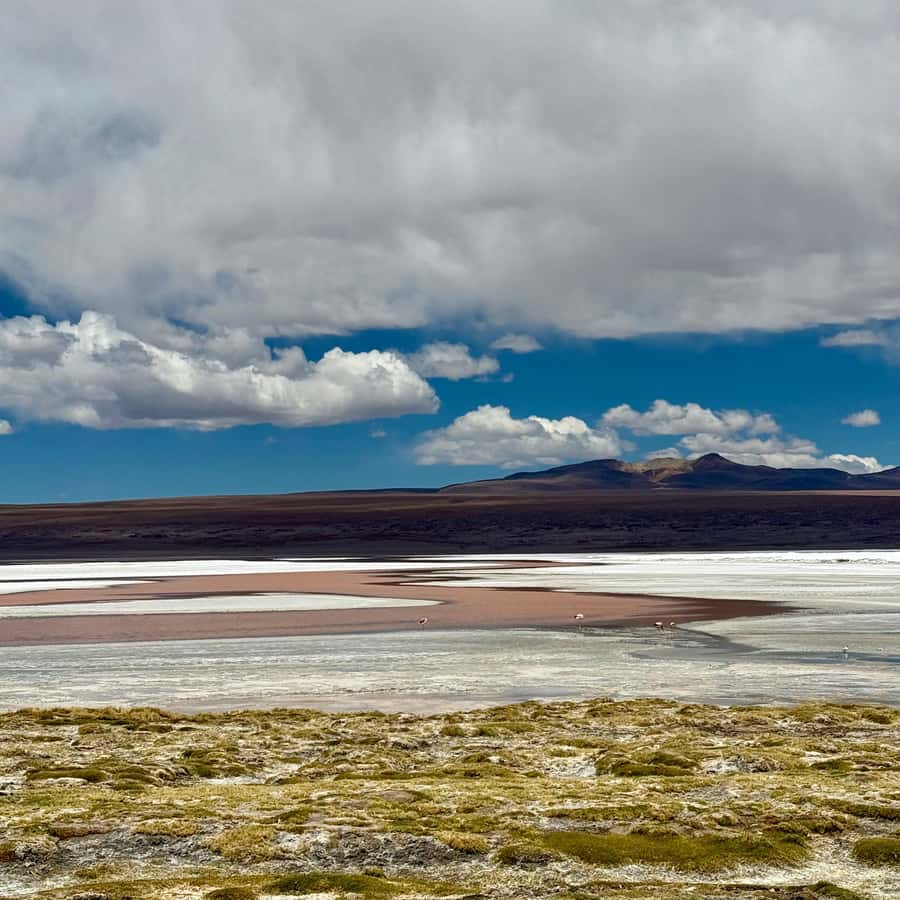
The lagoons are the first day’s main reward. Their colors can shift with light, minerals, algae, and weather, giving you deep greens, reds, blues, and pale tones across the high plain.
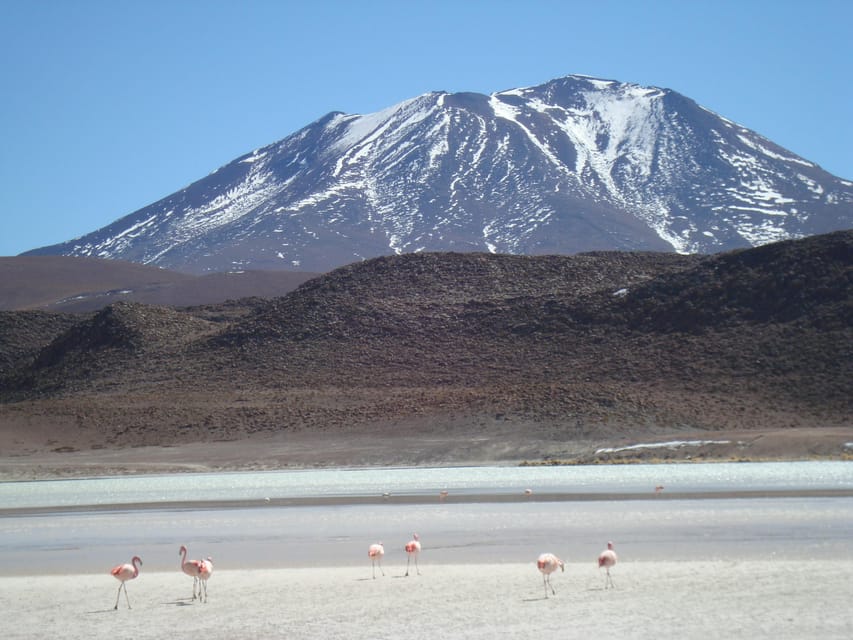
Laguna Colorada is the most famous. Its red appearance comes from the Dunaliella salina algae and a high level of ocher sediment. Hundreds of flamingos feed and breed around the water, creating one of the trip’s best combinations of wildlife and scenery.
You may also see vicuñas, llamas, foxes, viscachas, hawks, and other high-altitude wildlife. The exact sightings cannot be promised, but the open terrain makes animals easier to spot than in many more crowded places. A guide who knows where to look adds genuine value here.
The first night is at Kachi Wasi, with heating and hot water. That is welcome after a cold day above 4,000 meters. Still, keep your expectations practical. This is a simple mountain stop designed to provide warmth, sleep, and a shower, not polished hotel service.
A completely different sort of day out of San Pedro de Atacama:
- San Pedro de Atacama: Stargazing Experience
★ 4.7 · 489 reviews - San Pedro Atacama: Baltinache Lagoons
★ 4.6 · 359 reviews - San Pedro de Atacama: Valle de la Luna Guided Tour
★ 4.4 · 312 reviews - San Pedro de Atacama: 3-Day Activity Combo with 4 Tours
★ 4.6 · 247 reviews
Day Two: Incahuasi Island and the Uyuni Salt Flats
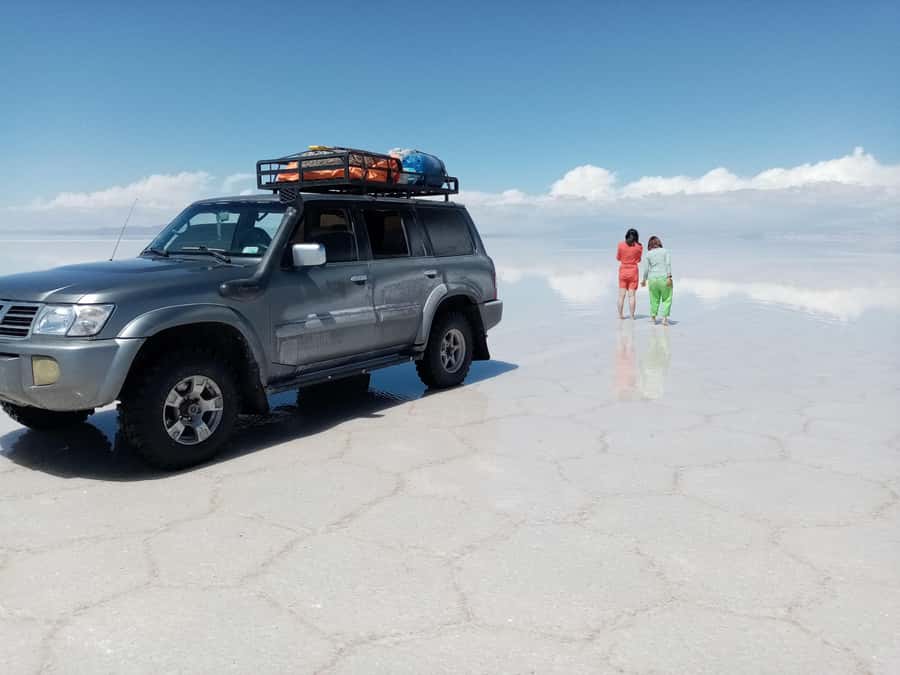
Day two shifts from colored water and volcanic rock to one enormous white plain. The Uyuni Salt Flats cover around 10,000 square kilometers and sit at approximately 3,600 meters above sea level. The scale is difficult to grasp until the vehicle is moving across the flat surface with almost no visual reference.
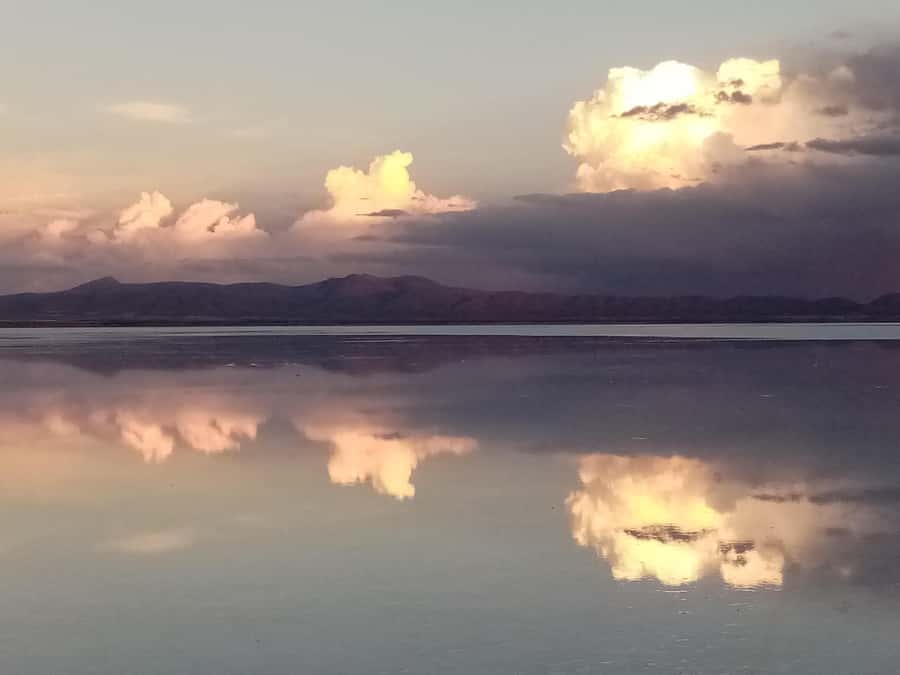
The salt formed from ancient bodies of water that covered the Altiplano. In the dry season, the surface may show polygon patterns and a hard white crust. Depending on conditions, the flat can also hold a thin layer of water that creates mirror-like reflections. The supplied itinerary does not promise a particular surface condition, so you should think of the salt flat as a place shaped by season and weather.
Incahuasi Island
Incahuasi Island breaks up the long crossing. The island is covered with giant cacti, some reaching seven or eight meters, and contains coral fossils from the ancient sea that once covered this high plateau.
The island is not a lush oasis. It is dry, exposed, and high. The walk can feel harder than expected because of the thin air, but it gives you a closer look at the cacti and the island’s unusual plant and animal life. Viscachas, lizards, insects, and small birds survive in this harsh setting.
Bring comfortable shoes and take the walk slowly. This is not the place to race up a path for a better photograph. A measured pace lets you enjoy the contrast between living cactus and the mineral whiteness stretching around it.
Making the Most of the Salt Flat
The salt flat is ideal for playful photographs because the horizon can disappear and distance becomes hard to judge. Your guide and driver can help with compositions and timing. Allow yourself time to try a few ideas, but do not expect a full studio session. The day has a schedule, and the route still needs to reach the shore before sunset.
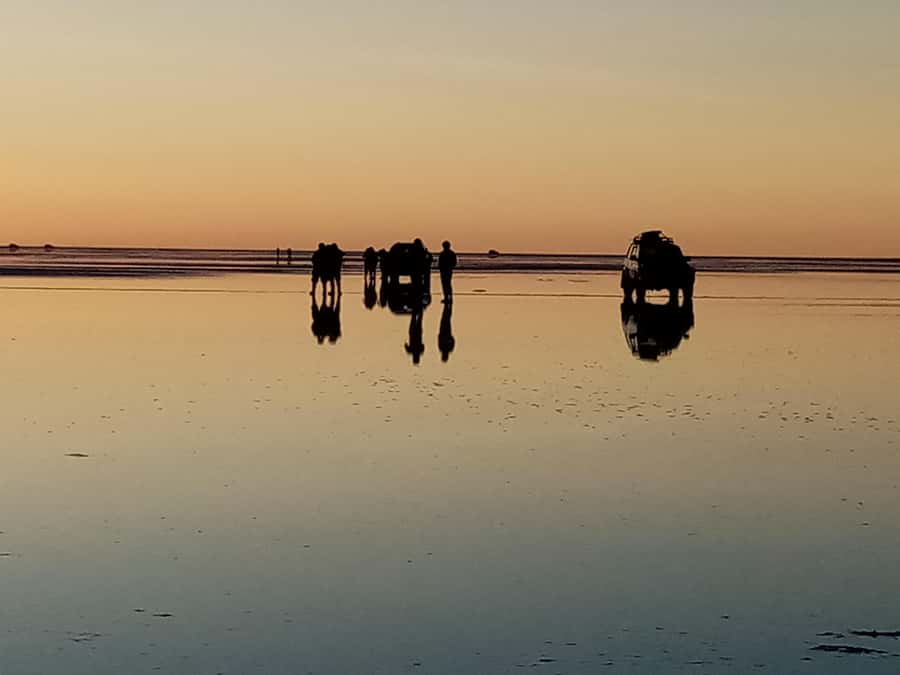
The afternoon crossing toward the edge of the Salar is a major highlight. The changing light brings out pale gold, pink, blue, and gray tones, while the wide surface creates unusually clean reflections when water is present. Sunset is not guaranteed to be dramatic, but the setting gives it an excellent chance.
You spend the night at Hotel Toñito, which also provides hot water and heating. Meals are included during the trip, with two breakfasts, three boxed lunches, and one dinner listed as part of the package. Vegetarian meals can be arranged, according to the experience details shared by the operator.
One point needs attention when planning your budget. Dinner is not included for the second night in Uyuni City. The accommodation details describe two nights, while the day-by-day plan lists Kachi Wasi for the first night and Hotel Toñito for the second. Ask exactly where you will sleep and which evening meal is included before departure, then carry some Bolivian cash for anything extra.
Day Three: Train Cemetery, Lake Catal, and the Return to Chile
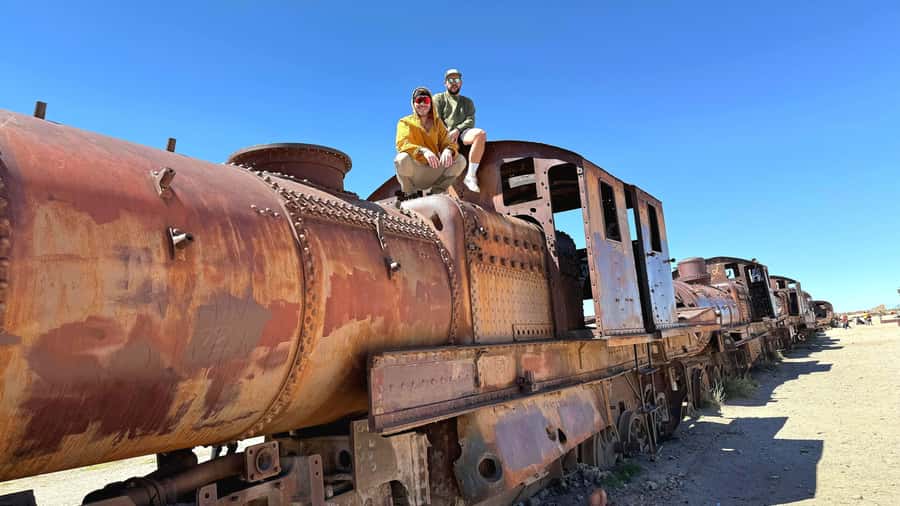
Day three starts early again. The private 4WD takes you to the train cemetery, one of Uyuni’s most recognizable stops. Rusting locomotives sit in the open desert, far from the industrial setting where you might expect to find them.
The trains make strong photographs because of their shape, texture, and isolation. This is a short stop compared with the salt-flat crossing, but it gives the morning a different mood before the route returns to natural scenery.
The itinerary then allows about three hours by car to Lake Catal. From there, you hike through a broad high-altitude area with volcanoes and hundreds of llamas. The combination of open country, animals, and distant volcanic peaks provides a final look at the Altiplano before the border crossing.
The return route is not a quick shuttle. You continue through the main volcanic range and reach elevations around 4,500 meters before arriving at Hito Cajones. A private transfer then takes you back to San Pedro, with arrival at your hotel expected around 15:30.
That arrival time is useful if you have an evening plan, but I would avoid booking anything that cannot be changed. Border procedures, road conditions, weather, and altitude can all affect the schedule.
What the $750 Price Really Buys
At $750 per person, this is not the cheapest way to see Uyuni. The price makes more sense when you separate the included services.
You receive:
- Shared transport from San Pedro to the Bolivian border
- A private return transfer from the border to San Pedro
- A 4WD vehicle and driver in Bolivia
- An English-speaking guide
- Two nights of accommodation with heating and hot water
- Two breakfasts, three boxed lunches, and one dinner
- National Park and Incahuasi Island entrance fees
- A small-car arrangement
The strongest value is time and coordination. You do not need to find separate border transport, negotiate a vehicle in Bolivia, arrange park tickets, or work out a return transfer from a remote border post. The private vehicle also matters on rough roads, where driver skill affects both comfort and safety.
The accommodation and meals are functional rather than luxurious. Several visitors found the hotels comfortable enough, warm, and supplied with hot water, while one found the hotel less impressive. That is a fair picture. You should see the rooms as a clean, warm base after a hard day, not as a reason to book the trip.
If your priority is the lowest possible price, another Uyuni option may suit you better. If your priority is seeing the highlights in three days, returning to San Pedro, and having an English-speaking guide who can explain geology, wildlife, culture, and history, the price is easier to defend.
Altitude, Weather, and Comfort
Altitude is the most important practical concern. San Pedro itself is already high, and the route rises to around 4,500 meters. The first day combines altitude, cold, long drives, and several stops, so it can feel demanding even if you are generally fit.
This tour is not suitable for children under 10, people with altitude sickness, or people over 70. Those restrictions are blunt, but they reflect the conditions. If you have a medical concern, you should get professional advice before booking.
Pack for sharp temperature changes. The required list includes:
- Comfortable shoes
- Swimwear
- A towel
- A jacket
- Warm, comfortable clothing
- A change of clothes
Swimwear and a towel are useful because the route includes hot springs. The vehicle may be warm, but outdoor stops can be cold and windy. Bring sunscreen, water, lip protection, and snacks as sensible personal supplies. One useful tip from the trip’s guidance is to carry a sports drink and ibuprofen if those are safe for you to use.
Do not bring alcohol or drugs. Also, do not choose this trip if you need luxury, pampering, or consistently mild temperatures. The appeal is the raw setting, not comfort at every turn.
The Guides and Drivers Make a Real Difference
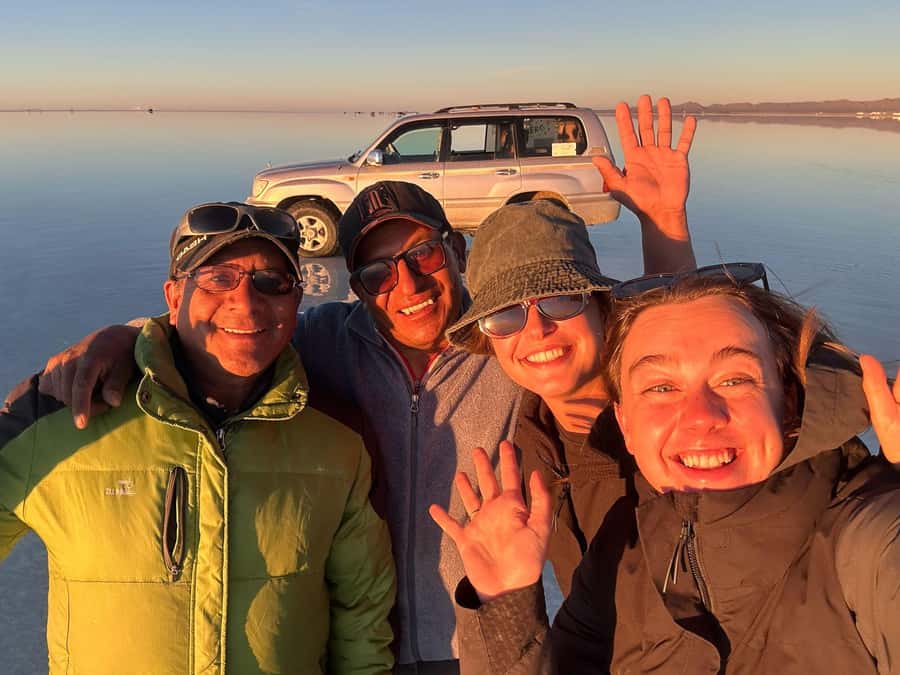
A route this remote depends heavily on the people in the vehicle. Freddy has been praised for clear English, humor, and detailed explanations of Bolivian history, geology, wildlife, culture, economics, and politics. That range matters because the scenery can otherwise become a blur of white flats, brown rock, and distant volcanoes.
The drivers are just as important. Isaac, Christian, Javier, Roly, and Cristian have been singled out for careful driving, wildlife spotting, and help with photographs. On rough desert roads, an experienced driver lets you look outward instead of worrying about every bump.
The arrangement is not always a single guide for a single car. The maximum group size is 12, and some departures use multiple 4WD vehicles. If personal guiding is important to you, ask how many people will share your vehicle and who will accompany it.
Who Should Book This Uyuni Tour?
I would recommend it to you if you want a concentrated introduction to southern Bolivia and need to return to San Pedro. It suits people who enjoy wildlife, geology, big open spaces, early mornings, and unusual photographs.
It is also a good fit if you prefer a small group to a large bus. The combination of a private 4WD, an English-speaking guide, and included border arrangements removes much of the uncertainty from a demanding route.
I would hesitate if you dislike long drives, rough roads, cold nights, basic hotels, or high-altitude walking. The salt flats are spectacular, but they are only one part of a physically tiring three-day circuit.
The operator offers free cancellation up to 24 hours before departure and a reserve-now, pay-later option. Those policies make it easier to hold a place while your wider schedule settles, but you still need to confirm your Bolivian visa and border documents well ahead of time.
Should You Book It?
Book this tour if the idea of crossing a stark Andean desert sounds as appealing as the salt flats themselves. The best parts are not limited to the famous white expanse: Laguna Colorada and its flamingos, the Dalí Rocks, the giant cacti of Incahuasi, Lake Catal, and the chance to see vicuñas, llamas, viscachas, and other wildlife all give the route depth.
The $750 cost is justified by the short round-trip format, private 4WD transport, border coordination, warm accommodation, and strong guiding. Just make the decision with open eyes. You will spend long hours on rough roads, sleep simply, wake early, and deal with altitude. If that sounds like a fair price for extraordinary scenery and a well-organized route, this is one of the strongest ways to reach Uyuni from San Pedro in only three days.
FAQ
How long is the San Pedro de Atacama to Uyuni tour?
The tour lasts three days and returns you to your hotel in San Pedro at about 15:30 on the third day.
What time does the tour start?
Pickup from your San Pedro hotel is scheduled for 06:00 on the first day. The third day also begins early.
Is transport included from San Pedro to Bolivia?
Yes. A shared van takes you from San Pedro to Hito Cajones, the Bolivian border, in about one hour. Immigration takes place at the border before you continue in Bolivia.
Is the return to San Pedro included?
Yes. A private transfer takes you from the Bolivian border back to San Pedro on the final day.
How high does the tour go?
The route reaches approximately 4,500 meters near the border and crosses high-altitude areas of the Bolivian Altiplano. Uyuni sits at about 3,600 meters above sea level.
What accommodation is included?
The package includes two nights, with Kachi Wasi listed for the first night and Hotel Toñito for the second. Both are described as having hot water and heating.
Are meals included?
Two breakfasts, three boxed lunches, and one dinner are included. Dinner on the second night in Uyuni City is not included.
Is this tour suitable for children or people with altitude sickness?
The tour is not suitable for children under 10, people with altitude sickness, or people over 70. It is also not intended for anyone seeking luxury, pampering, or comfortable temperatures throughout the trip.
Just added around San Pedro de Atacama
- San Pedro de Atacama: Valle de la luna★ 3.0 · 3 reviews
- Cejar & Tebenquiche Lagoons Tour with Ojos del Salar Atacama★ 3.4 · 3 reviews
- Atacama Desert: Floatation in Laguna Cejar and Sunset★ 3.1 · 3 reviews
- Astronomical Tour: San Pedro de Atacama – Chile★ 4.5 · 3 reviews
- San Pedro de Atacama: Astronomical Tour★ 3.9 · 3 reviews
- Valle de la Luna: A Moon-Like Escape in Atacama★ 5.0 · 3 reviews
- Piedras Rojas, Altiplanics Lagoons & Salar Full Day Tour★ 4.4 · 3 reviews
- Full Desert. The most complete program you will find★ 3.2 · 3 reviews
San Pedro de Atacama Tours, compared.
Piedras Rojas, Altiplanics Lagoons & Salar Full-Day Tour
Read our review →
Triple tour: Red stones, highland lagoons and Chaxa Lagoon
Read our review →Browse the lists this tour appears in