
Reviewed · EL TATIO GEYSER TOURS
Guided tour to the Tatio Geyser breakfast at Geyser Blanco
Go before sunrise for steam and silence. This $90 tour from San Pedro de Atacama takes you to the Tatio geothermal field at the coldest, most dramatic hour, then adds a breakfast stop at Geyser Blanco, wildlife viewing, a high-altitude river crossing, and a short visit to Machuca. I like the sunrise geysers and the chance to see vicuñas, flamingoes, and other birds along the return route. I also like the local food stop, where goat cheese and llama meat empanadas are prepared by people from the area.
The main drawback is the early start and uneven communication. Pickup is listed between 4 and 5 a.m., and one group was collected close to 5 after waiting from 4. Commentary may be mostly in Spanish, even when the guide speaks English. The mountain roads, high altitude, and very cold morning air also demand warm clothing and a reasonable level of fitness.
In This Review
- Key points to know before booking
- Why the Tatio geysers are worth the painful wake-up
- The coldest hour of the day
- Geyser Blanco: breakfast, bathing, and a seasonal change
- Wildlife and open country at the Putana River
- Machuca and a taste of local food
- Language and guiding can shape the whole morning
- Is the $90 price good value?
- Who should book this Tatio outing?
- Should you book it?
- FAQ
- How long does the Tatio Geyser tour take?
- What time does the tour begin?
- Is breakfast included at Geyser Blanco?
- How cold is El Tatio?
- Are children under five allowed?
- What happens if the tour is canceled?
Key points to know before booking
- Sunrise at El Tatio: The geysers are best seen early, when steam rises sharply in the freezing air.
- Geyser Blanco changes by season: From September through April, the stop features breakfast. In winter, the plan may include a thermal bath instead.
- High-altitude conditions matter: Temperatures can fall between minus 10 and minus 20 degrees Celsius, with parts of the route above 4,200 meters.
- Wildlife comes with the scenery: Keep watch for vicuñas, Andean flamingoes, and other birds near the plateau and river.
- Small group size: The maximum is 15 people, which is more manageable than a large bus tour.
- Allow six to seven hours: The driving time is part of the tour, and the return includes several scenic stops.
Why the Tatio geysers are worth the painful wake-up
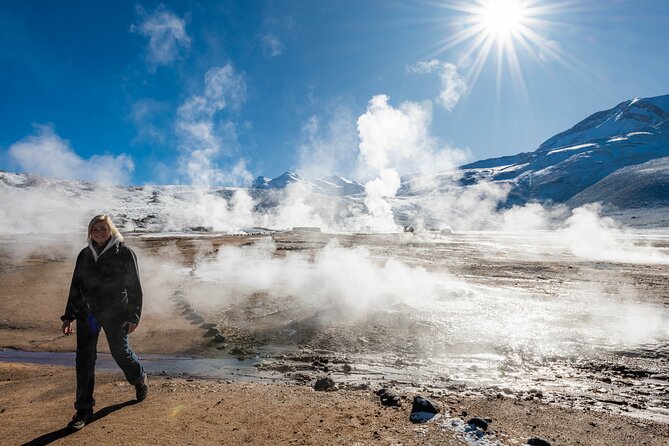
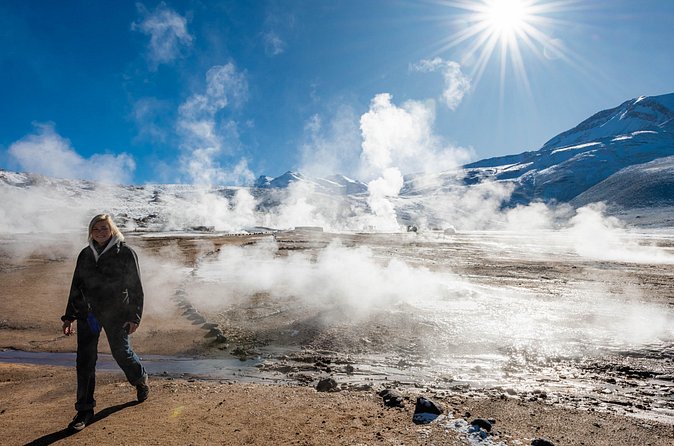
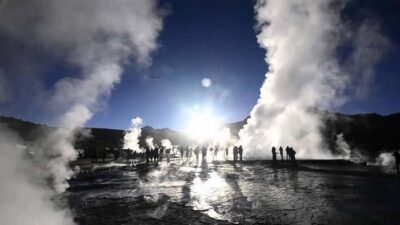
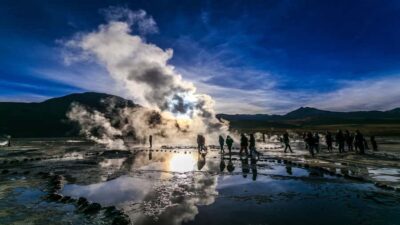
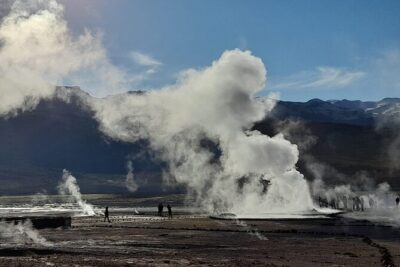
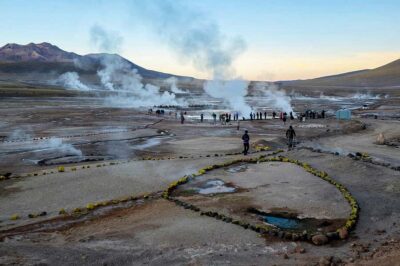
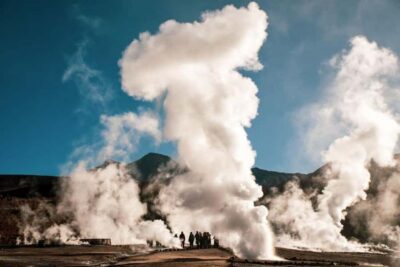
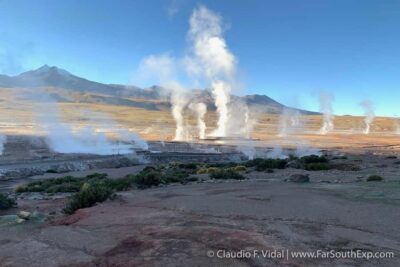
El Tatio is described as the third-largest geothermal field in the world, and the scale becomes clear once you are among its steaming vents. Fumaroles can reach 10 meters, with the high peaks around you rising to roughly 5,000 meters. This is not a single geyser erupting on cue. It is a broad field of steam, mud, mineral ground, and volcanic activity.
The timing matters. The tour reaches the geysers early, when the difference between the cold air and the hot vapor makes the columns of steam especially clear. Sunrise also gives the area a softer light, with the mountains changing color as the morning develops.
You should expect about two hours at El Tatio, including walking. That is enough time to see the geothermal field without treating the stop as a quick roadside photograph. You will be on your feet, though, and the cold can make even a gentle walk feel demanding. At this altitude, you may feel heavy or short of breath, especially on any uphill section.
I would keep your pace slow. You do not need to race from vent to vent, and taking it easy is sensible at more than 4,000 meters. One person described even climbing the optional church steps in Machuca as difficult because of the altitude. That is a useful warning for anyone who has not spent time at high elevation before.
The geothermal field is also a place where a good guide adds real value. The strongest guiding on this tour includes simple explanations of the geysers, local history, and the plants and animals around them. Nata received particular praise for checking on the group, translating into English, and helping with photographs. That kind of attention can make the difference between merely seeing steam and understanding what you are looking at.
More dawn runs up to the geysers:
- San Pedro de Atacama: El Tatio Geysers Tour
★ 4.7 · 943 reviews - From San Pedro de Atacama: El Tatio Geyser Field & Wetlands
★ 4.5 · 141 reviews - Full Day Tour to Geyser del Tatio, Vado Putana and Machuca
★ 5.0 · 134 reviews
The coldest hour of the day
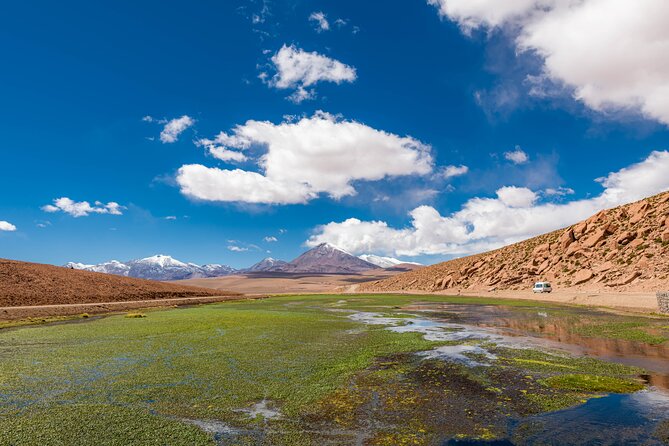
You need serious winter clothing for this outing, even if San Pedro feels mild later in the day. The morning at El Tatio can reach minus 10 to minus 20 degrees Celsius, according to the tour information. The cold is not a small inconvenience. It shapes how long you want to walk, how carefully you handle your camera, and how much you enjoy the first stop.
Bring your warmest available layers, gloves, a hat, and clothing that covers your legs. Do not rely on the idea that the Atacama is always hot. San Pedro is a desert town, but El Tatio is high mountain country.
The pickup window also deserves attention. The stated meeting period is between 4 and 5 a.m., not one exact time. If you are waiting outside your lodging, that uncertainty can feel long when it is dark and cold. One group waited from 4 until nearly 5, then discovered it was only the second pickup. I would confirm the exact pickup arrangement with Molantur and avoid planning anything demanding for the afternoon.
The tour vehicle may also spend a lot of time on rough or slow roads. A complaint about the driving style and the route suggests that the ride can feel longer than expected. Since six to seven hours includes transport, this is not six to seven hours of sightseeing.
Geyser Blanco: breakfast, bathing, and a seasonal change
After the geothermal field, the tour continues to Las Termas de Geyser Blanco. This stop lasts about an hour and is the most unusual part of the outing because the plan changes with the season.
From September through April, the experience includes breakfast in a striking setting. Geyser Blanco is described as a river with internal geysers, creating unusual views around the water. A well-prepared breakfast here can feel much more memorable than a meal eaten back in town, especially after the cold start.
One guide was praised for preparing an attractive and tasty breakfast, while also taking time to point out wildlife. That detail matters. The meal is not simply fuel between stops. It gives you a chance to warm up, sit with the setting, and enjoy a quieter part of the high plateau.
During winter, the tour information says the stop may instead include a thermal bath. This is an important seasonal distinction. The tour title highlights breakfast, but the actual offering depends on the time of year. One booking was disappointed because a promised thermal bath did not happen, so I would confirm exactly what is included for your date before paying.
The bathing option also requires practical judgment. You are moving between freezing air and naturally warm water at high altitude. If swimming is part of your plan, bring the items you need and ask the operator about the current conditions. The supplied details do not guarantee that the bath will operate on every winter departure.
This stop is a major reason to choose this tour over a simple geyser excursion, but it is also the part that needs the clearest confirmation. Breakfast from September to April appears more reliable in the description than the thermal bath reported on one departure.
Wildlife and open country at the Putana River
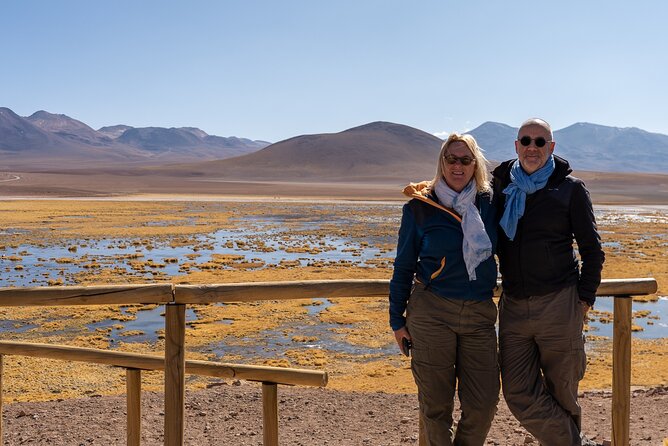
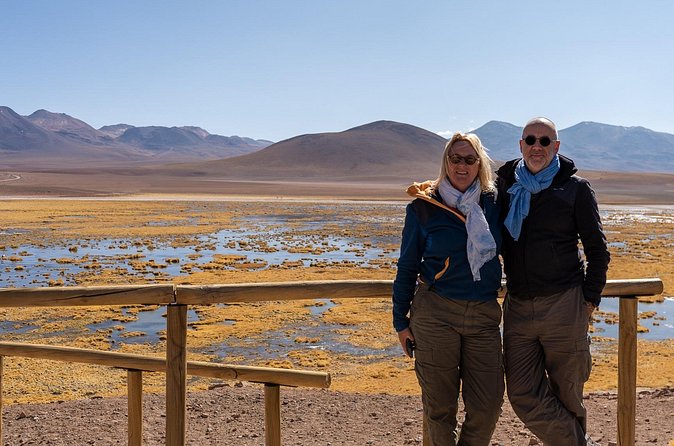
The return route includes a 20-minute stop at Vado del Rio Putana, the ford of the Putana River. The water crossing is part of a broad high-altitude setting above 4,200 meters, with native vegetation and animals spread across the plateau.
This is where you should keep your eyes open rather than focus only on the next scheduled stop. Vicuñas and Andean flamingoes have been seen along the route, along with other birds. The wildlife is not presented as a guaranteed show, so think of it as a chance to spot animals in their own setting rather than a formal viewing session.
The high plateau can feel surprisingly spacious after the concentrated steam and crowds around the geysers. The river, vegetation, distant peaks, and animals add texture to the morning. You get a better sense of the Atacama as a living high-altitude environment, not just a desert of bare rock.
Twenty minutes is brief, so do not expect a long walk or an extended nature program. Still, the stop breaks up the drive and gives you a chance to stretch your legs. If wildlife photography matters to you, keep your camera ready and listen closely to the guide’s directions.
A few more San Pedro de Atacama trips worth weighing up
- San Pedro de Atacama: Etno-Stargazing Tour with Transfer
★ 4.8 · 629 reviews - Piedras Rojas, Altiplanics Lagoons & Salar Full-Day Tour
★ 4.7 · 592 reviews - San Pedro de Atacama: Stargazing Experience
★ 4.7 · 489 reviews - San Pedro Atacama: Baltinache Lagoons
★ 4.6 · 359 reviews
Machuca and a taste of local food
The final stop is Machuca, a small town visited for about 30 minutes. Here, you can try goat cheese and llama meat empanadas prepared by local people.
This stop is short, but it gives the tour a human element that the geothermal field cannot provide. You see a community connected to the area and have the chance to buy or taste food made locally. The empanadas also offer a more distinctive snack than the standard packaged food often handed out on early morning excursions.
You may find the stop feels rushed, especially after the long ride and the other scheduled visits. A half hour is enough for a quick look and a bite, but not enough for a detailed visit. I would treat Machuca as a brief introduction rather than a full cultural tour.
The village may also include a church and optional steps. At this altitude, a short climb can feel much harder than it looks. Move slowly, drink water, and skip the climb if your body is not adjusting well.
Language and guiding can shape the whole morning
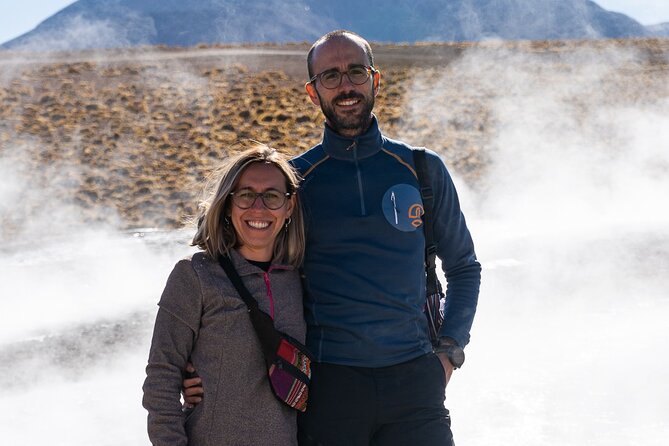
The experience depends heavily on the guide. A warm, attentive guide who explains the science, checks on the group, translates clearly, and points out wildlife can turn a cold morning into a memorable one. Nata was especially praised for translating all key information into English and helping the group feel included.
The language experience is not always consistent. Some of the commentary may be mainly in Spanish, even when the guide can speak English. If you do not understand Spanish, you should confirm the language arrangement before booking and make it clear at pickup that you need English explanations.
This is not a minor detail. The sights are strong on their own, but the guide gives meaning to the steam, volcanic ground, animals, and mountain communities. A mostly Spanish explanation can leave you looking at impressive scenery without understanding much of it.
The group limit of 15 helps. It is small enough for a guide to answer questions and notice if someone is struggling with altitude or cold. It does not guarantee a bilingual guide or perfect timing, but it is preferable to a large coach when the road and walking areas are busy.
Is the $90 price good value?
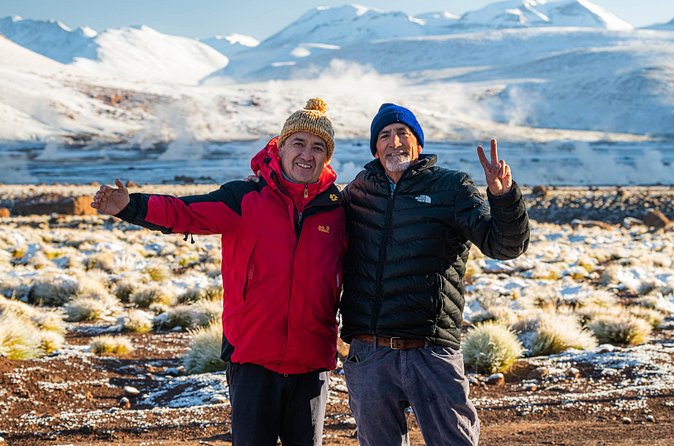
At $90 per person, I consider this a fair price if you want more than the geyser field alone. You get a six to seven-hour outing, transport, about two hours at El Tatio, a Geyser Blanco stop, the Putana River, and Machuca. The breakfast or seasonal thermal experience adds something extra to a standard sunrise geyser trip.
The value is strongest for someone who wants a full morning in the high plateau, not just a photograph of the fumaroles. Wildlife, local food, and the changing scenery make the return journey part of the experience rather than dead time.
There are some points to verify. Admission is described as included for El Tatio, but one group was asked to pay park entrances separately. Ask exactly which entrance fees are included before departure and keep any receipts if you are charged again.
The price is less appealing if your main goal is a relaxed breakfast or a guaranteed thermal bath. The early pickup, cold, long drive, and high altitude are central parts of the outing. You are paying for access to a remote place and several stops, not for comfort.
The tour receives a 4.7 rating from 81 ratings, with 95 percent recommending it. That matches my reading of the experience: the natural setting is the dependable strength, while pickup timing, language, driving, and seasonal promises require more care.
Who should book this Tatio outing?
I would choose this tour if you want to see El Tatio at sunrise and prefer a small group with several stops afterward. It suits people who enjoy dramatic natural sights, local snacks, wildlife spotting, and a morning that feels active rather than polished.
It is also a good fit if you are comfortable with basic conditions. You need moderate physical fitness, tolerance for a very early start, and the ability to handle cold and altitude. Children under five are not allowed.
I would think twice if you dislike uncertain pickup times, rough transport, or mixed-language guiding. You should also reconsider if you have never been at high altitude and want a gentle first introduction. The tour information does not promise medical support or a slow acclimatization plan, so you need to judge your own readiness.
Free cancellation is available if you cancel at least 24 hours before the start time. The operator may also cancel because of poor weather or an insufficient number of bookings, offering another date or a refund.
Should you book it?
Yes, if sunrise at El Tatio is a priority and you want the added value of Geyser Blanco, wildlife, Putana River, and Machuca. The steam, mountains, and chance to see vicuñas and flamingoes make this much more than a quick photo stop.
Book with a few checks first. Confirm your exact pickup time, ask if your guide will provide full commentary in your language, and clarify whether your date includes breakfast or a thermal bath. If those details are settled, the $90 price is reasonable for a long, varied morning in one of the Atacama’s most remarkable settings.
FAQ
How long does the Tatio Geyser tour take?
The total duration is approximately six to seven hours, including travel time between San Pedro de Atacama and the different stops.
What time does the tour begin?
The stated meeting period is between 4 and 5 a.m., from Monday through Sunday. The exact pickup time may vary, so confirm it with the operator.
Is breakfast included at Geyser Blanco?
From September through April, the plan includes breakfast at Geyser Blanco. In winter, the experience may include a thermal bath instead. Confirm the seasonal offering for your date.
How cold is El Tatio?
Temperatures at the geyser field can range from minus 10 to minus 20 degrees Celsius. Warm winter clothing is essential.
Are children under five allowed?
No. Children under five years old are not allowed on this tour.
What happens if the tour is canceled?
If poor weather or an insufficient number of bookings causes cancellation, you will be offered a different date or experience, or a full refund. You can cancel for a full refund if you cancel at least 24 hours before the start time.
Just added around San Pedro de Atacama
- Cejar & Tebenquiche Lagoons Tour with Ojos del Salar Atacama★ 3.4 · 3 reviews
- San Pedro de Atacama: Valle de la luna★ 3.0 · 3 reviews
- Atacama Desert: Floatation in Laguna Cejar and Sunset★ 3.1 · 3 reviews
- Astronomical Tour: San Pedro de Atacama – Chile★ 4.5 · 3 reviews
- San Pedro de Atacama: Astronomical Tour★ 3.9 · 3 reviews
- Valle de la Luna: A Moon-Like Escape in Atacama★ 5.0 · 3 reviews
- Piedras Rojas, Altiplanics Lagoons & Salar Full Day Tour★ 4.4 · 3 reviews
- Full Desert. The most complete program you will find★ 3.2 · 3 reviews
El Tatio Geyser Tours, compared.
Full Day Tour to Geyser del Tatio, Vado Putana and Machuca
Read our review →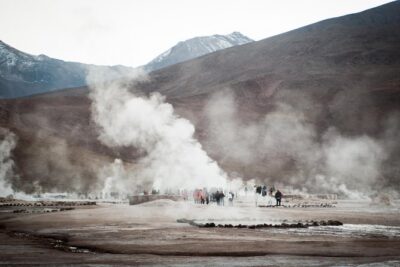
El Tatio Geysers Tour from San Pedro de Atacama
Read our review →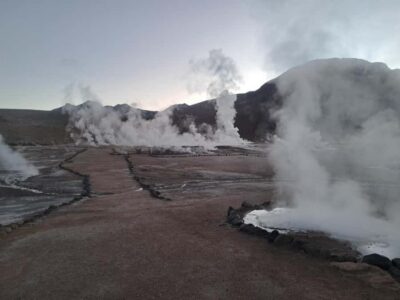
Browse the lists this tour appears in