
Reviewed · WALKING TOURS
Santiago de Chile Private Walking Tour-5 Hours with Hotel Pick-up
Santiago reveals itself on foot. This private five-hour tour links La Moneda, Santa Lucia Hill, Plaza de Armas, and Bellavista with a local guide who can shape the day around your interests. I like the mix of major landmarks and ordinary city movement, including public buses or the subway, and I like the useful food stops, from an empanada to a café or natural juice. The main drawback is simple: this is a serious walking day, not a gentle sightseeing ride.
The $130 per person price makes the most sense for solo visitors, couples, or small groups who want a personal introduction rather than a fixed script. Guides such as Pablo, Sofia, Eduardo, Julio, Patricia, Alessandro, and Camila have been praised for history, political context, humor, and flexibility. Still, you should wear solid walking shoes, expect little sitting, and remember that lunch is not included.
In This Review
- Key points to know before you book
- A useful first day in Santiago
- La Moneda and Chile’s political story
- Climbing Santa Lucia Hill for a city view
- Plaza de Armas and the city’s old center
- Fifteen minutes at the Central Market
- Lastarria’s cafés, art, and slower pace
- Bellavista, La Chascona, and the San Cristobal foothills
- Patio Bellavista and the final shopping window
- Guides make or break the experience
- Walking distance, pace, and weather
- Is $130 per person good value?
- Who should book this private Santiago walk?
- Should you book it?
- FAQ
- How long does the Santiago private walking tour last?
- What sights are included?
- Is hotel pickup and drop-off included?
- Is lunch included?
- Does the tour use public transportation?
- What happens if I book on a Monday?
- Can I cancel for a full refund?
Key points to know before you book
- Expect a true walking tour: One guest covered more than six miles, so comfortable shoes matter more than stylish ones.
- Public transport is part of the lesson: Your guide helps you use Santiago’s buses or subway instead of keeping you behind a vehicle window.
- History goes beyond monuments: Guides may discuss Chile’s government, the Pinochet era, current political life, art, and everyday culture.
- The route covers a lot: La Moneda, Santa Lucia Hill, Plaza de Armas, the Central Market, Lastarria, Bellavista, La Chascona’s exterior, and Patio Bellavista all fit into roughly five hours.
- Private means flexible: Guides have adjusted the pace, added a stop, made shopping detours, and helped with plans for the next day.
- Monday needs a change of plan: Santa Lucia Hill is closed on Mondays, so another stop replaces it.
A useful first day in Santiago
This is the kind of tour I would choose near the start of a Santiago stay. It gives you a working map of the central districts, shows you how the public transport system feels, and helps you decide where to return later.
The tour begins with hotel pickup and ends with hotel drop-off. The published description says private transportation is not included, which means you should not expect a private car to carry you between every stop. Instead, the experience is built around walking and local buses or the subway, with your guide helping you handle the system.
That arrangement is valuable. Santiago makes more sense when you see the changing streets at human speed. You notice the shift from government buildings to old churches, from market stalls to café-lined streets, and from the historic center to the artsy quarters west of the main sights.
The five-hour schedule is full, and the stop times are approximate. A guide may adjust the pace to your group, as Sofia did for one party, or add a nearby place if you finish early. This flexibility is one of the strongest reasons to book a private outing instead of a large group walk.
More Walking Tours in Santiago
- Santiago: Guided Walking Tour of the Historical Old Town
★ 4.8 · 459 reviews - Santiago Half-Day Walking Tour with Hotel Pick up & Brunch
★ 4.7 · 148 reviews - Santiago De Chile: Private Custom Walking tour with A Guide
★ 4.4 · 88 reviews
La Moneda and Chile’s political story
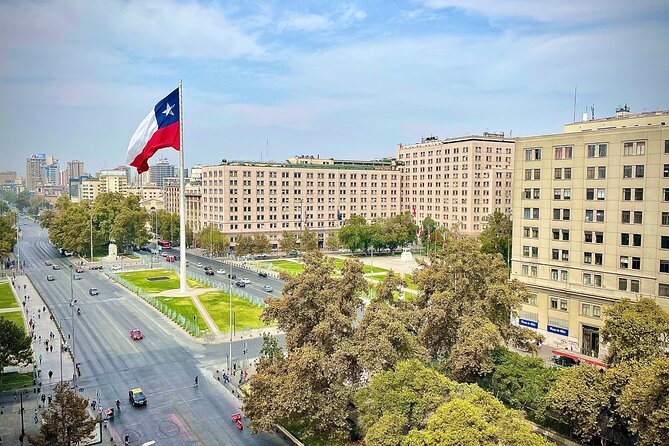
The first major stop is the Centro Cultural Palacio de La Moneda, the cultural center beside the presidential palace. La Moneda is one of Chile’s key symbols of government and political power, so this is not just a photo stop.
You can expect your guide to explain how the building fits into Chile’s political story. Several guides have been praised for discussing both historic events and present-day government, and the strongest experiences appear to connect the building to the wider national story rather than simply naming it.
This is also where a private guide earns the fee. You can ask about Chile’s political changes, the military coup, or the Pinochet period, subjects that one guide, Pablo, addressed while also explaining the city around him. Eduardo even used footage on an iPad to add context while discussing the coup. That kind of conversation can turn a grand government building into a place with real meaning.
Plan on about an hour here. Since admission to the listed stops is free, the value comes from the interpretation, not from a ticket. If politics and modern Chile matter to you, allow time for questions.
Climbing Santa Lucia Hill for a city view
Cerro Santa Lucia is described as the founding place of Santiago and remains one of its best-known public parks. The tour allows about 45 minutes, enough for a brisk climb and views if your pace and conditions permit.
The climb is one of the day’s physical highlights. A guide named Aldo led one guest up the hill, who especially liked the views from above. Another visitor singled out the top of Santa Lucia as a favorite part of the day. You should treat this as a climb, not a flat park stroll.
The hill also gives your guide a natural way to explain Santiago’s layout. From above, you can better understand the relationship between the historic center, the central neighborhoods, and the San Cristobal area. The view adds a visual break after the political discussion at La Moneda.
Santa Lucia Hill is closed on Mondays. The operator says another place will be substituted, but the exact replacement is not specified, so do not book a Monday expecting this particular climb.
Plaza de Armas and the city’s old center
The tour then reaches Plaza de Armas, the heart of Santiago’s historic center. You will see the Metropolitan Cathedral and watch the daily movement of the central district.
The scheduled hour here is generous. That matters because the plaza is best understood through its details: architecture, public activity, nearby streets, and the way Santiago’s old core functions today. Your guide can answer questions as you walk, and several guides have received praise for explaining architecture as well as history.
I like this section because it balances the formal setting of La Moneda. The palace tells you about national power. Plaza de Armas shows you the city as a lived place, with people moving through the center and using it for ordinary business.
The area can feel busy and crowded, so keep your belongings secure and avoid flashy accessories. One guest specifically advised simple clothing and no valuable accessories for walking downtown. That is sensible city practice, not a reason to avoid the stop.
More walking tours:
- 2-Hour Walking Tour of Yungay The Coolest Neighborhood in Chile
★ 5.0 · 85 reviews - Santiago: City Highlights Walking Tour
★ 4.2 · 51 reviews - Santiago Private Walking Tour with a Local
★ 5.0 · 45 reviews - Santiago : Must-See Sites Walking Tour With A Guide
★ 3.6 · 9 reviews
Fifteen minutes at the Central Market
The Central Market is scheduled for only 15 minutes, but it adds a useful sensory change. This is Santiago’s traditional fish and seafood market, where you can see the catch of the day and get a quick look at a long-running part of local food culture.
Do not expect a long meal here. The short stop is better for observing the stalls, asking questions, and taking in the atmosphere before moving on. One guest found the market especially impressive because of the visible seafood.
The tour also includes a Chilean empanada, plus a soda, natural juice, or café. The exact timing can vary, and the published details do not identify one fixed empanada shop. Still, the snack is a practical part of the day. After several hours of walking, a local bite is more welcome than another rushed landmark.
Lunch is not included. Bellavista includes a typical Chilean food restaurant for lunch, but you should budget separately if you choose to eat there. The food and drinks included in the tour should not be confused with a full lunch.
Lastarria’s cafés, art, and slower pace
Barrio Lastarria receives about 20 minutes. This short visit introduces one of Santiago’s best-known bohemian quarters, with cultural activity, crafts, paintings, antiques, theater, and other small-scale attractions.
Twenty minutes is enough for a first look, but not enough for a serious shopping or museum visit. Think of this as a scouting stop. If you spot a shop or café you want to revisit, note its location and return later.
This is also an example of why the private format helps. A guide may be able to linger briefly at something that catches your attention, or suggest a return visit. Claudio, for example, made room for a local shopping detour during one tour. That flexibility is useful if you have specific interests rather than a simple checklist.
Bellavista, La Chascona, and the San Cristobal foothills
The route continues to Bellavista, a cultural quarter at the foot of San Cristobal Hill. The area is associated with theaters, jazz, salsa, live music, restaurants, and nightlife.
The scheduled hour here includes a typical Chilean food restaurant for lunch, but lunch itself is not included in the $130 price. Ask your guide about the timing and cost before ordering, especially if you are traveling on a tight budget.
The walk also passes the facade of La Chascona, the Santiago home of Chilean poet and Nobel Prize winner Pablo Neruda. You see the exterior rather than entering the museum, so this is an orientation stop, not a museum visit. If Neruda’s homes are a major interest, you will need separate time for an interior visit.
The route reaches the bottom of the hill. The supplied details do not promise a climb of San Cristobal or a cable-car ride, although one guest described a walking and cable-car experience. Consider that an individual variation, not a guaranteed feature of every departure.
Patio Bellavista and the final shopping window
The final listed stop is Patio Bellavista, a pedestrian-style boulevard where food, culture, tourism, and shopping come together. The tour allows about 30 minutes.
This is a practical ending because it gives you a chance to see Chilean crafts made from copper, alpaca, wood, and lapis lazuli. If you want souvenirs, tell your guide early. Pablo helped one visitor find particular gifts for family, and that kind of personal help can save time and reduce guesswork.
Half an hour is enough to browse, but not enough for a relaxed meal and serious shopping. You may want to return later, especially if you find a craft item that needs careful comparison.
The stop also works as a final taste of Bellavista’s social side. After the formal center and the historic plazas, the atmosphere is more relaxed and entertainment-focused. Your guide can point out places worth revisiting in the evening, though the tour itself is a daytime half-day experience unless your booking says otherwise.
Guides make or break the experience
The guide is the biggest variable here. Names praised in the supplied feedback include Alessandro, Julio, Patricia, Pablo, Eduardo, Sofia, Sofi, Aldo, Franco, Camila, Izi, Stephanie, Claudio, Alex, and Diego.
The common strengths are clear. Guides are often described as friendly, punctual, funny, attentive, and well informed about Santiago’s history. The best accounts also mention present-day politics, social issues, art, architecture, local food, and practical help with later plans.
Pablo was praised for excellent English, local food suggestions, a pisco sour, and help finding souvenirs. Franco met one guest at the airport, helped with the hotel transfer, then used buses and the subway to show Santiago. Eduardo helped one couple plan the following day. Patricia returned one group to its hotel exactly on schedule.
There is one useful caution. One family found Alessandro strong on history but less effective at explaining the character of the neighborhoods and Chilean culture. That is a reminder to ask direct questions. If you want more than dates and buildings, say so early: ask about daily life, food, politics, music, or how the districts differ.
The tour may use a multilingual guide. English ability has been praised for several guides, but the exact guide and language are not guaranteed in the supplied details.
Walking distance, pace, and weather
You should prepare for a lot of movement. One guest logged more than six miles, and another was surprised that the tour involved no vehicle at all. The schedule includes hills, city sidewalks, market areas, and public transport.
Most people can participate, and service animals are allowed. Still, the physical demands are real. Wear comfortable shoes, bring water, and dress for the forecast. Bottled water is included, but the operator says the tour runs in all weather conditions.
A private format helps with pace. Guides have slowed down for different abilities and adjusted routes to suit requests. It does not remove the need for stamina, though. If you dislike long walks, ask about shortening the route before the day begins.
Is $130 per person good value?
At $130 per person, this is not the cheapest way to see Santiago. You are paying for a private guide, hotel pickup and drop-off, local transport guidance, bottled water, and a tailored five-hour introduction.
For a solo visitor, the cost is easier to justify because a private guide can provide company, language help, historical context, and practical orientation all at once. For a couple or small group, the per-person price may feel more reasonable, especially if you value flexibility.
The tour includes a soft drink, natural juice, or café, and a Chilean empanada. It does not include lunch, private transportation, or admission to paid attractions. The listed stops are free, so the main purchase is the guide’s time and local knowledge, not entry tickets.
I see the strongest value for first-time visitors who have limited time in Santiago. You cover the political center, historic core, market, arts district, and Bellavista in one outing. You also receive recommendations that can shape the rest of your stay.
The overall rating is 4.8 from 77 ratings, with 94 percent recommending it. That is a strong record, but the experience still depends on your guide, weather, walking ability, and willingness to participate in conversation.
Who should book this private Santiago walk?
I would recommend it to first-time visitors, solo travelers, couples, families who can walk for several hours, and anyone arriving without a clear sense of Santiago’s districts. It is particularly useful early in a trip, when recommendations about restaurants, shopping, museums, and later day plans still have time to help you.
It suits people who want history connected to current Chile, not just a list of monuments. The strongest guides can discuss the coup and Pinochet period, government, art, architecture, food, and neighborhood life.
I would be cautious if you want a relaxed vehicle tour, a museum-heavy itinerary, or a guaranteed restaurant meal included in the price. You should also reconsider if steep walking is difficult or if your schedule cannot handle five active hours.
Free cancellation is available when you cancel at least 24 hours before the local start time. Later cancellations and changes are not accepted for a refund.
Should you book it?
Book this tour if you want to get your bearings fast and prefer a private guide who can adjust the pace, explain Chile’s difficult history, and show you how Santiago works beyond the postcard sights.
Skip it if you mainly want transportation, long museum visits, or a low-cost group walk. For most first visits, though, this is a strong introduction. Bring walking shoes, ask for the kind of context you enjoy, and keep an open hour afterward for returning to the place that catches your attention.
FAQ
How long does the Santiago private walking tour last?
The tour lasts approximately five hours.
What sights are included?
The route includes La Moneda Cultural Center, Santa Lucia Hill, Plaza de Armas, Santiago Central Market, Barrio Lastarria, Bellavista, the exterior of La Chascona, the bottom of San Cristobal Hill, and Patio Bellavista.
Is hotel pickup and drop-off included?
Yes. Hotel pickup and drop-off are included.
Is lunch included?
No. Lunch is not included. The Bellavista portion includes a typical Chilean food restaurant, and the tour includes an empanada plus a soda, natural juice, or café.
Does the tour use public transportation?
Yes. The experience includes riding public transport, such as buses or the subway, with help from your guide. Private transportation is not included.
What happens if I book on a Monday?
Santa Lucia Hill is closed on Mondays. The operator says another location will be visited instead.
Can I cancel for a full refund?
Yes, if you cancel at least 24 hours before the experience start time. Cancellations or changes made less than 24 hours before the start are not accepted for a refund.
Just added around Santiago
- Portillo & Laguna del Inca with Lunch at the Hotel Portillo★ 5.0 · 3 reviews
- ISLA NEGRA AND ALGARROBO WITH VINICOLA UNDURRAGA – TOUR : CHILE★ 3.3 · 3 reviews
- Santiago: Guided City Tour through the historic center of Santiago★ 4.1 · 3 reviews
- Santiago de Chile: Half-Day City Tour with Local Cuisine★ 4.5 · 3 reviews
- Valparaíso Tour with Funicular Ride and small groups★ 5.0 · 3 reviews
- From Santiago: Isla Negra, Pablo Neruda Museum & Winery Tour★ 5.0 · 3 reviews
- Santiago: Private Half-Day City Tour★ 4.2 · 3 reviews
- Santiago: Sunset at Vinicola Alyan Family★ 5.0 · 4 reviews
Walking Tours, compared.

Walk with Penguins on Magdalena & Marta Island
Read our review →
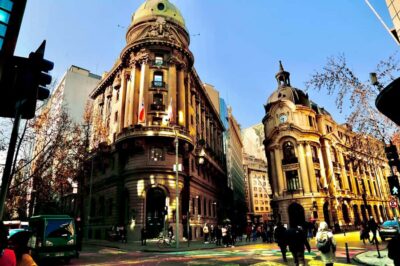
Santiago Half-Day Walking Tour with Hotel Pick up & Brunch
Read our review →
Walk alongside Penguins on Magdalene Island and navigate Marta Island
Read our review →
2-Hour Walking Tour of Yungay The Coolest Neighborhood in Chile
Read our review →
Valpo in 1 day: Authentic + Famous! Semi-private walking tour & public transport
Read our review →Browse the lists this tour appears in