
Reviewed · ALTIPLANIC LAGOONS & SALT FLATS
From San Pedro de Atacama: The Salt Flats Route, Full Day
The high plateau is the real attraction. I like this six-hour route because it reaches Salar de Tara without requiring a pre-dawn start, and I like the mix of flamingo lagoons, volcanic rock formations, and big views of Licancábur. The $78 price also covers shared transport, a bilingual guide, breakfast, and a snack, which makes it a useful half-day option.
The main drawback is practical: there are no toilets along the route, according to the tour information. You also need to arrive at the meeting point early and check the directions carefully, since one booking failed because the pickup location was too vague.
This is not a relaxed town excursion. The road climbs toward altitudes of 4,500 meters, and cold wind can make the open stops feel severe. Still, if you want salt flats, high-altitude birds, and strange volcanic scenery in one outing, this route packs a lot into a short day.
In This Review
- Key points to know before booking
- Why this salt-flat route is worth considering
- An 08:00 departure toward Paso de Jama
- The Salar de Atacama and Oasis views
- Hito Cajón Norte and Licancábur at 5,916 meters
- High-altitude birds and small lakes at kilometer 75
- Pakana hills and the Farellón de Tara
- The Moai de Tara and Pakana Witness
- The Pakana Cathedrals and Salar de Tara
- What the $78 price includes
- Pickup, timing, and the small details that matter
- Who should book the Salt Flats Route
- Should you book it?
- FAQ
- How long does the Salt Flats Route last?
- What language does the guide speak?
- What is included in the price?
- Are entrance fees included?
- How high does the route go?
- Can I cancel the tour for a refund?
Key points to know before booking
- Salar de Tara reaches about 4,500 meters, so the altitude is a serious part of the experience.
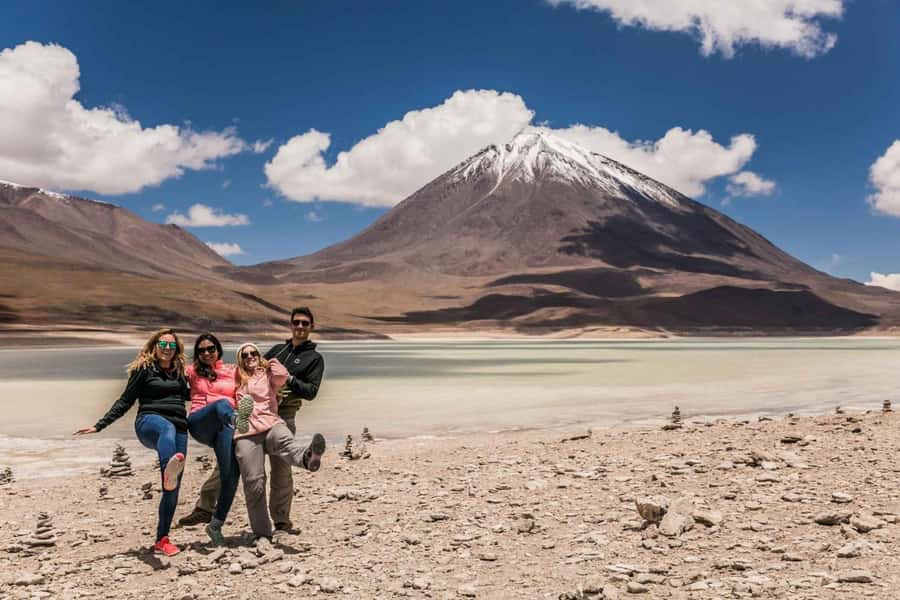
- Licancábur volcano rises to 5,916 meters, giving the route one of its most memorable views.
- Flamingos and other birds appear around small high-altitude lakes, with the salt-flat ecosystem providing the setting.
- The Pakana rock formations include the Moai de Tara, also called the Pakana Witness, and the Pakana Cathedrals.
- Breakfast and a snack are included, but other meals, drinks, and entrance fees are not.
- Guide Marta received especially warm praise, so a strong guide can make the long stretches of driving much more rewarding.
Why this salt-flat route is worth considering
San Pedro de Atacama is surrounded by dramatic places, but many outings demand a very early start or a full day on rough high-altitude roads. This Salt Flats Route takes about six hours and offers a shorter way to see the remote scenery beyond the town.
I like the route because it is not limited to one salt basin. You get a sequence of changing views: the Salar de Atacama, the Oasis of San Pedro, high volcanoes, small bird-filled lakes, sculpted rock walls, and finally Salar de Tara. The scenery changes from desert settlement to bare volcanic country to a salt-flat ecosystem.
The experience is best understood as a scenic drive with several stops, not as a long walking tour. You will spend plenty of time in the vehicle, but the drive is part of the point. The road climbs steadily through lava and ash, and each rise opens a wider view of the Chilean high plateau.
At $78 per person, I see fair value if you want several remote sights in one organized trip. A shared vehicle keeps the cost below a private excursion, while breakfast, a snack, transport, and a Spanish and English-speaking guide are already included. The value is weaker if you mainly want an easy outing near San Pedro or dislike long stretches without facilities.
More altiplano lagoon and salt flat days:
- Piedras Rojas, Altiplanics Lagoons & Salar Full-Day Tour
★ 4.7 · 592 reviews - San Pedro Atacama: Baltinache Lagoons
★ 4.6 · 359 reviews - Triple tour: Red stones, highland lagoons and Chaxa Lagoon
★ 4.7 · 219 reviews
An 08:00 departure toward Paso de Jama
The tour begins at 08:00 in San Pedro de Atacama and heads toward Paso de Jama, the international route leading toward the Chilean border. The route includes Chilean border control, so you should expect the setting to feel more like a high-altitude frontier crossing than a standard sightseeing road.
The road climbs on a steady slope formed by lava and ash. That description matters because this is not a flat drive across a simple desert. You move upward through volcanic terrain, with the air becoming thinner and the scenery more severe.
Breakfast is provided at the start of the outing. That is a useful touch, especially because the itinerary does not include a full meal. I would still bring water and any food you know you need, since only breakfast and a snack are specified.
Cold wind is another early concern. One booking described the breakfast as decent but warned that the wind was very cold. Pack warm layers even if San Pedro feels sunny and mild when you leave. The high plateau can be a different world only a short drive away.
The Salar de Atacama and Oasis views
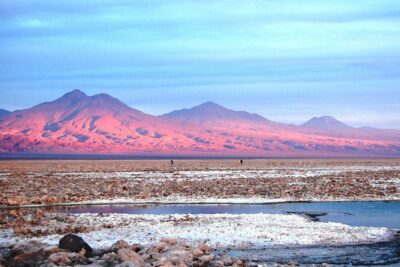
One of the first scenic rewards is a panoramic view of the Salar de Atacama and the Oasis of San Pedro de Atacama. From above, the contrast is sharp: pale salt country and dry volcanic ground around a small green settlement.
The oasis is important because it explains why San Pedro exists at all. In a region dominated by bare rock and salt, the town’s vegetation marks the presence of water and long-standing human settlement. From the route, you are not visiting the oasis itself. You are seeing its position within the wider desert.
This stop is likely to be appreciated most by people who enjoy seeing how places fit together. Instead of viewing San Pedro only from its streets, you gain a broad sense of the town’s setting and the scale of the Atacama around it.
The stop also gives you a useful visual introduction to the day. The salt flats are not just a single bright-white surface. They form part of a much larger high desert system, connected to volcanoes, wetlands, mineral deposits, and old lava flows.
Hito Cajón Norte and Licancábur at 5,916 meters
At about kilometer 41, the route reaches an altitude of roughly 4,200 meters. A crossing or detour toward Hito Cajón Norte and Licancábur provides the chance to look toward Licancábur volcano.
At 5,916 meters, Licancábur is a commanding marker on the horizon. Its near-symmetrical volcanic form gives the otherwise open scenery a clear focal point. This is one of the strongest photographic moments of the outing, but the view also has geological meaning. The route is taking you through country shaped by fire, ash, lava, and uplift.
You should take the altitude seriously here. The tour reaches 4,200 meters before continuing to about 4,500 meters at Salar de Tara. The supplied information does not describe a specific acclimatization policy or medical support, so anyone sensitive to altitude should think carefully before booking.
I would keep this stop simple. Walk slowly, avoid rushing between viewpoints, and listen to your guide. The point is to appreciate the volcano and the open setting, not to turn a short viewpoint stop into a physical challenge.
A few more San Pedro de Atacama trips worth weighing up
- Full Day Tour to Geyser del Tatio, Vado Putana and Machuca
★ 5.0 · 134 reviews - Full Day Tour to Ruta de los Salares
★ 5.0 · 105 reviews - Full Day Tour Piedras Rojas Altiplanic Lagoons Chaxa Lagoon
★ 5.0 · 75 reviews - From San Pedro de Atacama: The Salt Flats Route, Full day
★ 4.4 · 15 reviews
High-altitude birds and small lakes at kilometer 75
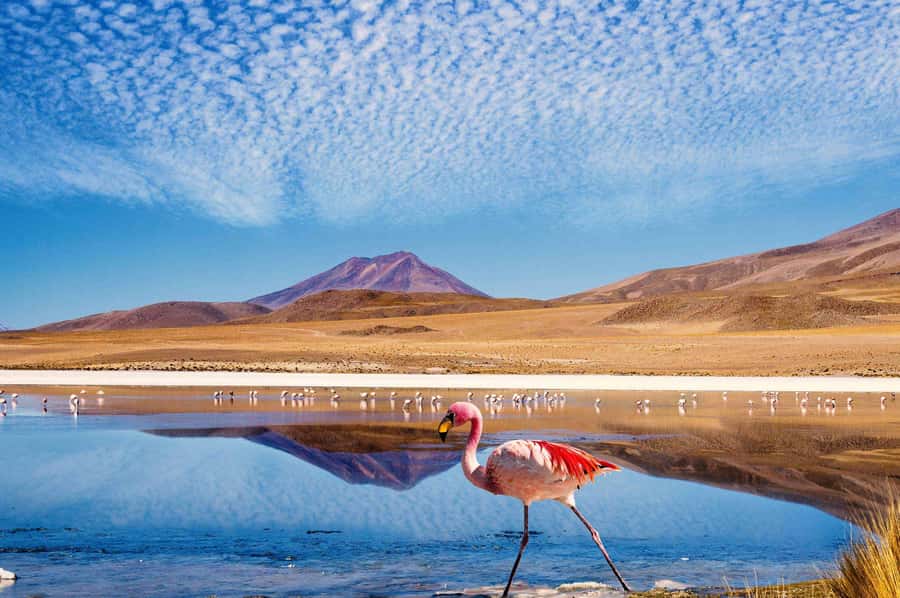
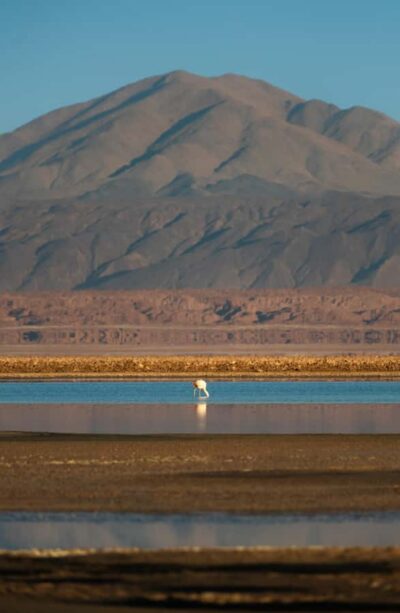
As the vehicle continues between the mountains, the scenery becomes more open and remote. Around kilometer 75, small lakes provide habitat for flamingos and other birds. Groups of ostriches may also be seen along the route.
The birdlife is one of the reasons this trip feels more varied than a straightforward salt-flat visit. The high plateau can look empty at first glance, but the lakes reveal a working ecosystem. Water, salt, altitude, and volcanic soil create conditions that support birds in an otherwise harsh region.
The information identifies Chilean flamingos as common around Salar de Tara. You should bring patience here. Wildlife sightings are never guaranteed in a precise form, and the animals may be distant. The guide can help identify what you are seeing, but the viewing conditions depend on where birds are present during your visit.
This is also where a bilingual guide matters. A guide who can explain the difference between the various birds and the salt-flat environment adds much more than a driver who simply points toward the horizon. Marta was singled out for making the most of the stops, which suggests that guide quality can have a real effect on the experience.
Pakana hills and the Farellón de Tara
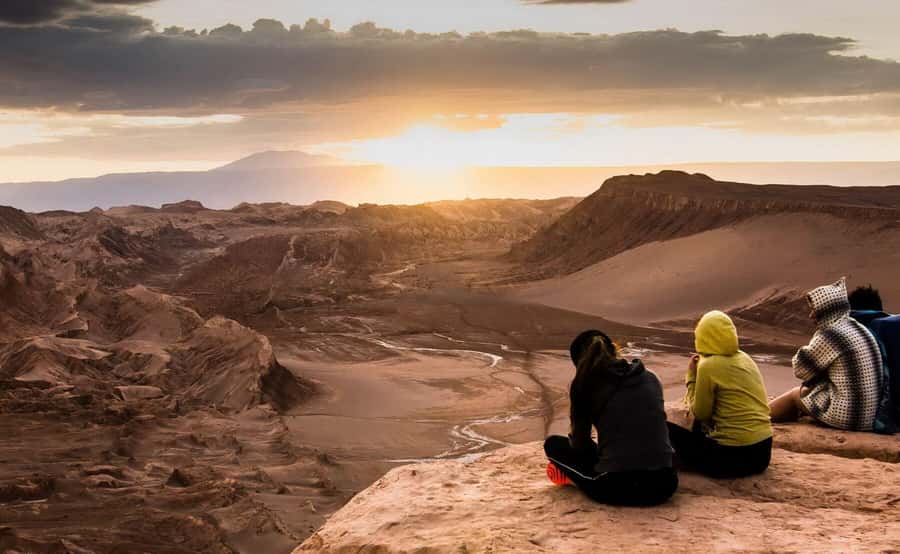
Around kilometer 91, the route passes through the Pakana hills. The terrain then opens toward the Farellón de Tara, a rock wall shaped by erosion into unusual forms.
This section is a welcome change from the salt and water. The Farellón is not a polished monument or a built attraction. It is a natural wall, marked by weather and geological forces. The sculptures are best appreciated from a distance, where the scale and strange outlines become clear.
I like this part of the route because it rewards people who enjoy geology and natural forms. You are not simply stopping at a viewpoint with one famous object. You are moving through a broad field of rock and learning to read shapes in the cliffs.
The stop may feel less exciting if you expect a long walk or a large visitor center. Nothing in the tour description suggests extensive facilities or developed paths. Think of it as a scenic pause in a remote area, with the vehicle doing most of the work.
The Moai de Tara and Pakana Witness
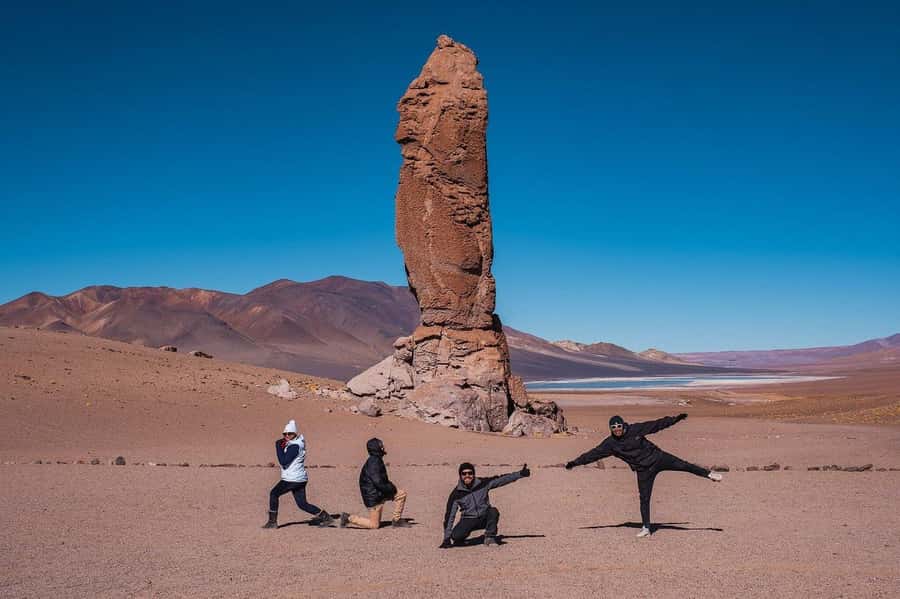
A little farther on, you reach the Moai de Tara, also known as the Pakana Witness. The name comes from the group of upright rock columns, which can resemble giant stone figures when viewed from the right angle.
These formations were preserved through geological time and are described as evidence of violent volcanic events during the Tertiary period. That makes the stop more than a quick photo opportunity. The columns help show how powerful volcanic activity once shaped this part of the plateau.
I find the nickname useful because it gives the formation a memorable human comparison, but you should not expect actual carved statues. These are natural rock structures. Their appeal comes from erosion, volcanic history, and the way the columns appear against the empty high-altitude setting.
This is another place where a guide can add value. Without some explanation, you may see a collection of rocks and move on. With context, the formations become clues to the region’s past.
The Pakana Cathedrals and Salar de Tara
The route then reaches a panoramic view of the Pakana Cathedrals before continuing to Salar de Tara at about 4,500 meters. The Cathedrals are another group of large rock formations, named for their tall, architectural appearance.
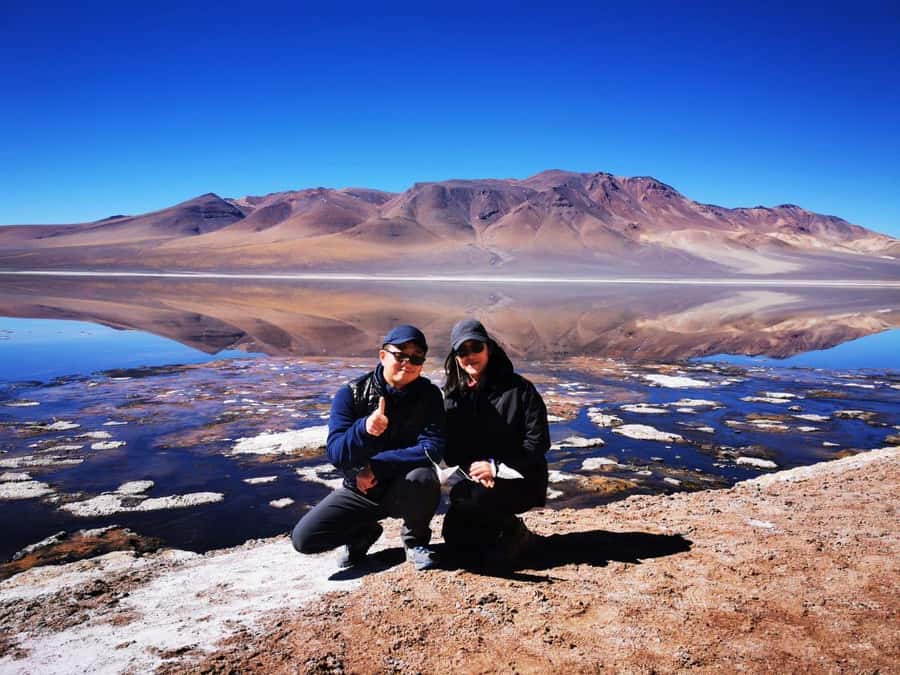
Salar de Tara is the main destination. Its salt-flat ecosystem supports flamingos and other birds, while the surrounding rock formations give the area a more complex character than a simple white plain. The combination of salt, water, high mountains, and volcanic rock creates the most distinctive setting of the day.
The final stop is likely to feel spacious and exposed. You may have open views in every direction, but you will also face cold wind, thin air, and limited shelter. The route information does not list toilets at Salar de Tara or elsewhere, and a direct account warns that there are no toilets along the entire way. Plan accordingly before leaving San Pedro.
The high altitude also changes how you experience the stop. Even a short walk can feel harder than expected. I would focus on the view, keep your pace easy, and avoid treating the stop like a hike.
What the $78 price includes
The $78 cost covers shared transport, pickup, a bilingual Spanish and English guide, breakfast, and a snack. For a remote route involving a border road, high-altitude driving, and several distant sights, that package is reasonably structured.
The shared format is the key tradeoff. You pay less than you would for a private vehicle, but you have less control over the pace and stop length. The tour is designed to connect several locations in a fixed period, so it suits you if you want an efficient overview rather than a custom schedule.
Entrance fees are not included, and meals and drinks not specifically listed are also extra. The information does not state the amount of any entrance fee, so I would check the current total before booking if you are keeping to a tight budget.
Because the route is only six hours, you are paying for access to remote scenery without giving up an entire day. That can be valuable if you have limited time in San Pedro or want to combine this outing with another activity on a separate day.
Pickup, timing, and the small details that matter
The stated start time is 08:00, and pickup is included. Still, you should confirm the exact meeting point before the morning of departure. One person arrived 30 minutes early but could not find the precise location because the directions were unclear and missed the tour.
That problem is avoidable with a little preparation. Save the meeting point, check whether pickup is at your accommodation or a separate location, and ask for a landmark if the instructions are vague. A remote excursion cannot wait easily for someone who is searching nearby streets.
The trip lasts six hours, but the listed route includes many kilometers of driving. That means the stops are important, yet the vehicle time is substantial. I would not book this expecting continuous activity.
Bring warm clothing, water, sun protection, and a small personal supply of food if you need more than breakfast and a snack. The lack of toilets is the most important comfort issue, so use facilities before departure and treat the route as a remote outing.
Free cancellation is available up to 24 hours before departure, and you can reserve now and pay later. Those terms help if your San Pedro schedule may change, but they do not remove the need to prepare for the altitude and weather.
Who should book the Salt Flats Route
I would recommend this trip to you if you want:
- A shorter alternative to a full-day high-plateau excursion
- A mix of salt flats, flamingos, volcanoes, and rock formations
- A shared tour with breakfast and a bilingual guide included
- A strong scenic route without arranging private transport
- A chance to see Licancábur and Salar de Tara in the same outing
I would be more cautious if you need regular toilet access, dislike cold exposed conditions, or know that high altitude affects you strongly. The tour reaches 4,500 meters, and the supplied details do not provide medical or acclimatization guidance.
I would also avoid booking until the pickup instructions are clear. The meeting-point problem is not a minor detail when the vehicle leaves at a fixed time.
Should you book it?
Book this Salt Flats Route if you want a compact introduction to the high plateau and value variety over comfort. The strongest features are the Salar de Tara ecosystem, the flamingos, the Pakana formations, and the view of 5,916-meter Licancábur. Guide Marta’s praised work also shows how much the day can benefit from an engaging guide.
Skip it if you want a gentle outing close to San Pedro, dependable facilities, or a relaxed meal schedule. At $78, it is a fair deal for remote scenery and included transport, breakfast, a snack, and guiding, but the price cannot change the basic facts: this is a cold, high, exposed route with no toilets along the way.
FAQ
How long does the Salt Flats Route last?
The activity lasts six hours. The stated departure time is 08:00, and you should check current availability for the exact starting time.
What language does the guide speak?
The tour includes a live bilingual guide who speaks Spanish and English.
What is included in the price?
The price includes pickup, shared transport, a bilingual guide, breakfast, and a snack.
Are entrance fees included?
No. Entrance fees are not included in the stated price.
How high does the route go?
The route reaches about 4,200 meters near the Hito Cajón Norte and Licancábur detour, then continues to Salar de Tara at about 4,500 meters.
Can I cancel the tour for a refund?
Yes. You can cancel up to 24 hours in advance for a full refund. You can also reserve the tour and pay later.
Just added around San Pedro de Atacama
- Cejar & Tebenquiche Lagoons Tour with Ojos del Salar Atacama★ 3.4 · 3 reviews
- San Pedro de Atacama: Valle de la luna★ 3.0 · 3 reviews
- Atacama Desert: Floatation in Laguna Cejar and Sunset★ 3.1 · 3 reviews
- Astronomical Tour: San Pedro de Atacama – Chile★ 4.5 · 3 reviews
- San Pedro de Atacama: Astronomical Tour★ 3.9 · 3 reviews
- Valle de la Luna: A Moon-Like Escape in Atacama★ 5.0 · 3 reviews
- Piedras Rojas, Altiplanics Lagoons & Salar Full Day Tour★ 4.4 · 3 reviews
- Full Desert. The most complete program you will find★ 3.2 · 3 reviews
Altiplanic Lagoons & Salt Flats, compared.
Piedras Rojas, Altiplanics Lagoons & Salar Full-Day Tour
Read our review →
Triple tour: Red stones, highland lagoons and Chaxa Lagoon
Read our review →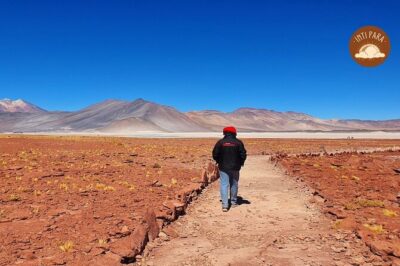
Altiplanic Lagoons & Piedras Rojas Tour from San Pedro de Atacama
Read our review →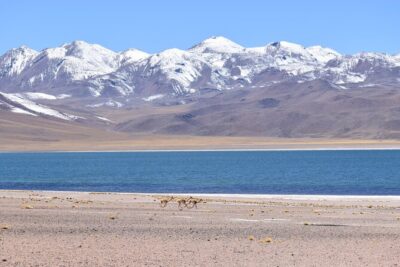
Full Day Tour Piedras Rojas Altiplanic Lagoons Chaxa Lagoon
Read our review →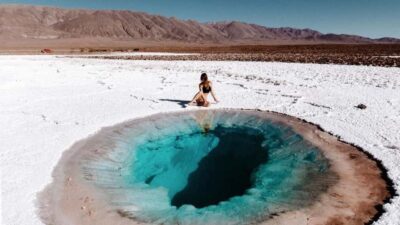
Browse the lists this tour appears in